Well, we knocked the bastard off!
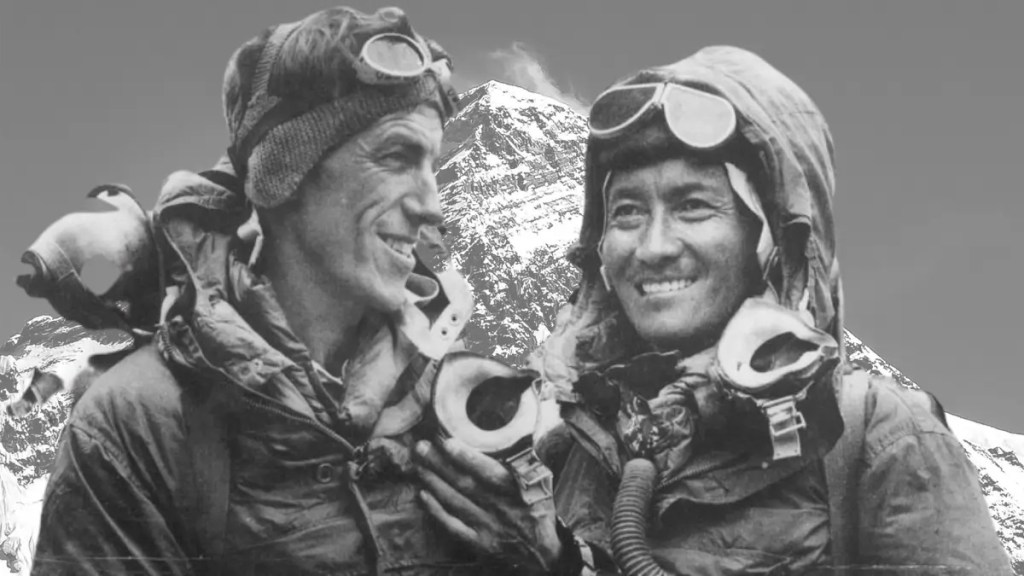
So said Edmund Hilary to his companions on returning from the summit of Everest in 1953; just 4 days before the coronation of Queen Elizabeth II on 2 June.
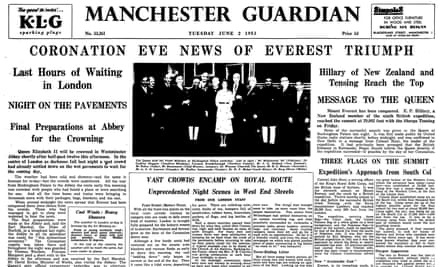
Apparently, Hillary’s mother initially disapproved of the rough language, causing the phrase to be left out of some early official books and memoirs before it became part of mountaineering folklore. So, mother, if you are reading this, sorry for the rough language!
Don’t you just love the fact that Hillary’s son, Peter, has climbed the peak twice, and three generations of Tenzings (famously, Sherpa Tenzing Norgay accompanied Hillary to the summit) have stood at 29,028ft.
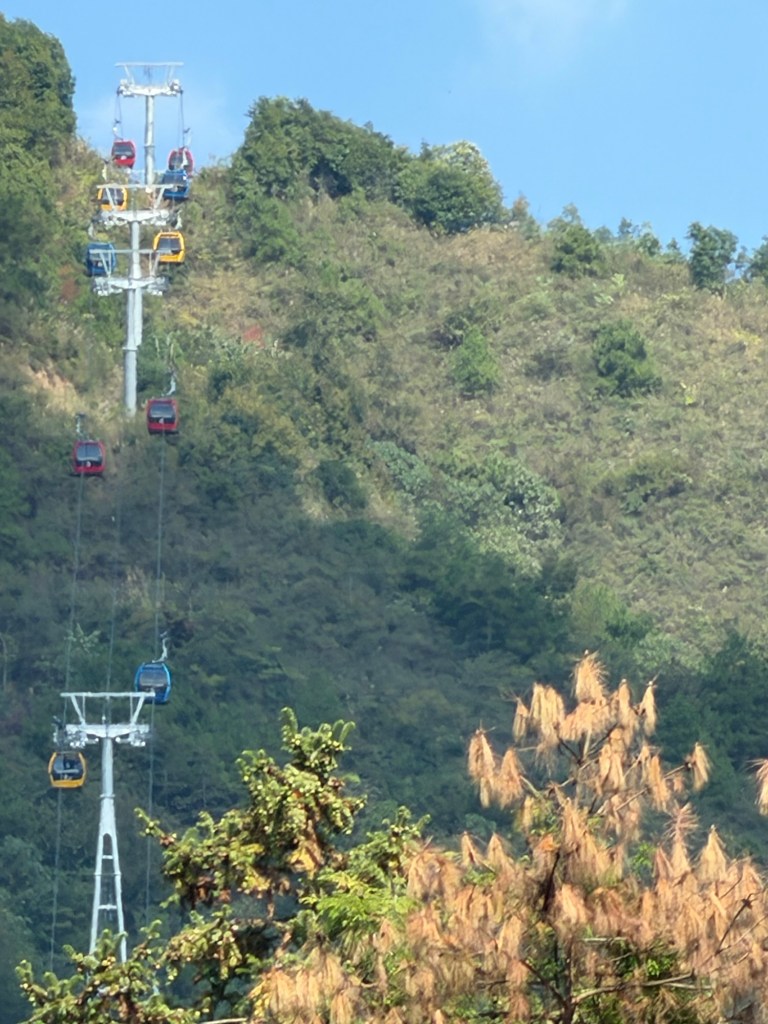
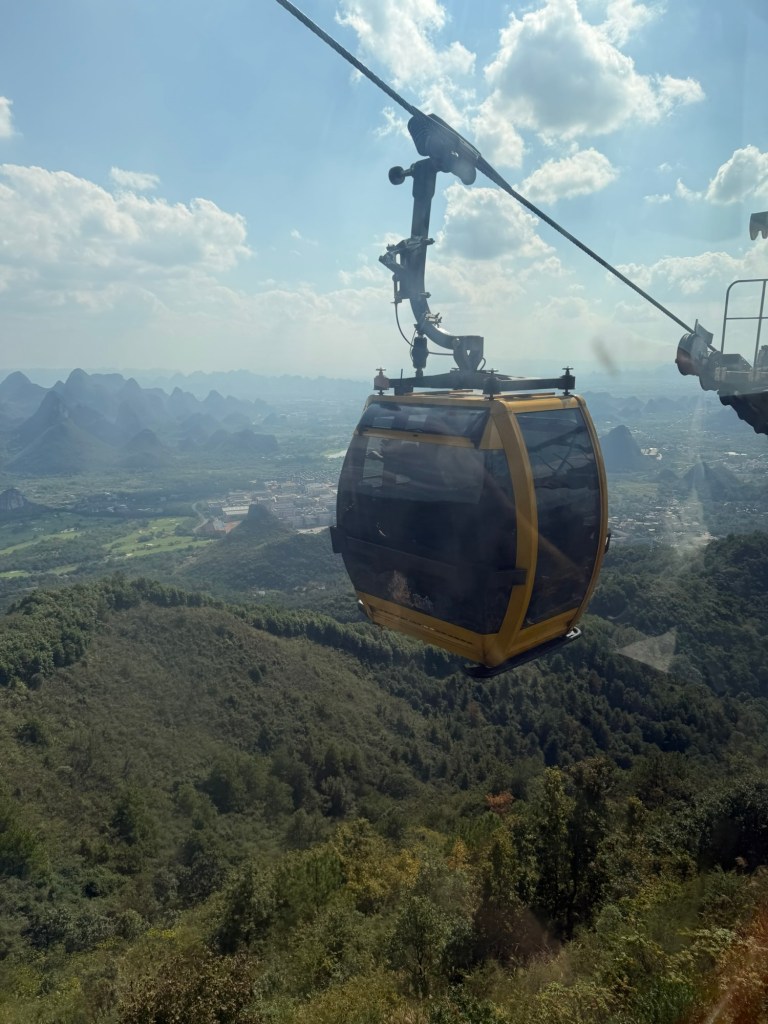
Today, in honour of Edmund and Tenzing we are ascending 2,983ft to the top of Yao Mountain (Yáo Shān). Why? Because it’s the tallest mountain in the area. It’s roughly 1/10 the height of Everest so we are not counting on needing supplemental oxygen. And we are ascending by cable car. Not just any old cable car, mind, for its cableway is nearly 1.5km (1,416m) long.
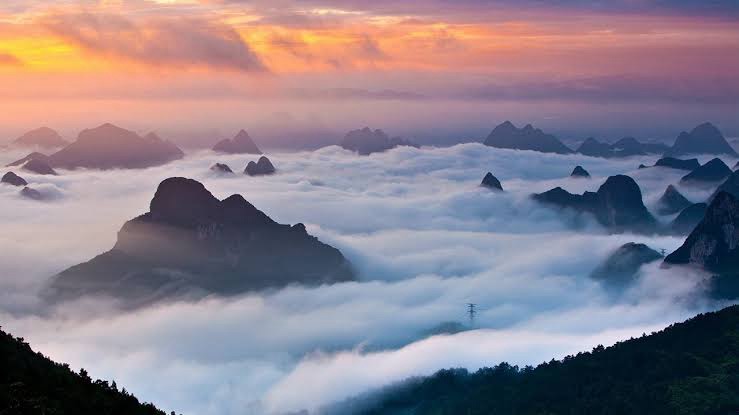
The Yao Mountain (尧山) got its name from a Yao emperor temple built in the Qin dynasty (221 – 207BC) on the top of the mountain.
Again, we shied away from taking the organised tour option, favouring the use of our own initiative, and doing it our way.
First step: DiDi to Yangshuo railway station, 8km, 12 minutes, £2.03 (We ‘hailed’ the car as we left our room, and it was at reception before us. No kidding!).
Second step: bullet train from Yangshuo to Guilin North, 65 km, 26 mins, £5.39 each. Cautionary note: This is the worst case of queue jumping we have experienced so far, but by no means the first. Locals will and do walk directly to the front of a queue, without a by your leave, and – every time – get served. It is exasperating but say to them what you like, in any language, they don’t even make eye contact; just shuffle off.
Third step: DiDi to Yaoshan Scenic Area Cableway Ticket Office, 11.5km, 18 mins, £2.62.
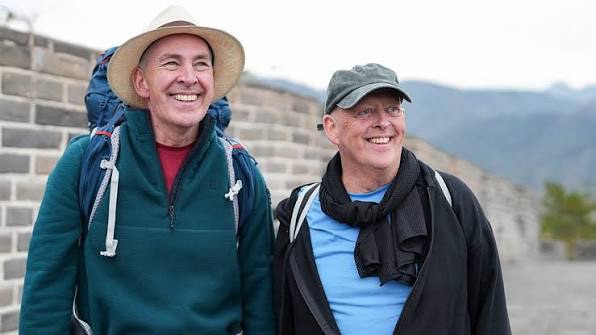
In short, we travelled 84.5km – total cost £15.43. And no, in case you are wondering, we are not competing in Race Across the World. How on Earth they did it without a mobile phone is a mind-boggling mystery to us. Hats off and shed loads of respect to you, Brian and Melvyn – more here on the one and only Melv Mole
Going up…
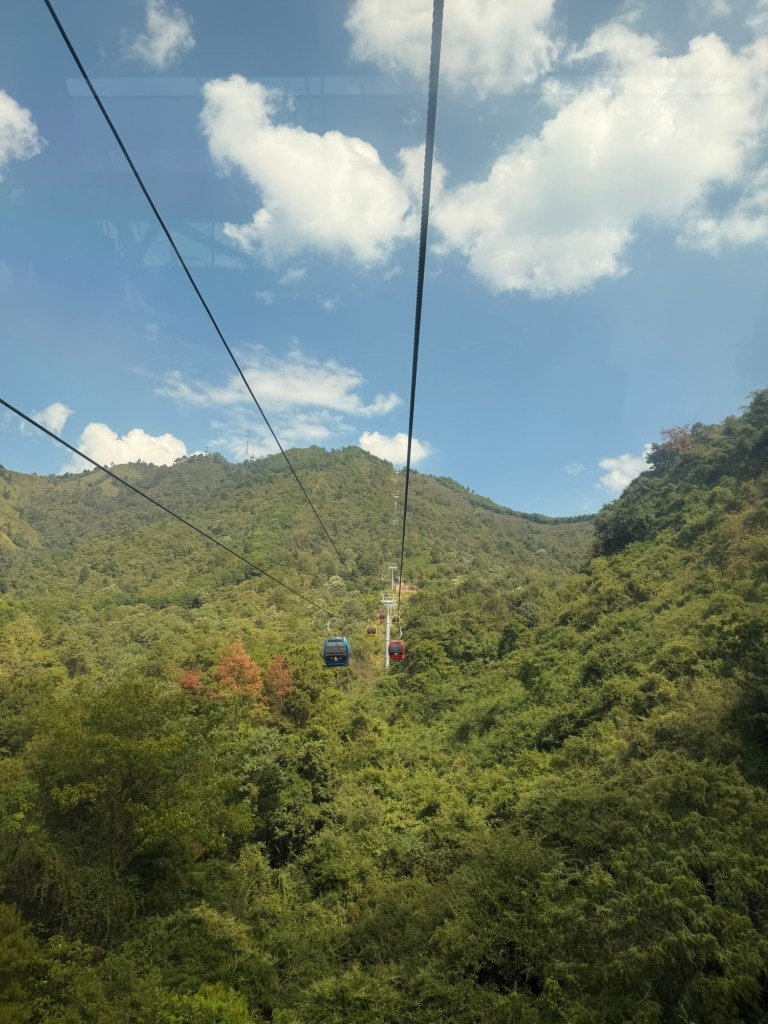
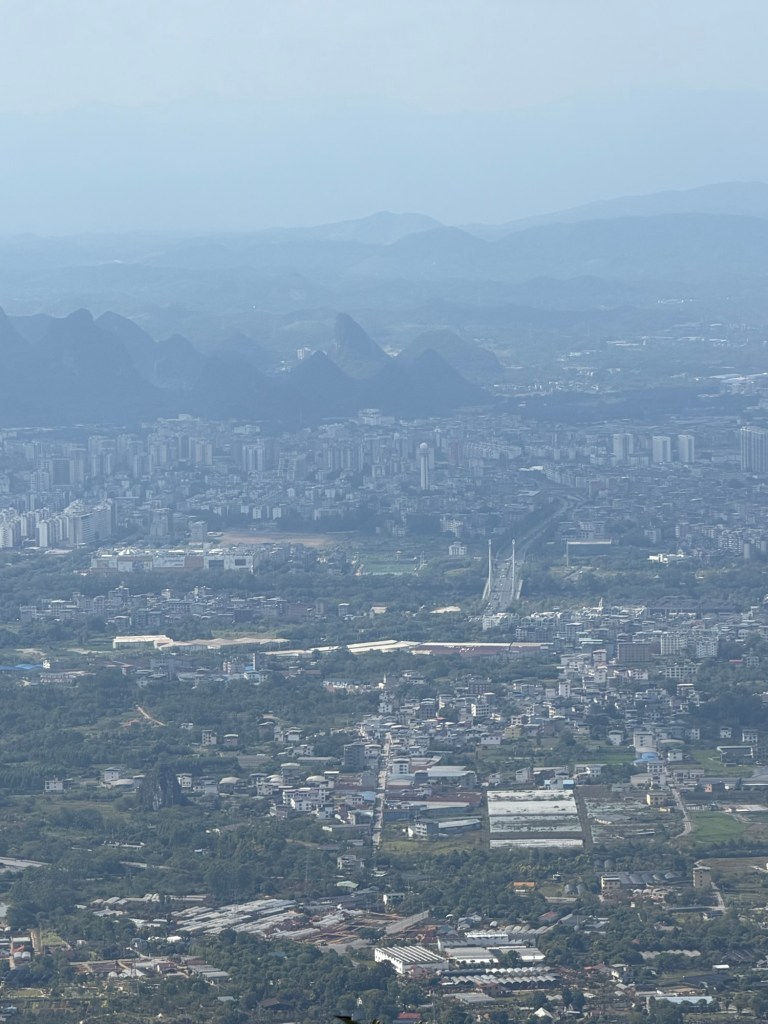
We tried hard to capture the majesty of the scenery but are not convinced the photos actually do the view justice, so you will just have to get yourselves up here. We were blessed with a clear day but it was extremely hot so we didn’t outstay our welcome.
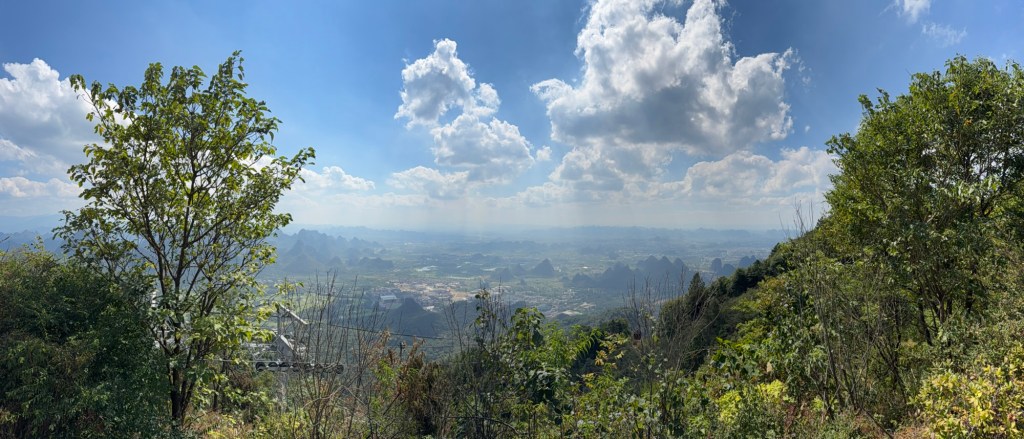
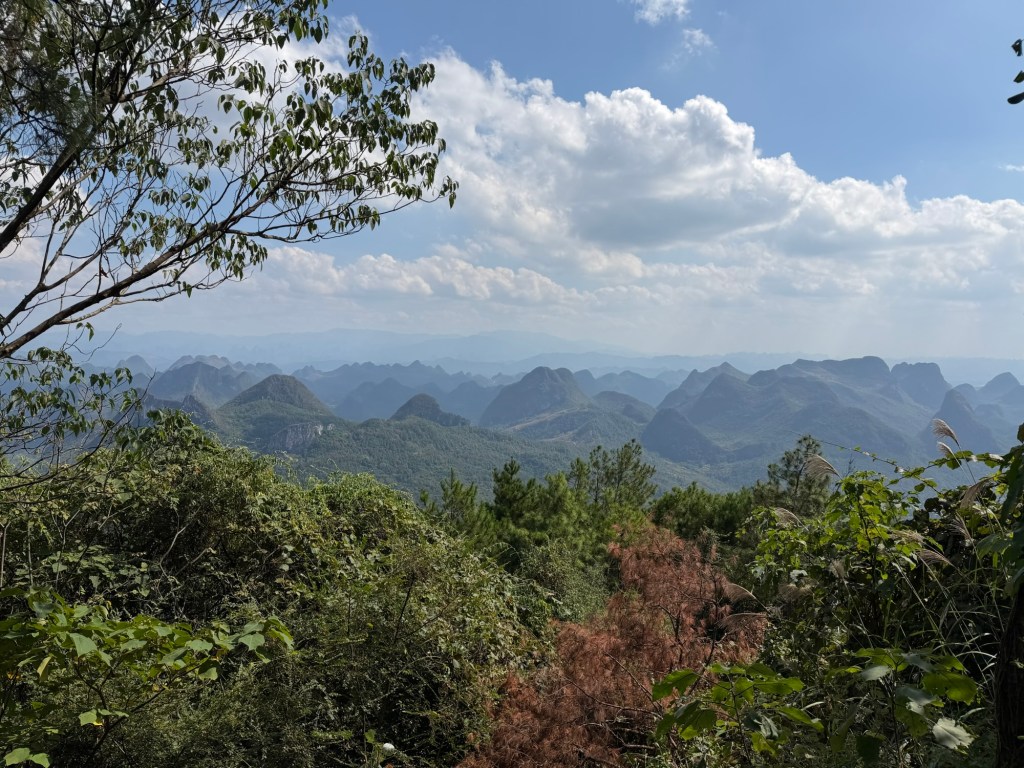
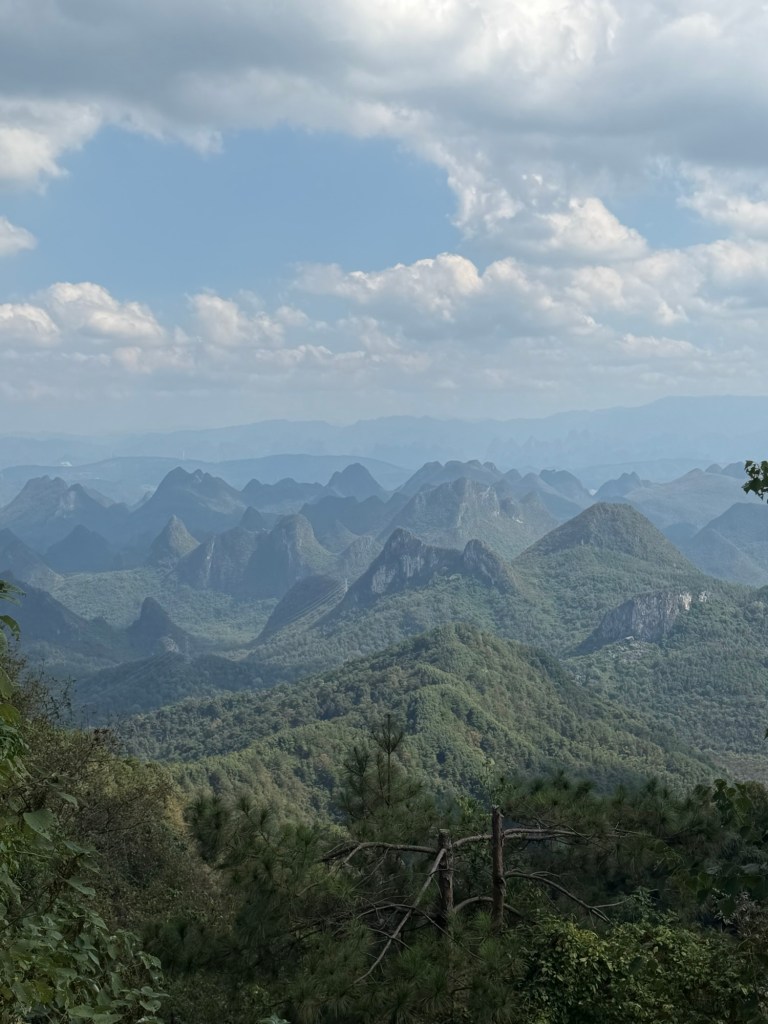
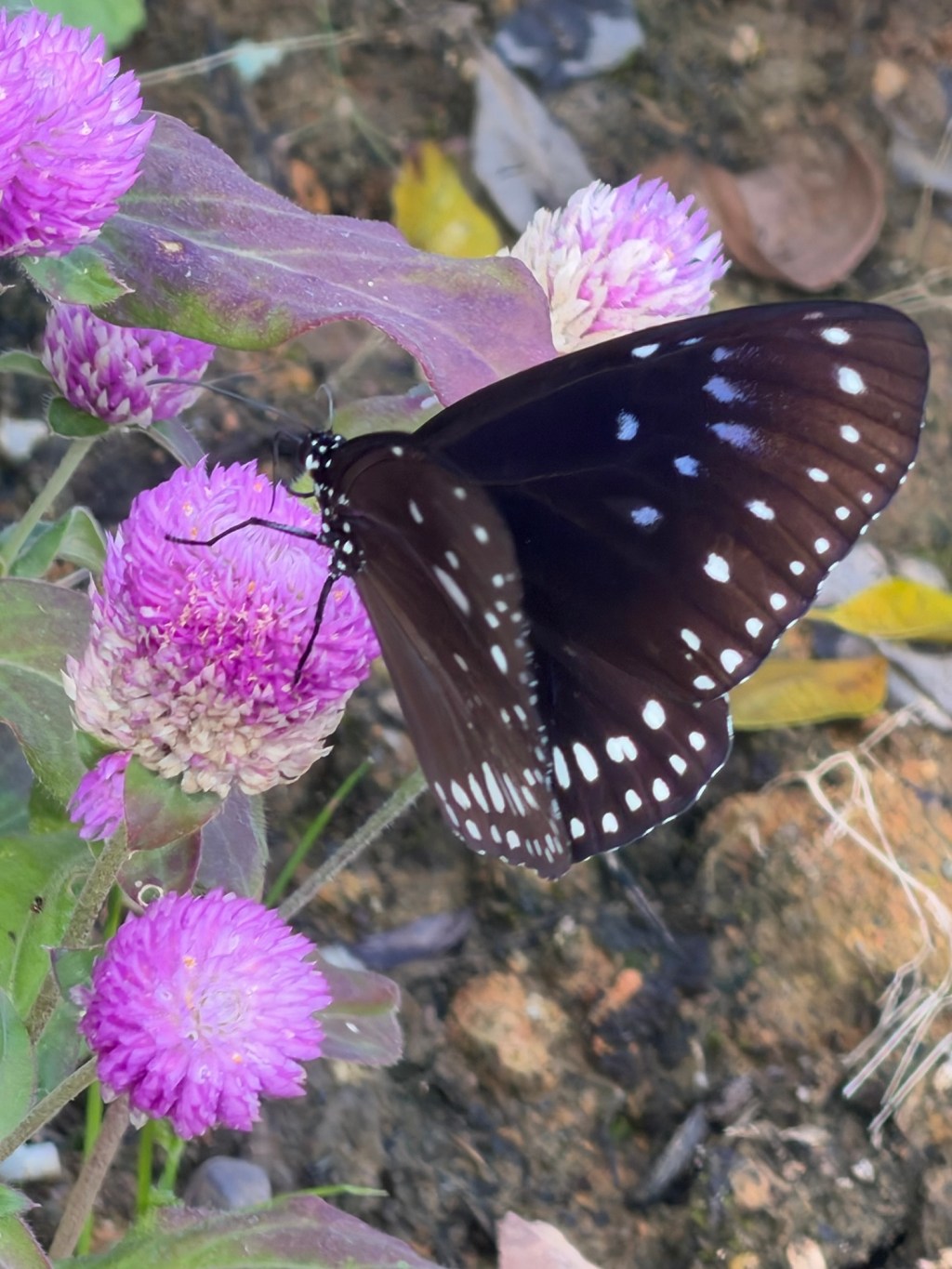
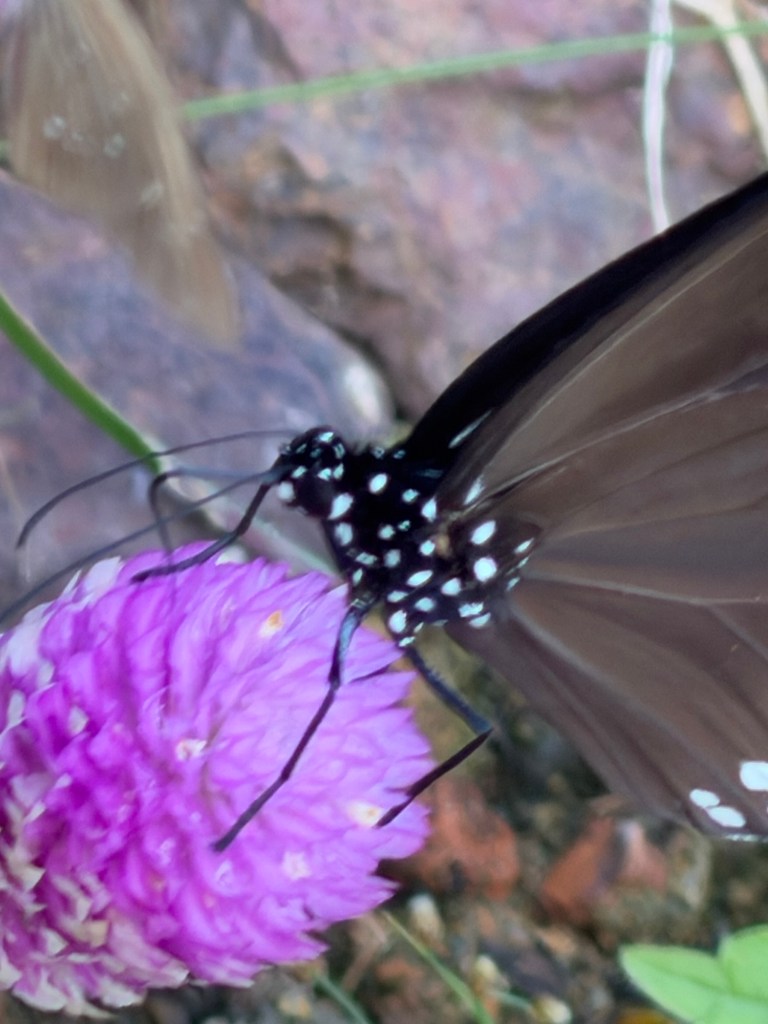
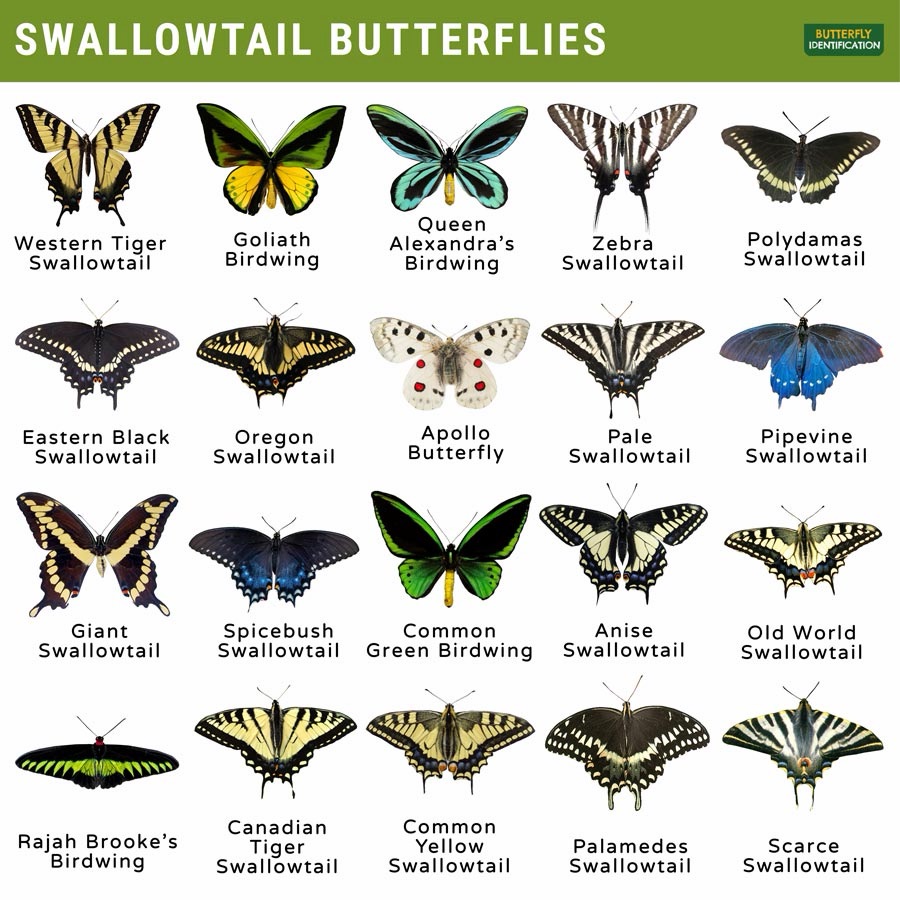
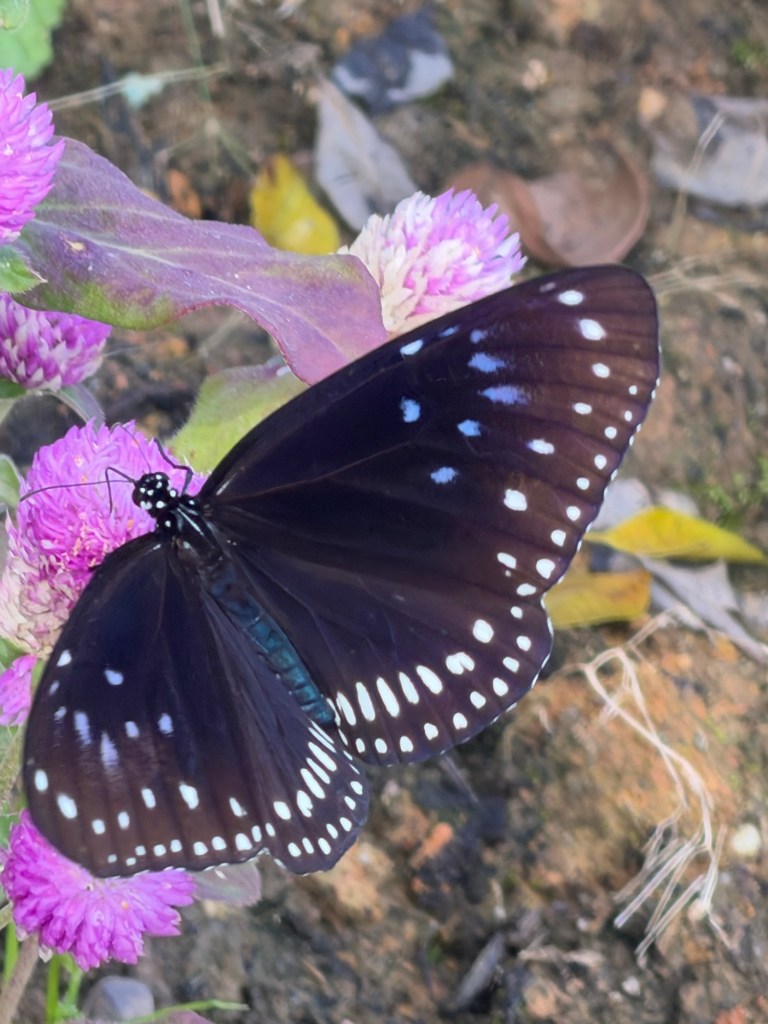
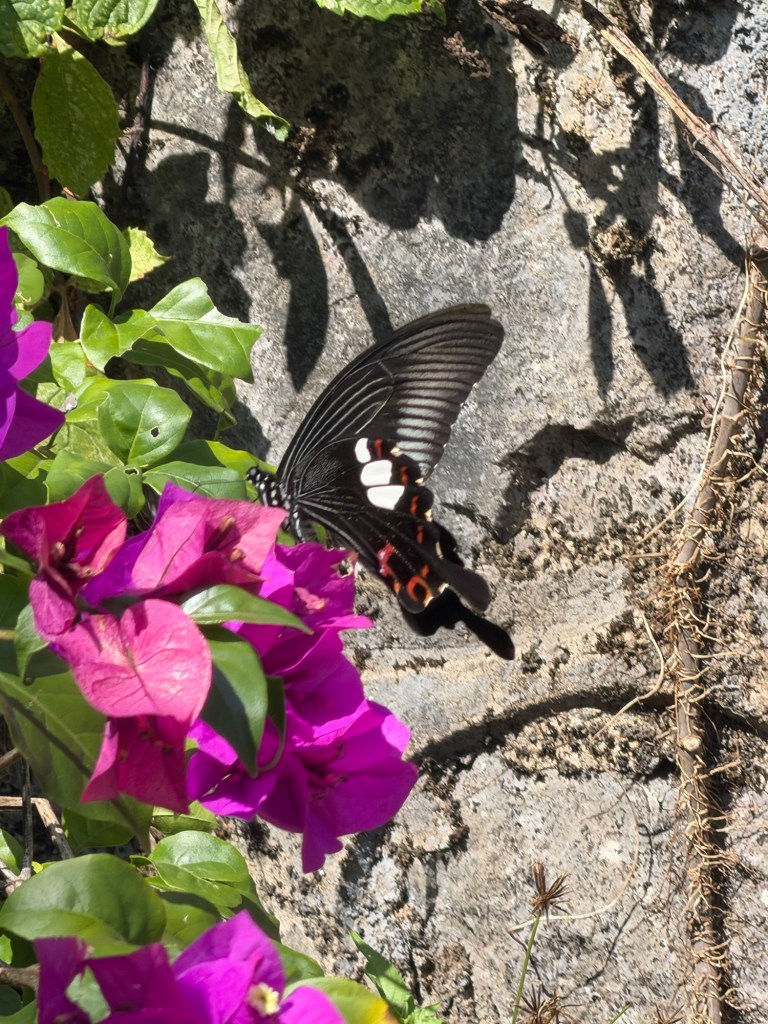
At the summit there was an abundance of beautiful butterflies; namely, Spicebush Swallowtail butterflies.
So far as Everest is concerned, more total deaths happen during the ascent or preparation stage but the descent from the summit is statistically the most dangerous single phase of the climb.
We reached the base of the mountain safely enough.
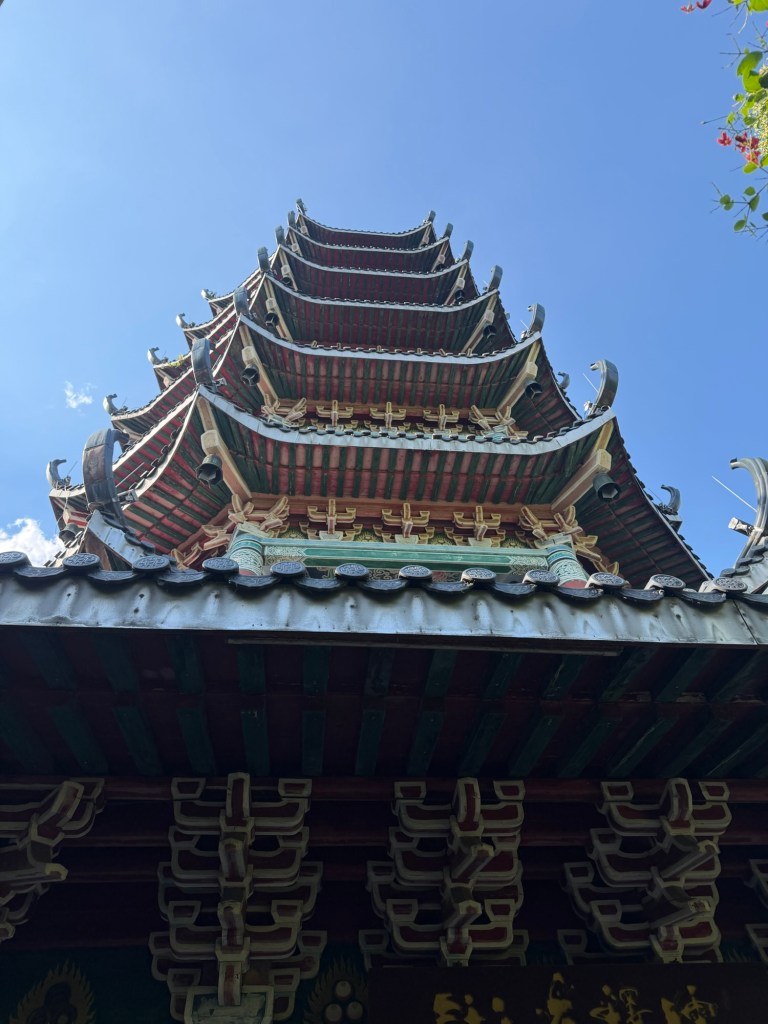
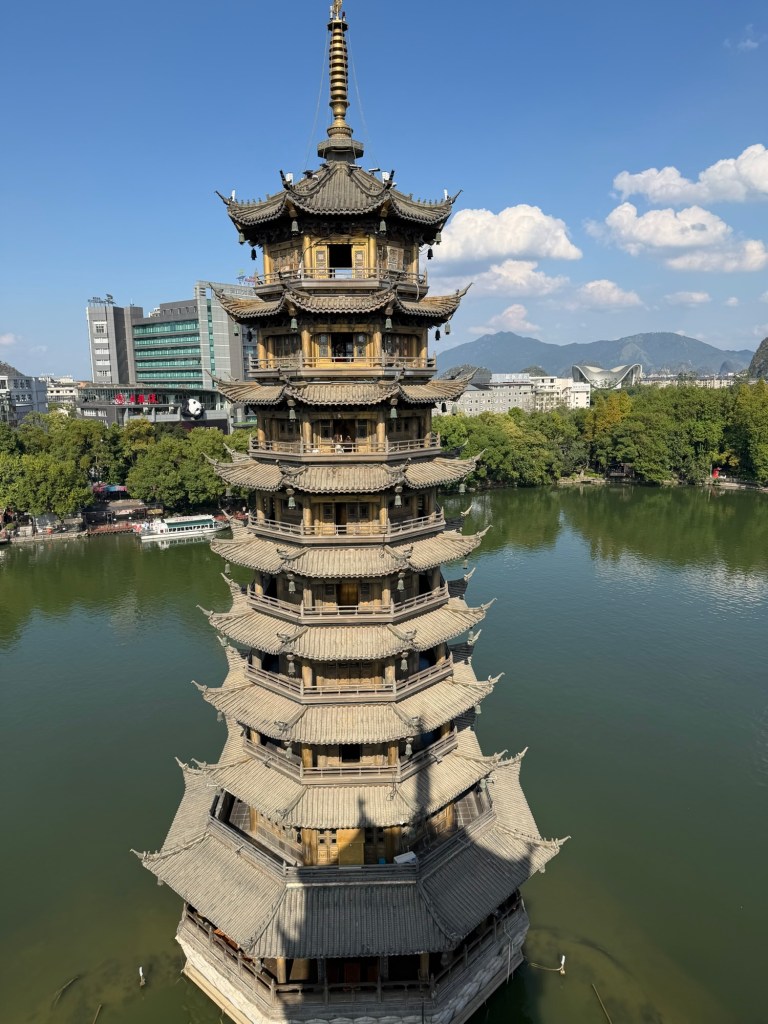
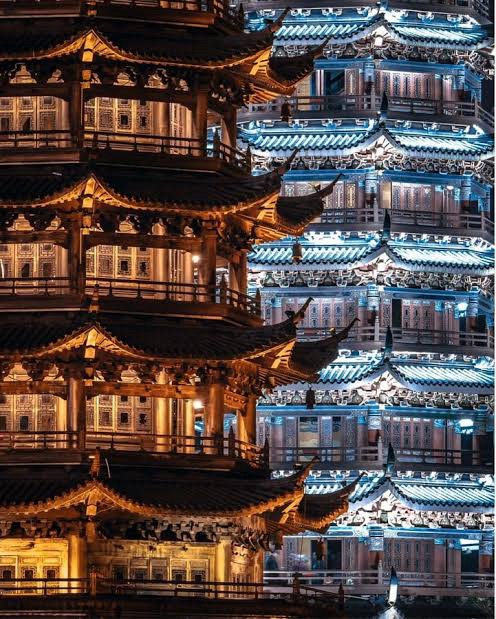
Next stop, Guilin’s Riyue Shuangta Cultural Park, more accurately, the Sun and Moon pagodas (日月双双塔); twin pagodas originally built in the city moat of Guilin during the Tang dynasty.
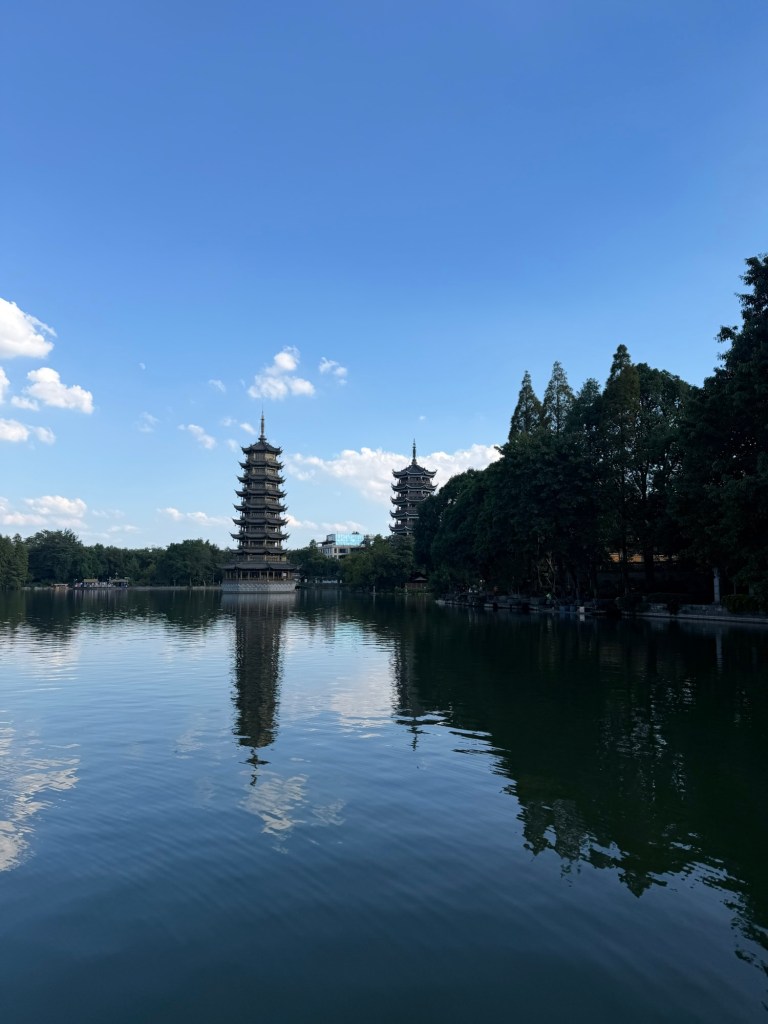
The pagodas were reconstructed in 2001 using historical records, as the centrepiece of the park; a park themed around the unity of Buddhism, Confucianism, and Taoism. The Moon Pagoda was built on an island in Shan Lake while the Sun Pagoda was built out in the lake.
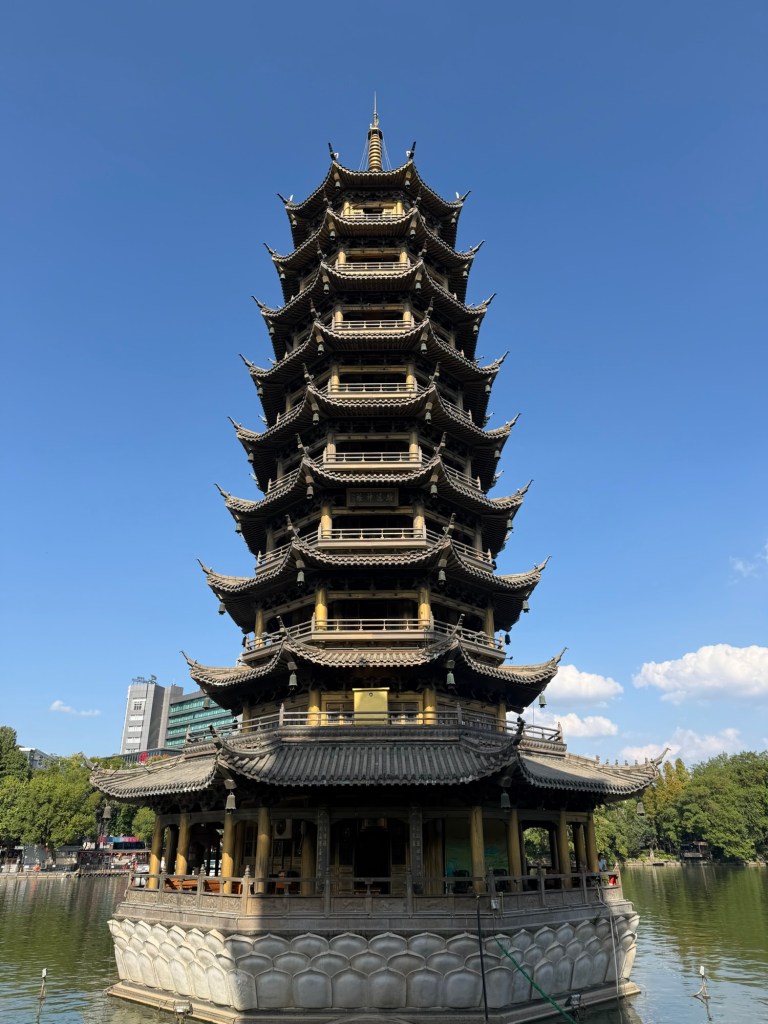
With a height of 41 metres and 9 stories, the Sun Pagoda is the highest bronze pagoda and the highest tower on the water in the world. Every part of the pagoda is completely built in bronze.
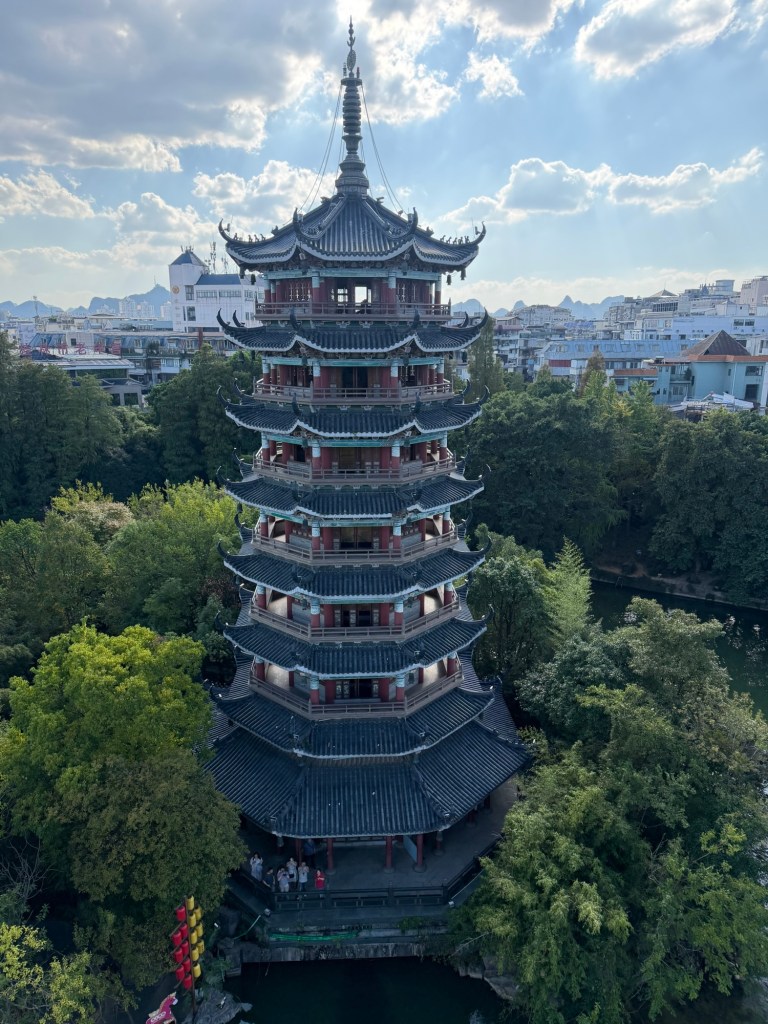
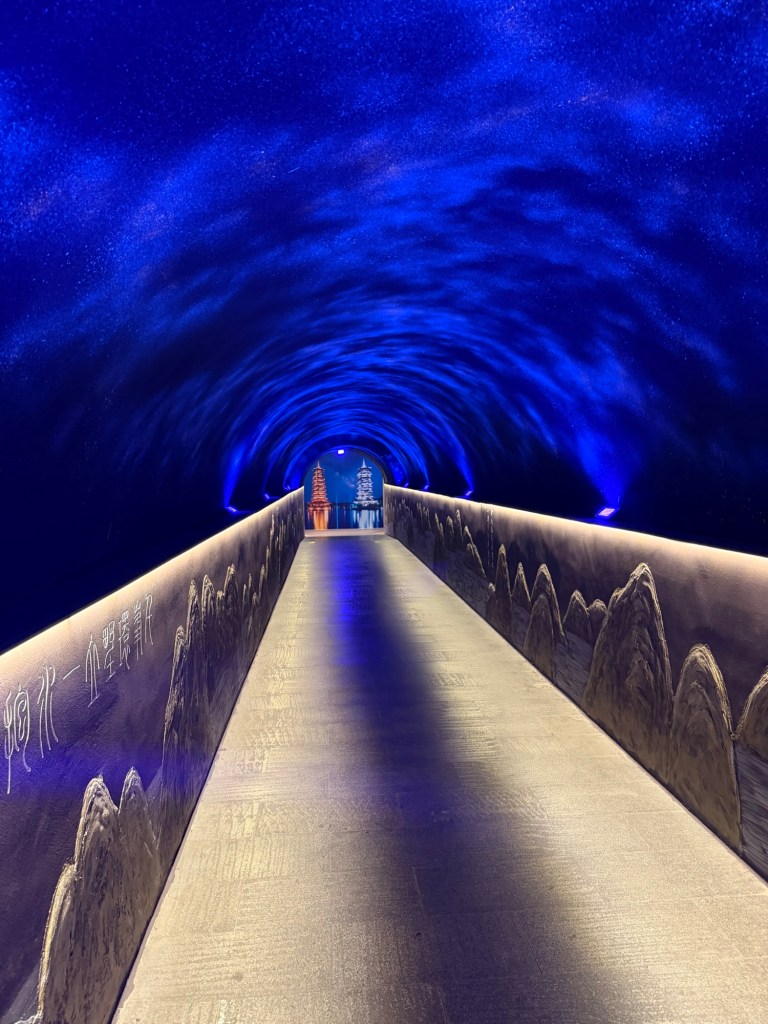
Access to the Sun Pagoda is through an underground tunnel…
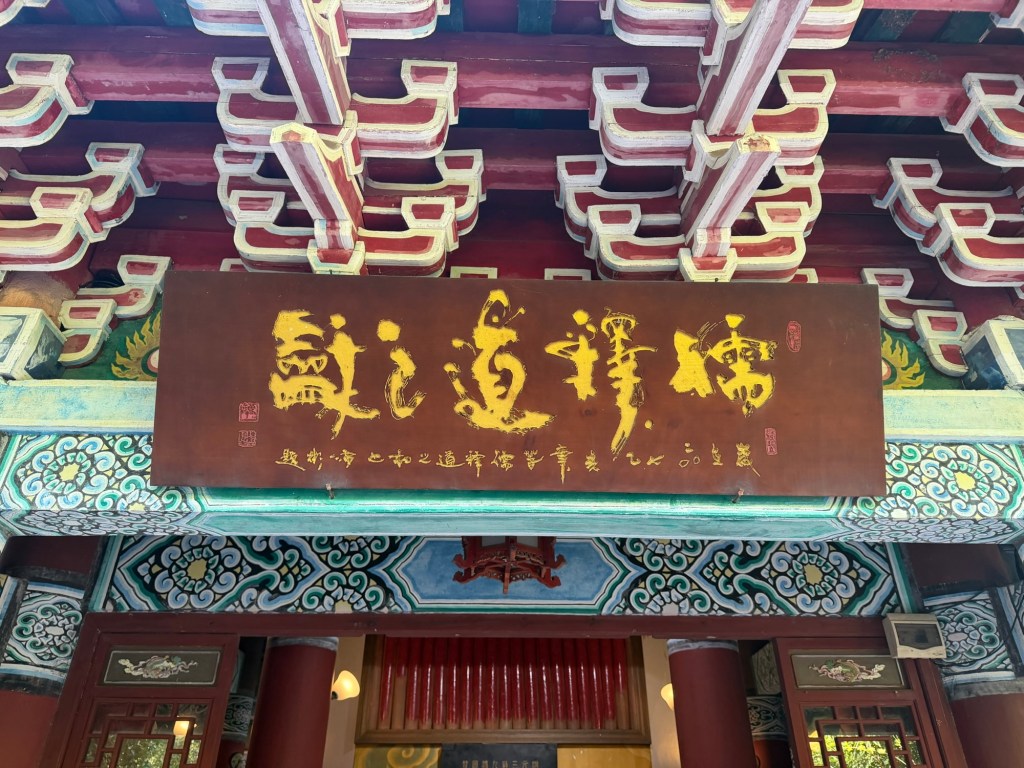
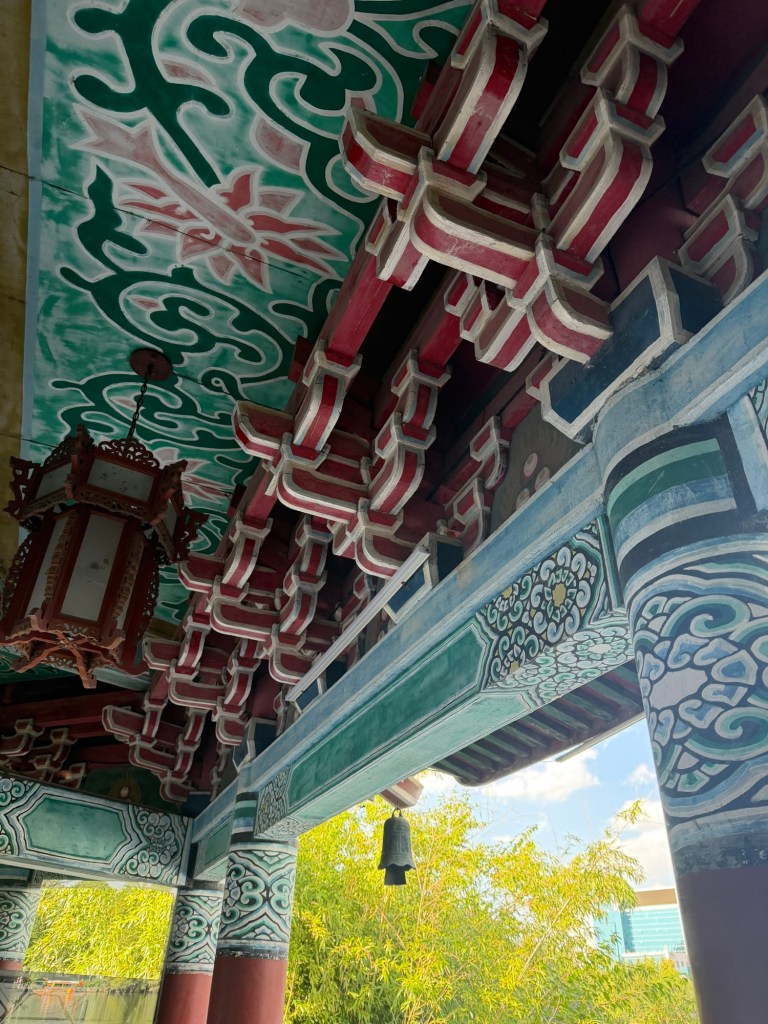
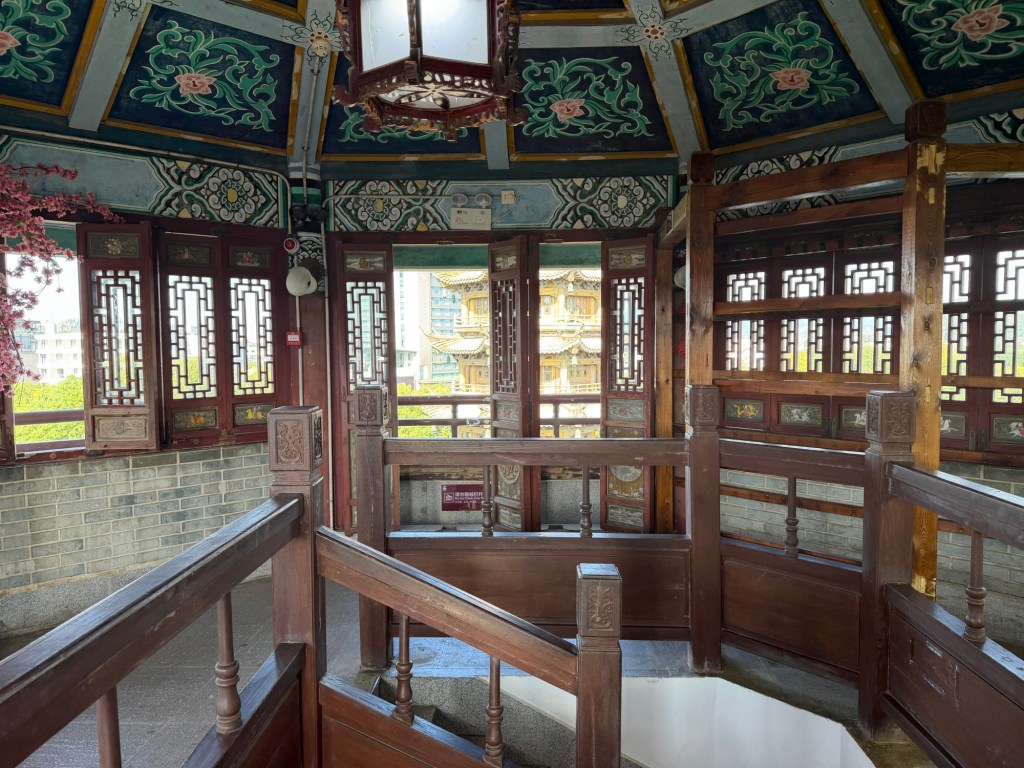
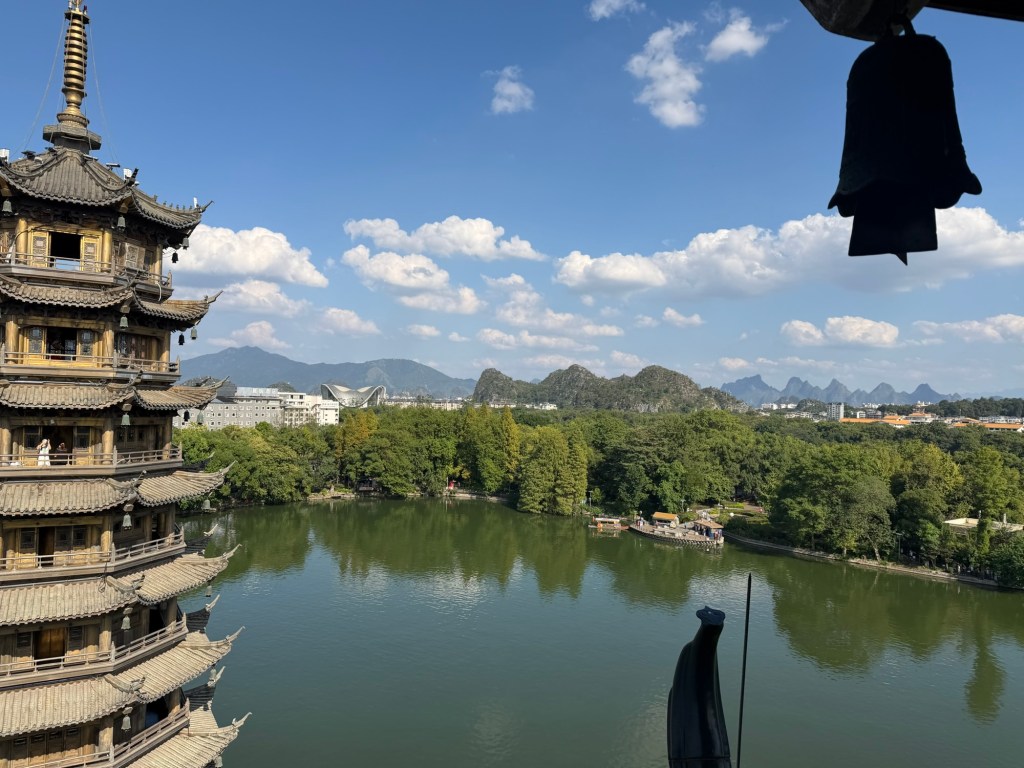
The term ‘pagoda’ comes from the Sinhalese word ‘dagoba’, which means relic chamber. The pagoda evolved from the stupas of ancient Nepal and this name is a reflection of the stupa’s purpose as a reliquary – a place to store holy relics.
Pagodas are tiered towers of an odd number of levels (odd numbers are superstitiously positive in Chinese culture), with multiple eaves – eaves being the part of a roof that overhangs the walls of a building.
We would love to have returned at nightfall but time to move on…
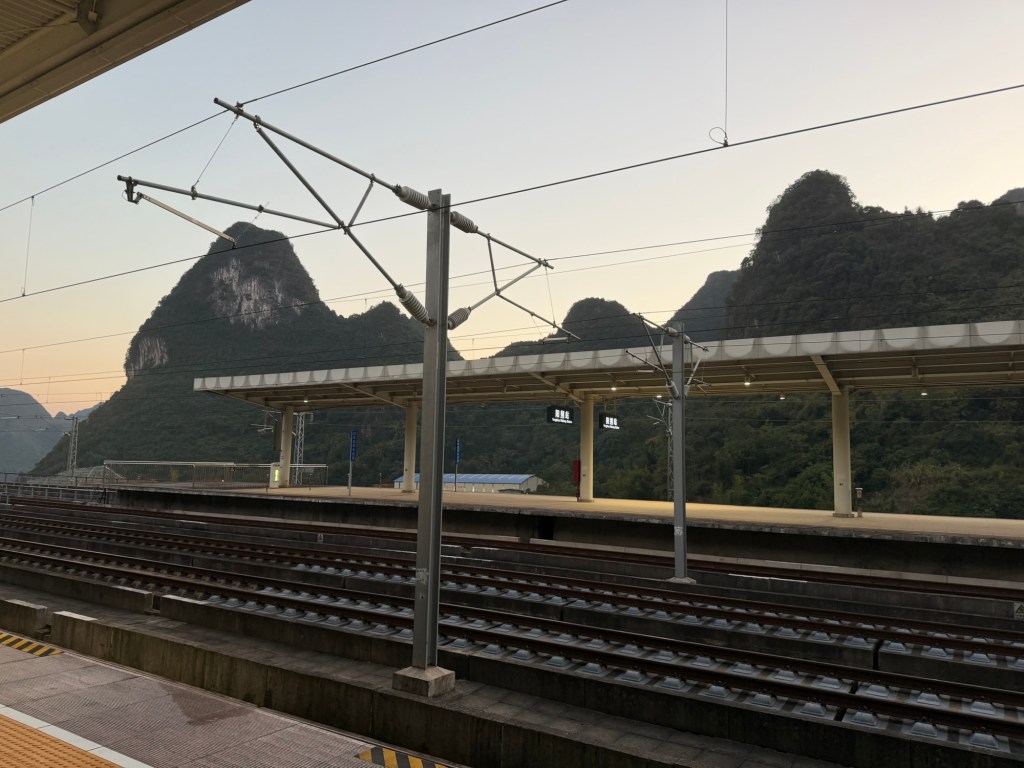
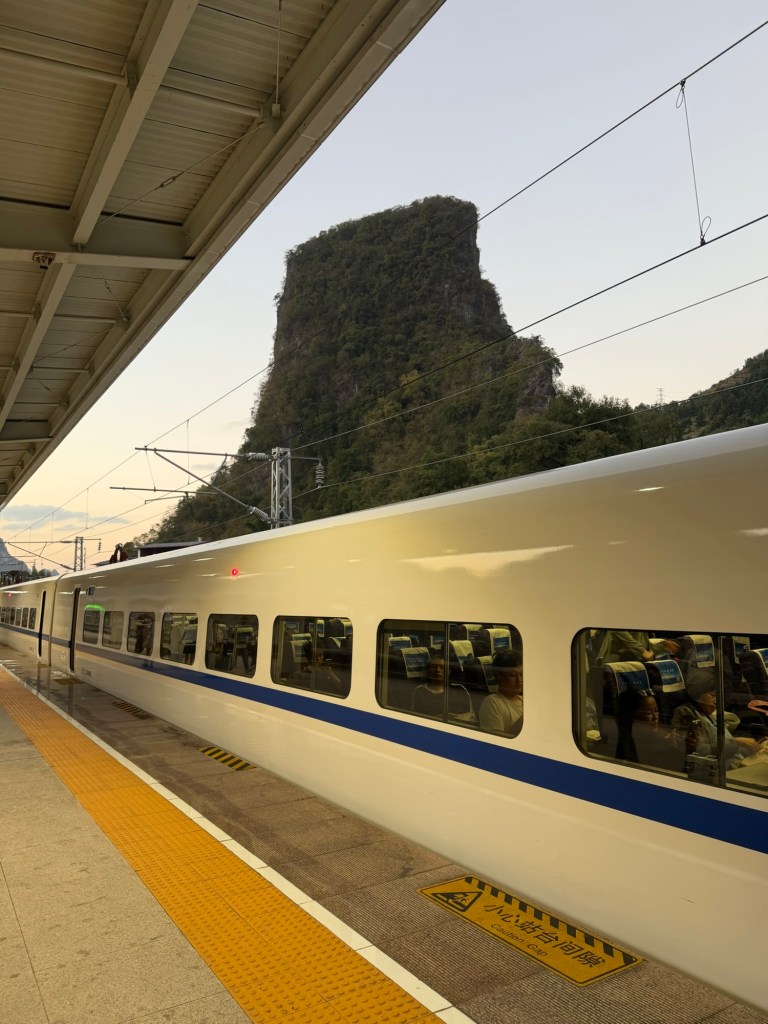
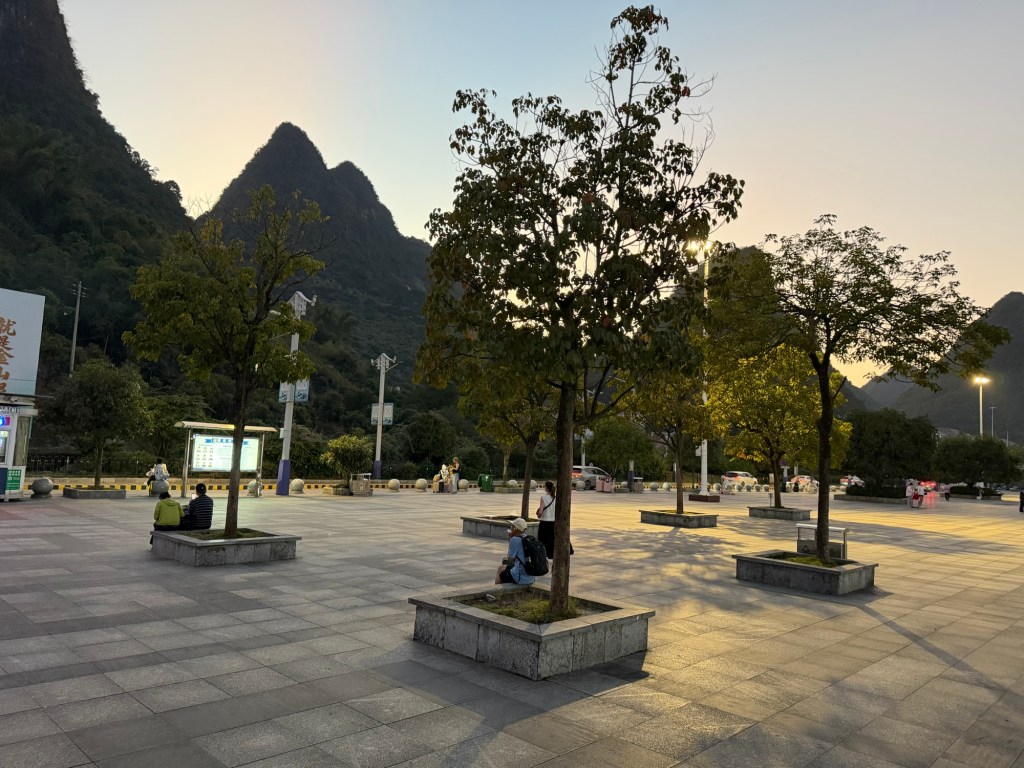
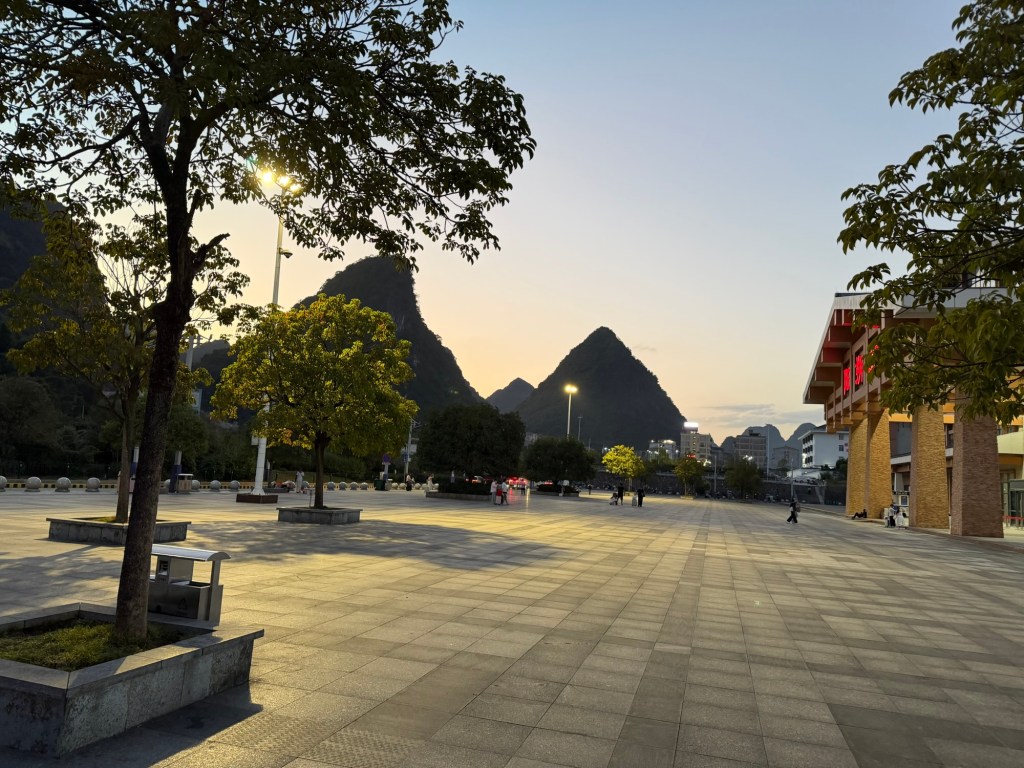
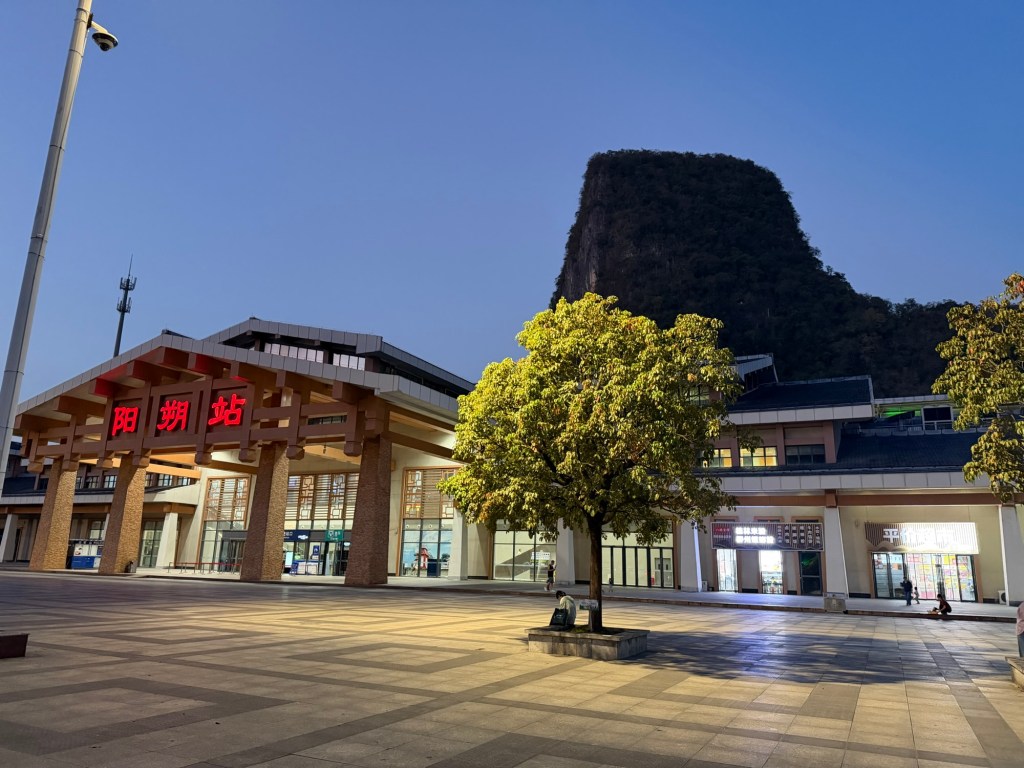
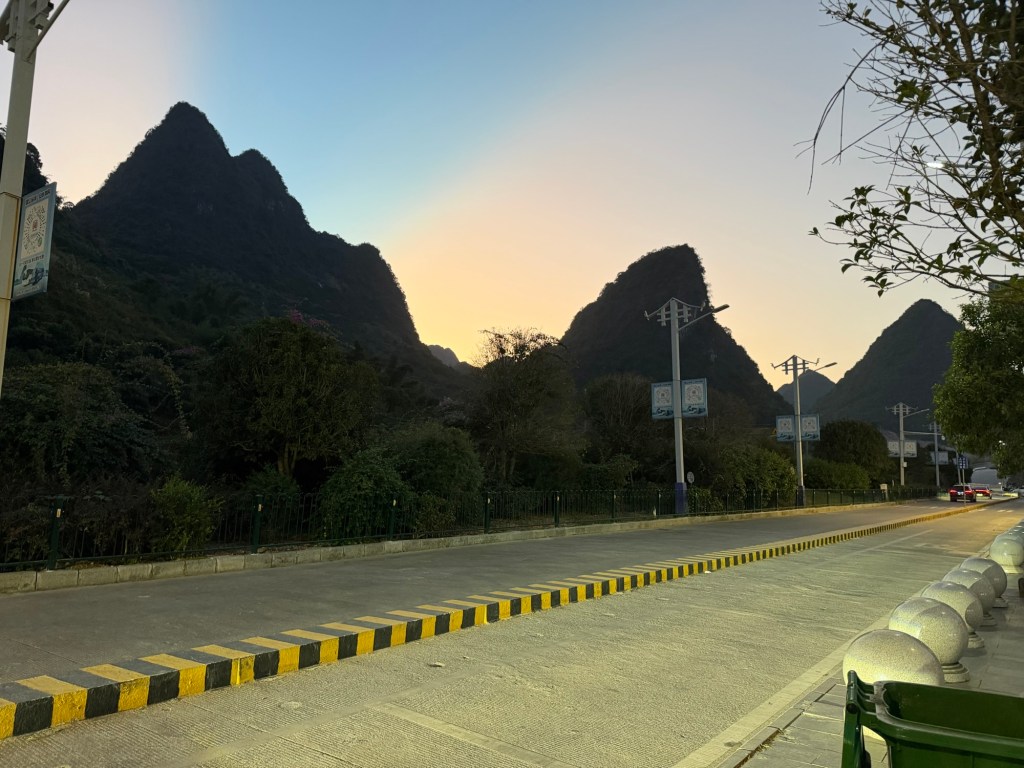
And back to base. How many railway stations in the world can boast this sort of backdrop?
End note: (CENSORED, and sorry to mother!)
We have not yet resorted to Billy Connolly’s line on telling people where to go, despite the queue pushers testing our resolve. Billy has an interesting and hilarious take on the use of a certain phrase; one that is unmistakable all over the world. “It’s such a lovely pair of words,” he says.
Transcription: of Billy’s rant:
F*** off is such a lovely pair of words, and it’s international.
I don’t care where you are. If somebody’s f***ing with your bags at Lhasa Airport in Tibet, and he’s got a shaved head and saffron clothes on, and you say, Hey! F*** off! he knows exactly what you mean. Exactly! He will f*** off! Off he will f***!
F*** off doesn’t mean go away. F*** off means f*** off! And everyone can feel what it means.
Well, it would seem that we have started and finished with the use of foul language. We sincerely hope that nobody is left offended.
Previous China daily blogs here


Leave a Reply