Jianfu Temple
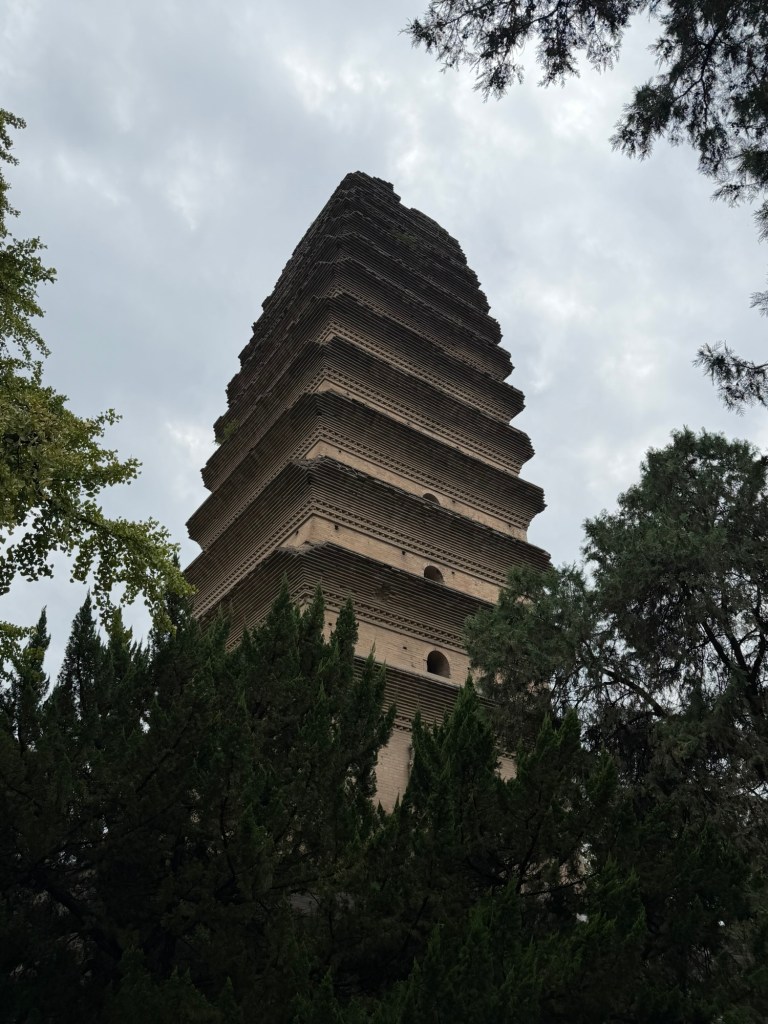
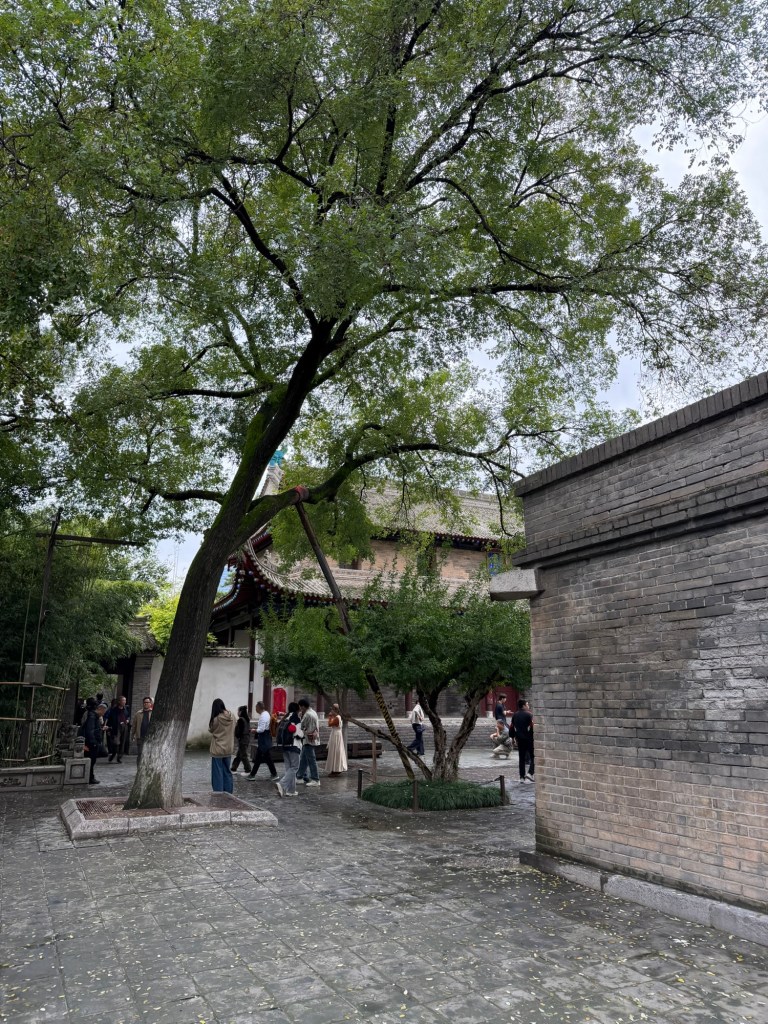
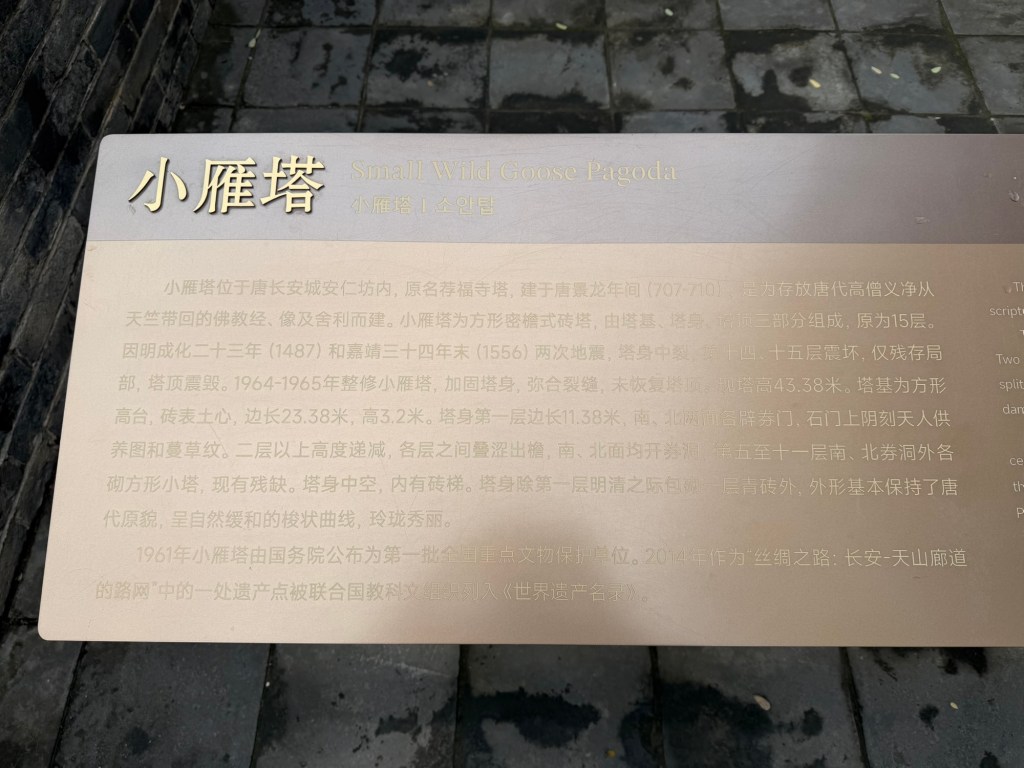
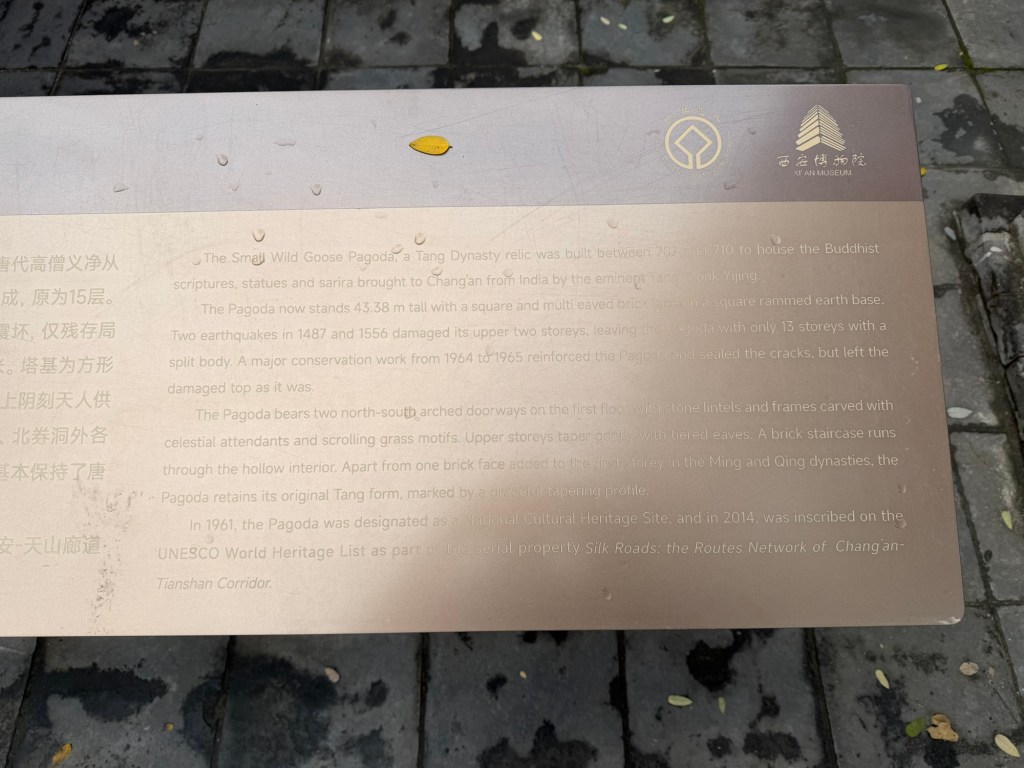
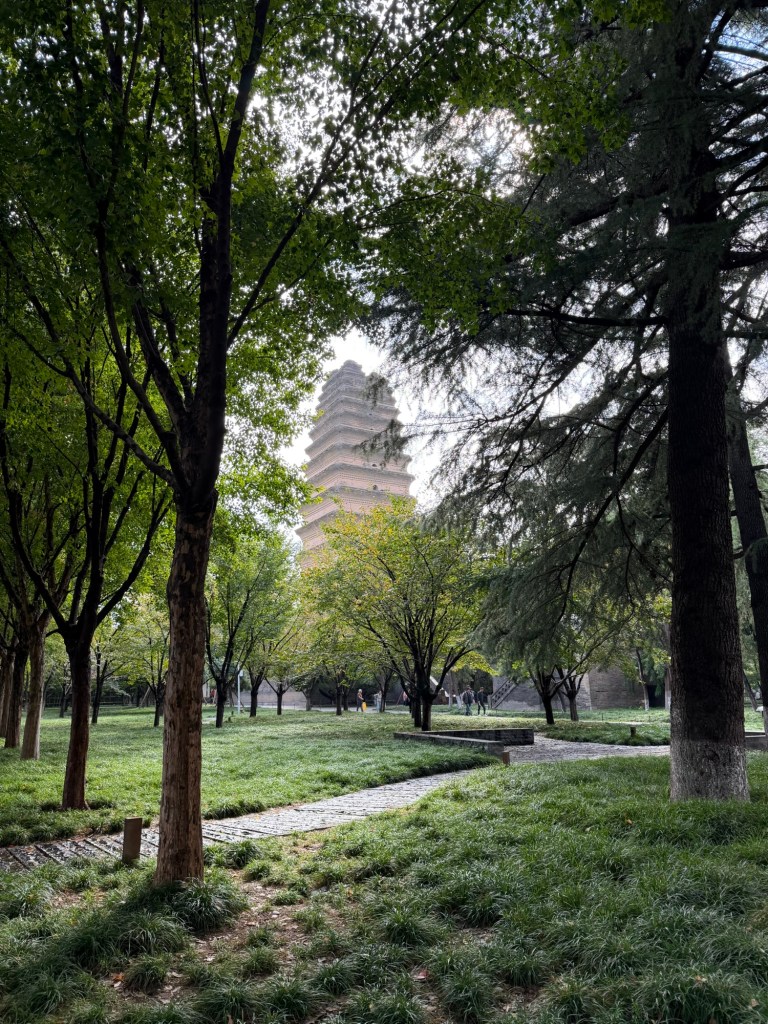
The Jianfu Temple (荐福寺) is a Chinese Buddhist temple situated outside the city walls, close by the South Gate. The temple includes the Little Goose Pagoda (小雁塔) built 707-9 during the Tang Dynasty. Pilgrims brought sacred Buddhist texts to the temple and pagoda from India, as the temple was one of the main centres in Chang’an for translating such texts.
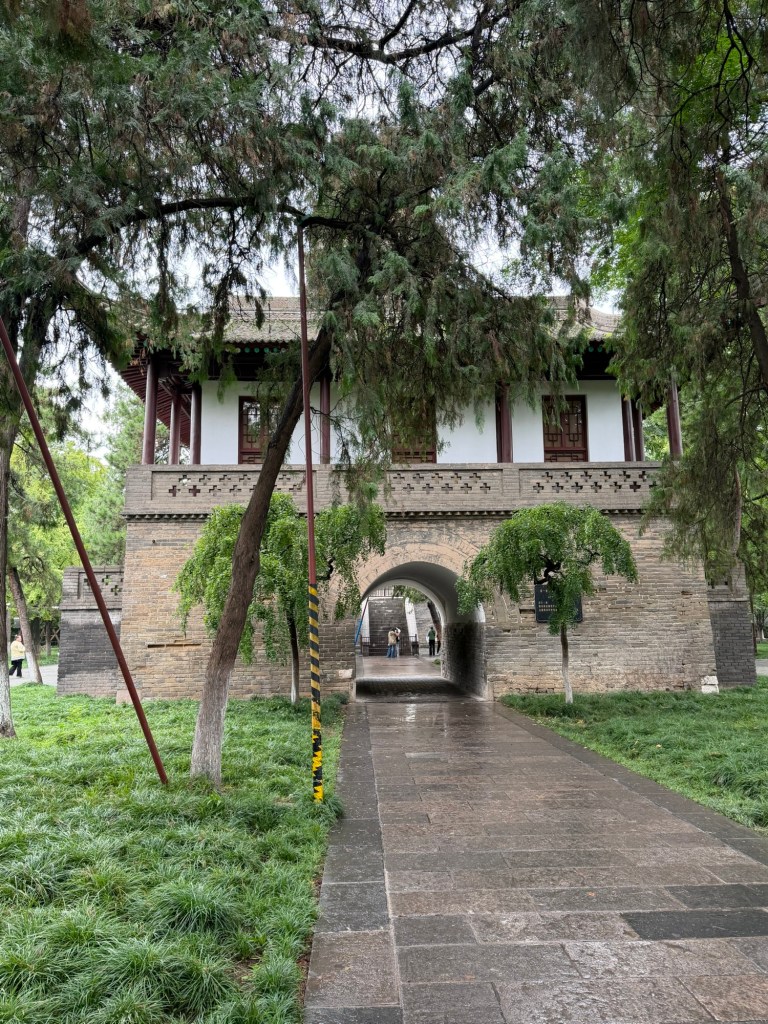
The temple was in a beautiful, peaceful setting, despite, again, being in the heart of the city itself.
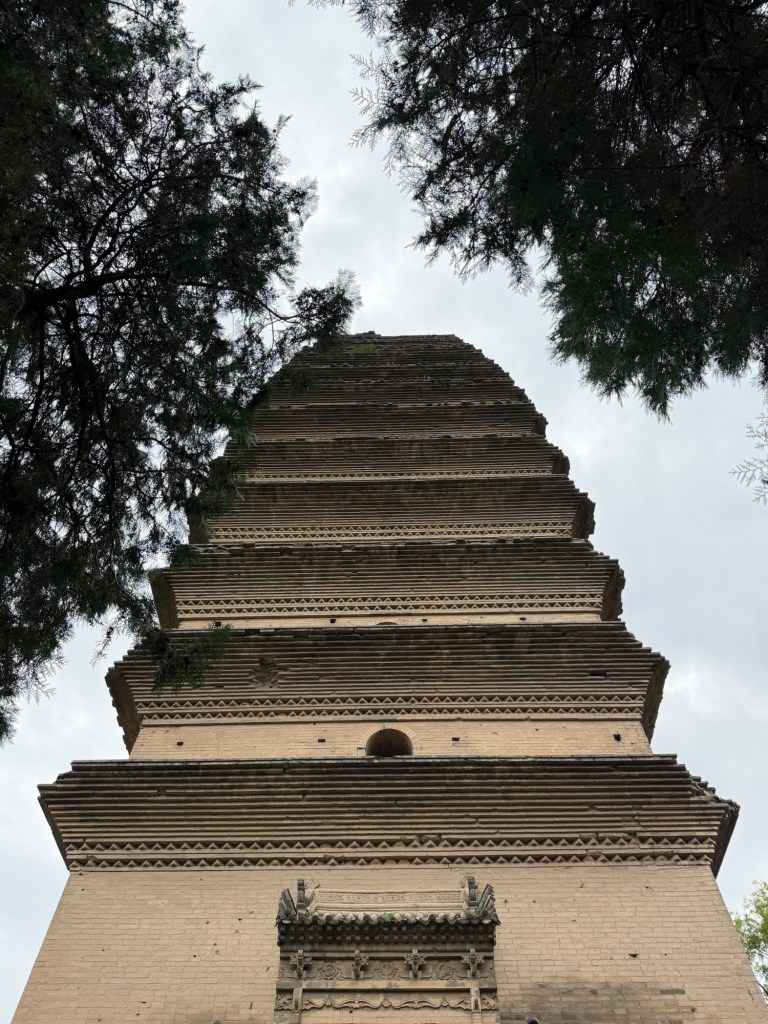
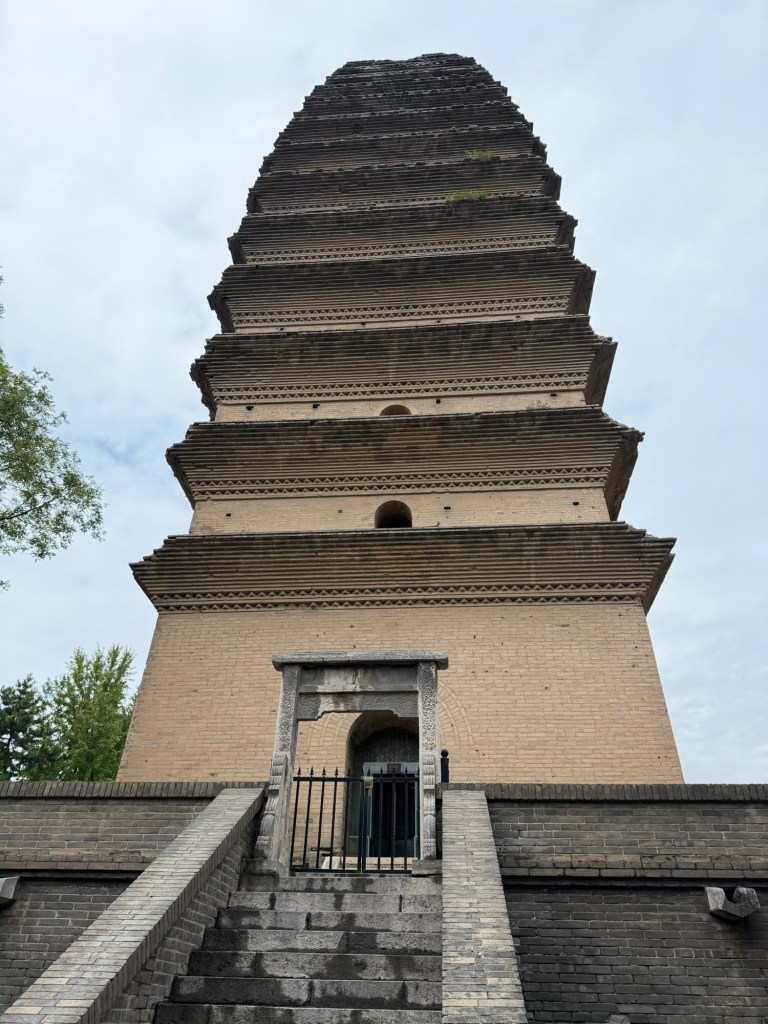
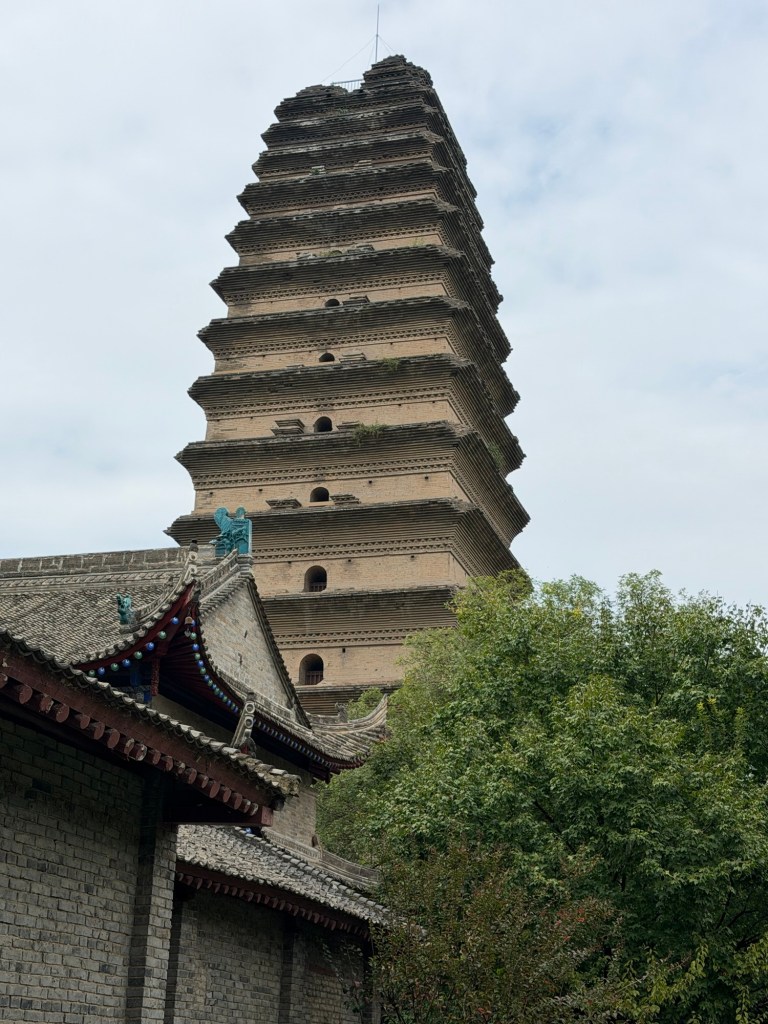
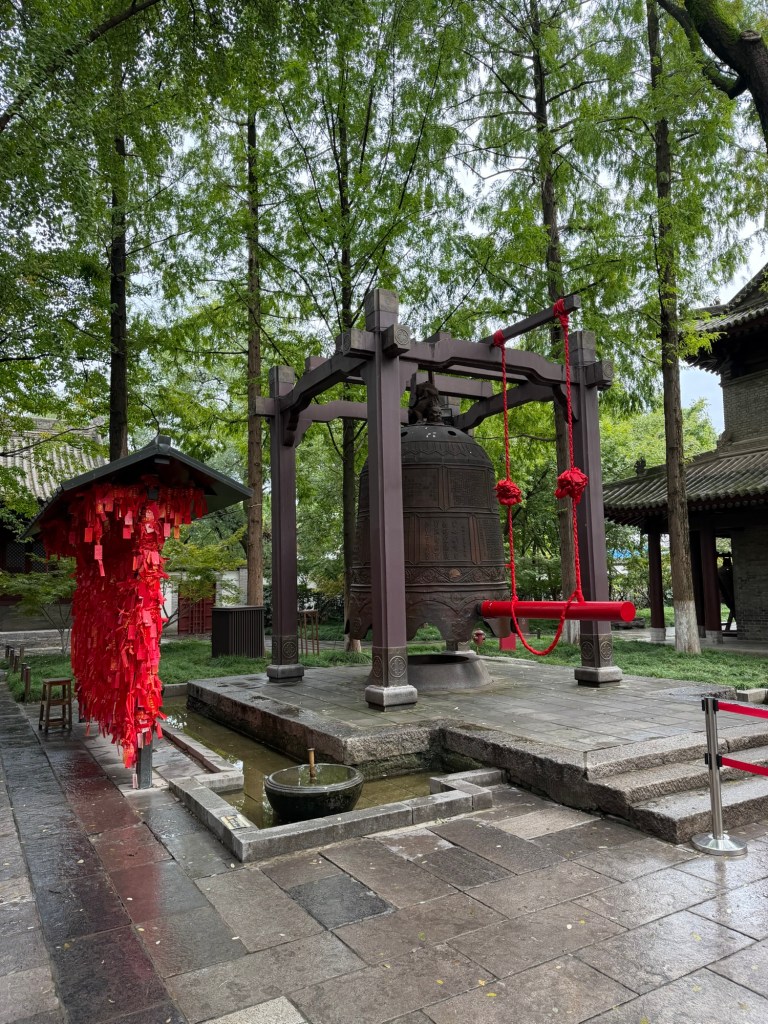
We both rang the bell 9 times, and we look forward to the blessing of lasting good fortune, longevity, and good health!
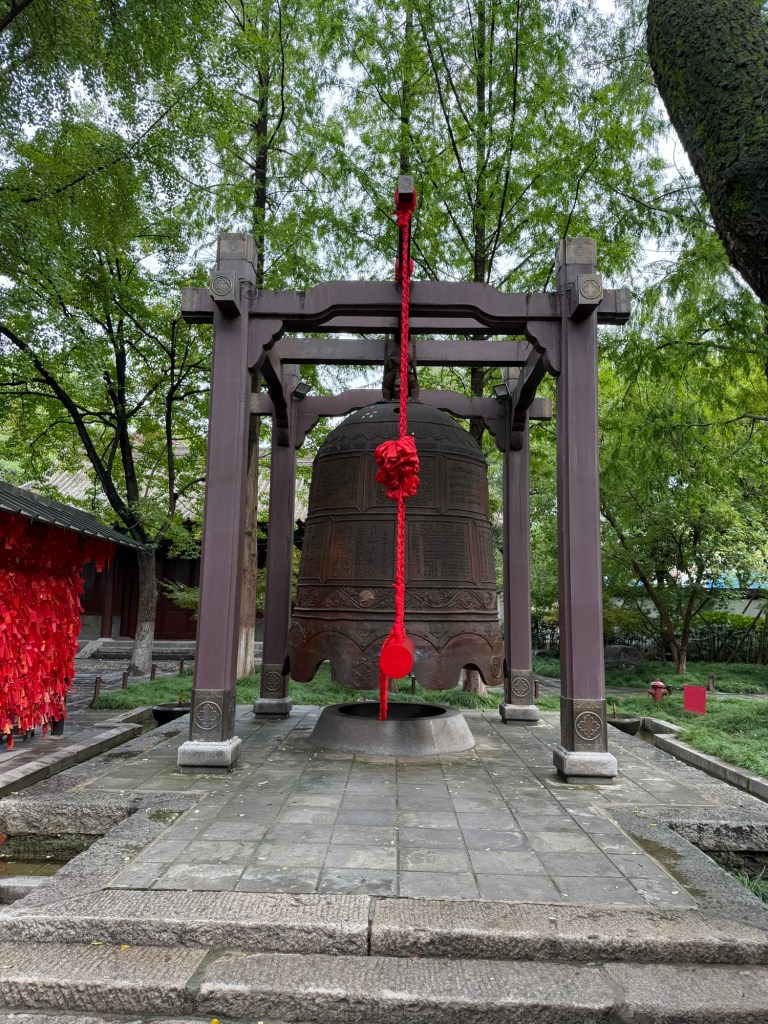
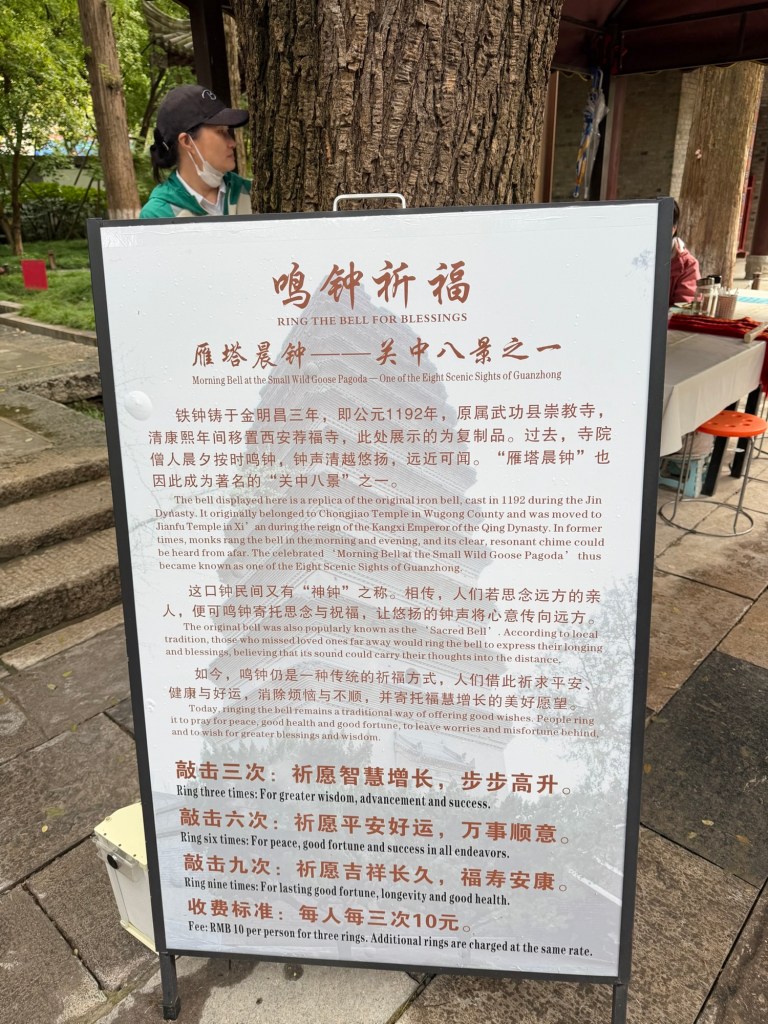
The bringing of scared texts from India is central to the famed Chinese tale of The Monkey King. Buddhist monk Xuan Zang’s epic 17-year trip to India, via Central Asia and Afghanistan, in search of Buddhist enlightenment was fictionalised in Journey to the West (西游记). The Ming dynasty novel by the poet Wu Cheng’en gives the monk Xuan three disciples to protect him along the way, the best loved of which is the Monkey King.
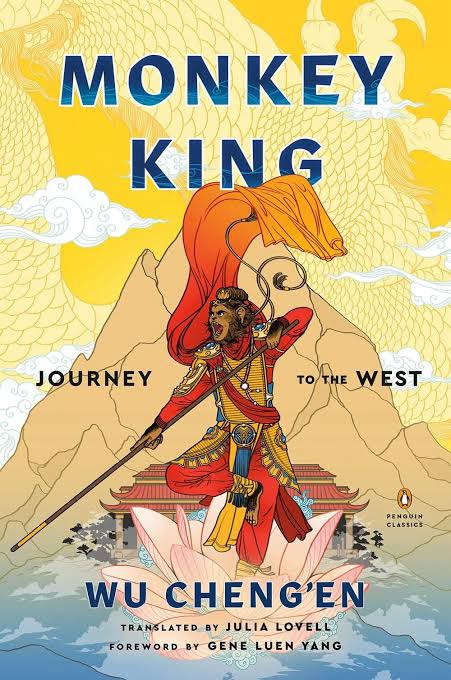
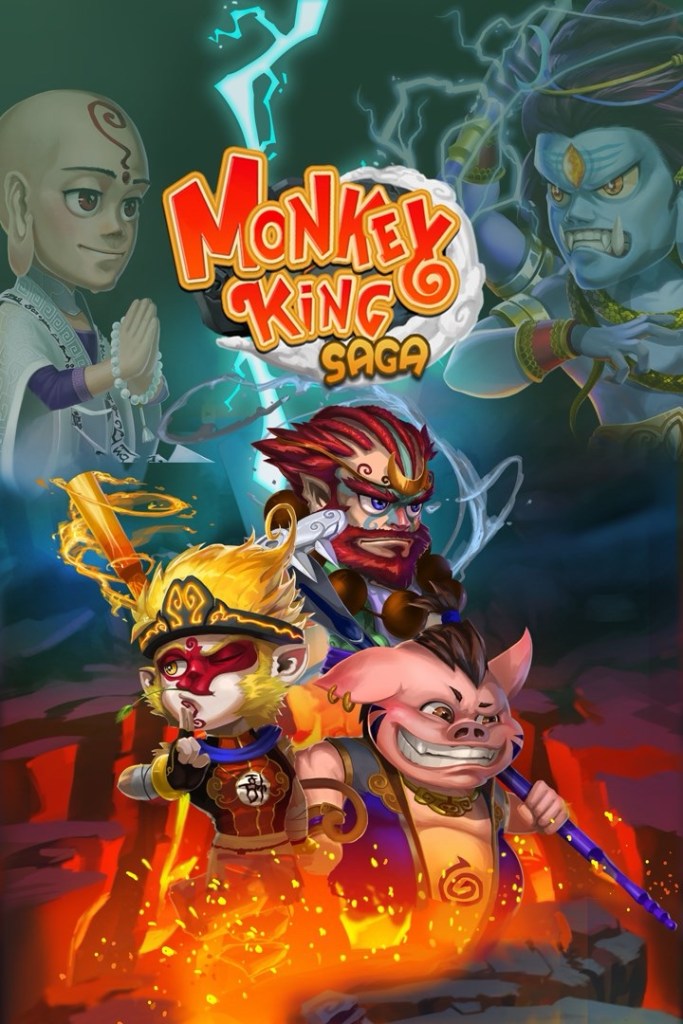
As is the case for Yan Guifei and the Terracotta Warrior super-hero (see yesterday) the novel has inspired many media adaptations, including the cult ’70s t.v. Series Monkey, computer games, and movies.
The Chinese Communist Party (CCP) views foreign-influenced religions (Islam and Christianity, in particular) as potential inroads for “Western values” or extremist ideologies.
Under the current leader, President Xi Jinping, the state enforces religious Sinicization, which requires religious groups to adapt their doctrines, architecture, and practices to align with traditional Chinese culture and socialist society.
We were interested to see what this looked and felt like in modern-day Xi’an.
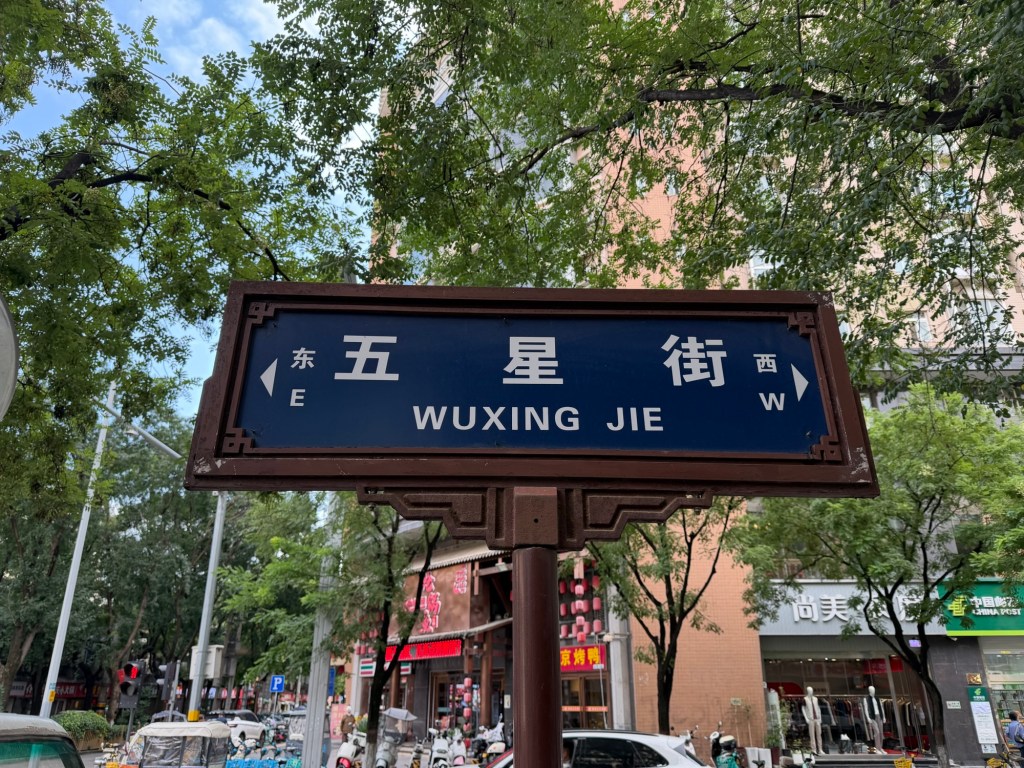
St. Francis Cathedral, Wuxing Jie
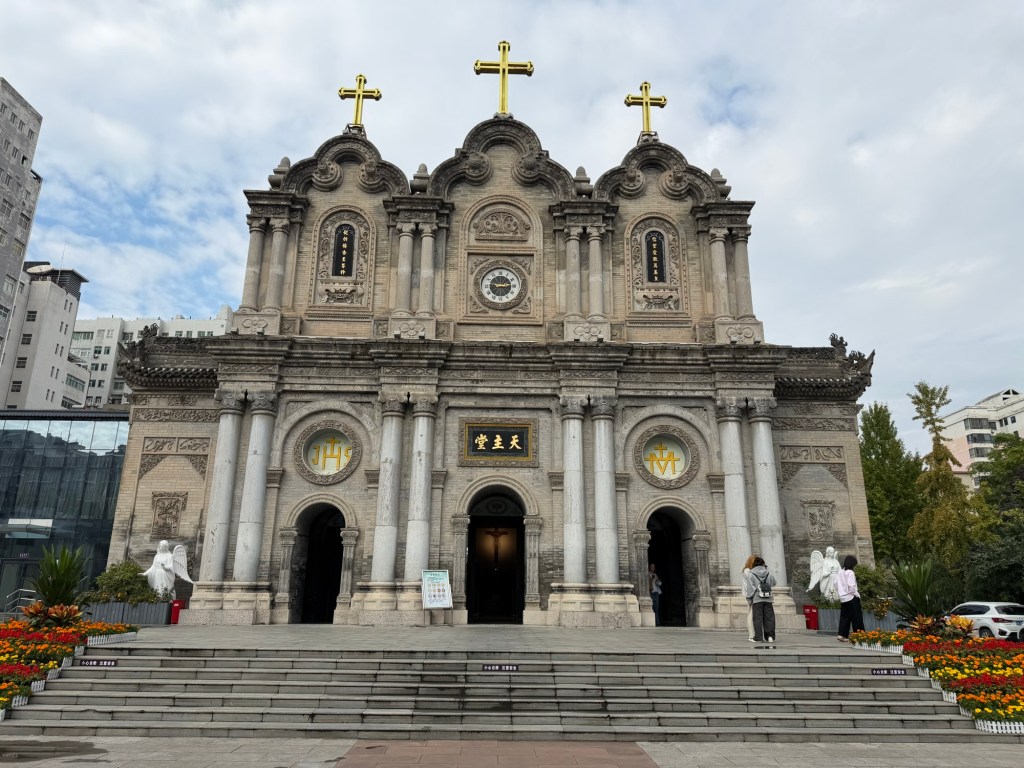
Xi’an, being a key city on the Silk Road, saw the arrival of Christianity in the 7th century through Nestorian missionaries. In the 13th century, Catholicism re-entered the city with Franciscan missionaries during the Yuan Dynasty, establishing a lasting Christian presence.
In the 19th century, Catholic missionary work intensified in Xi’an, and today, the city is home to a thriving Catholic community, with churches like St. Francis Cathedral serving local believers. The Catholic Church in Xi’an has managed to integrate itself within the local culture, maintaining its presence despite various challenges throughout history. During the Cultural Revolution churches were closed down and many of the clergy arrested. The Cathedral was appropriated by the Xi’an Candy Factory. In 1980, China’s State Council returned all confiscated.
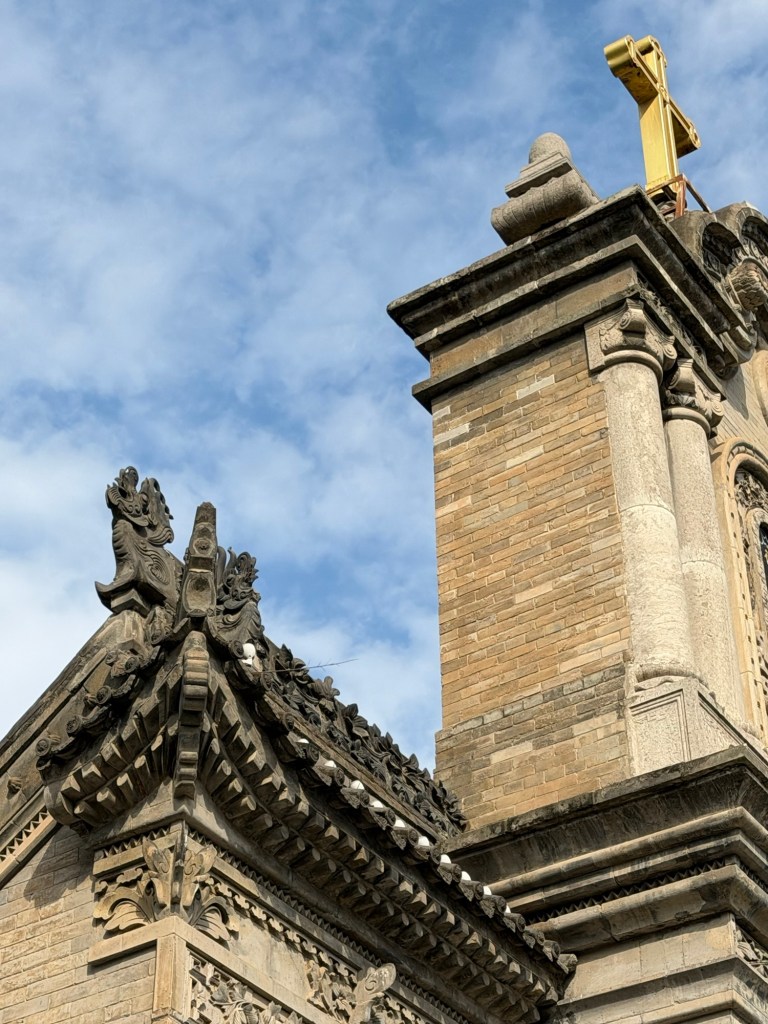
St. Francis Cathedral in Xi’an combines Chinese and western architectural styles. The Chinese government calls the cathedral “Wuxing Street Catholic Church” (五星街天主教堂).
It was not difficult to identify the quite wonderful fusion of Chinese / Asian and that we would see as typical of Christian (Catholic) style.
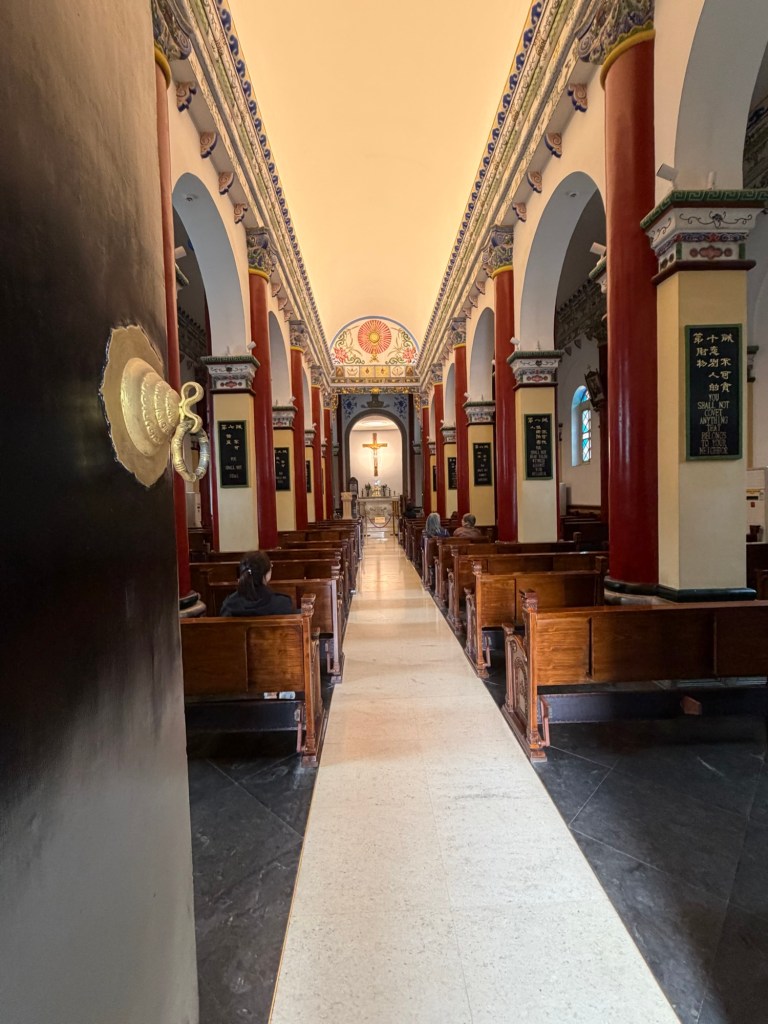
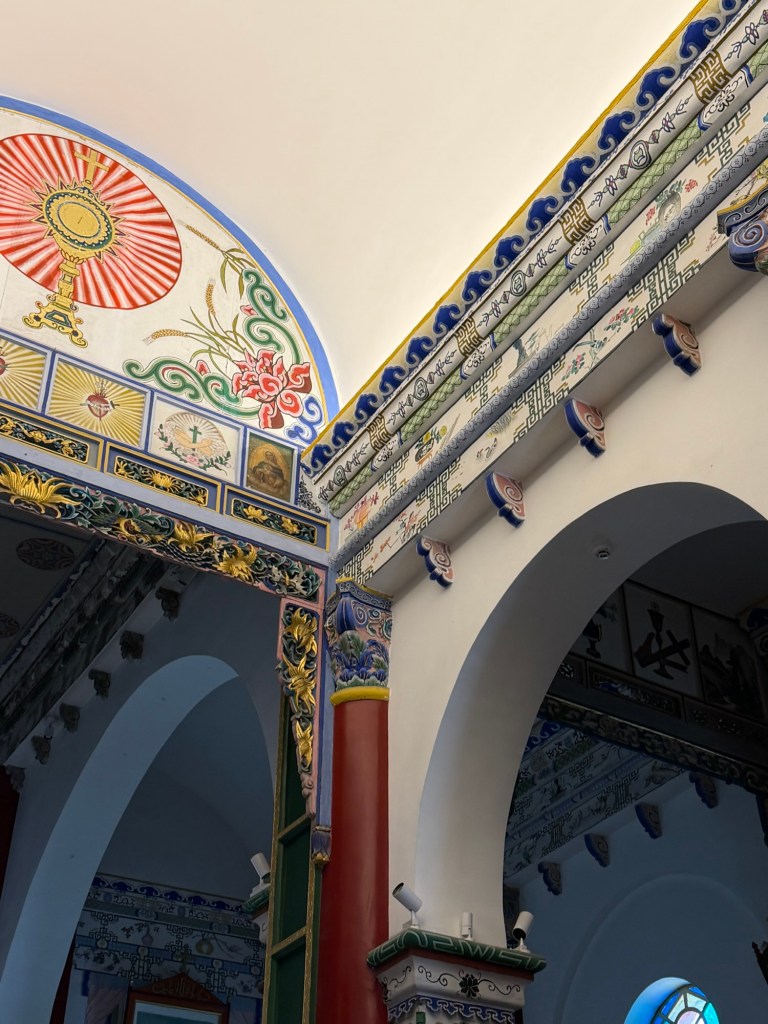
As for the inside, St. Francis Cathedral, Xi’an, is simply stunning…
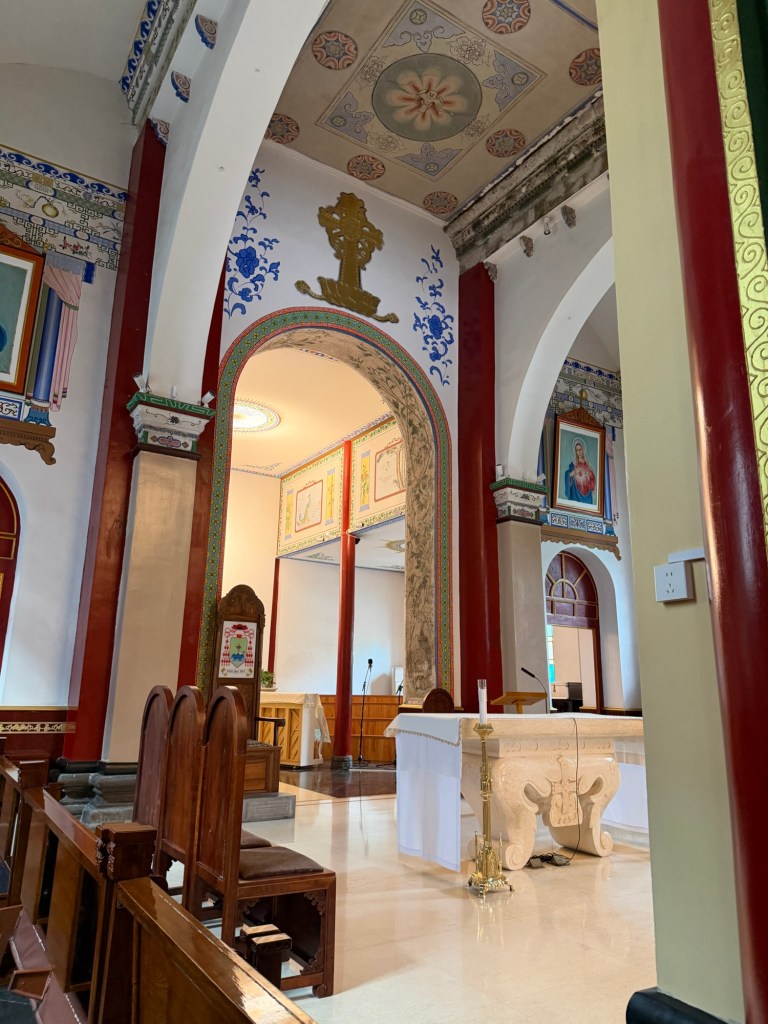
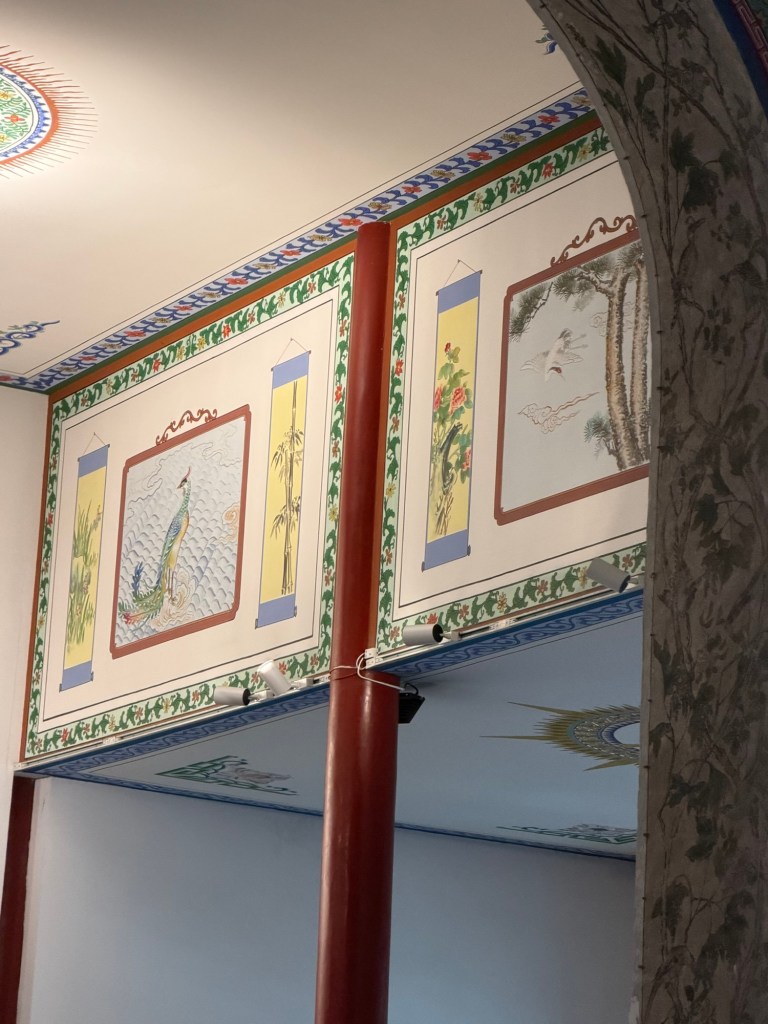
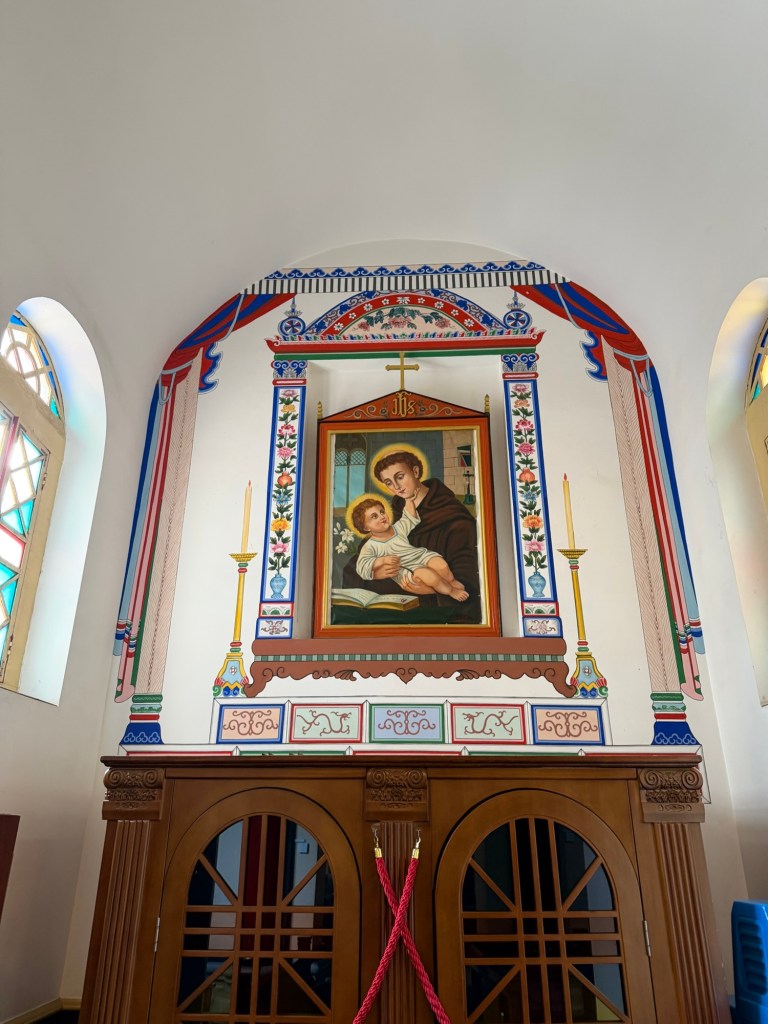
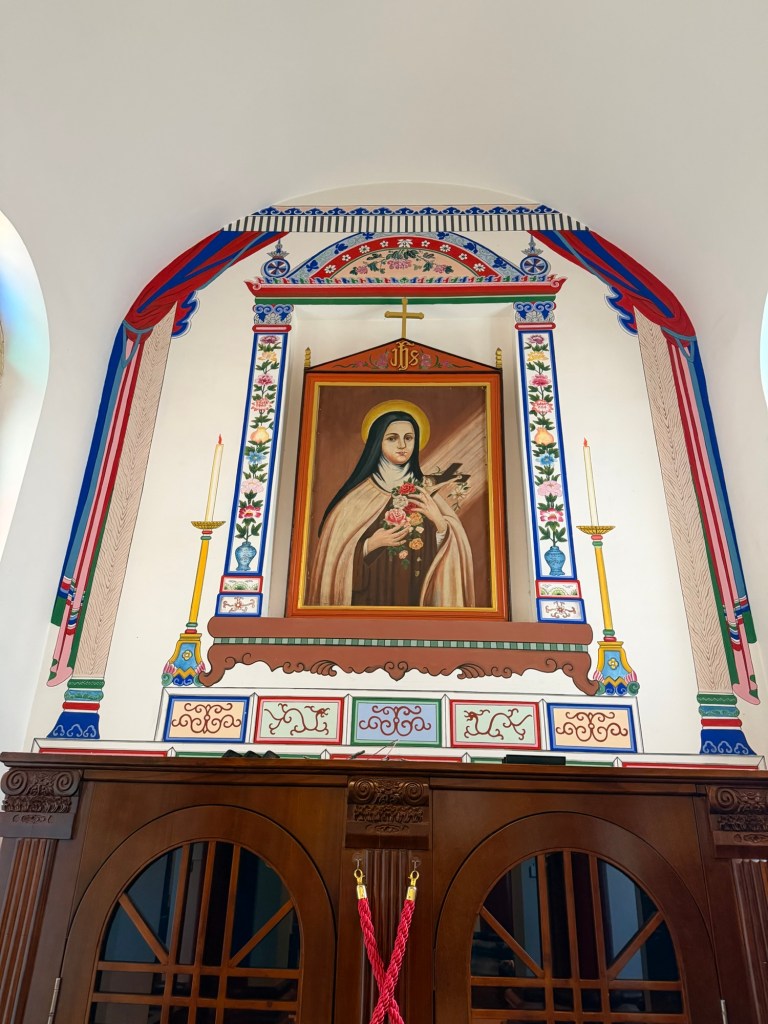
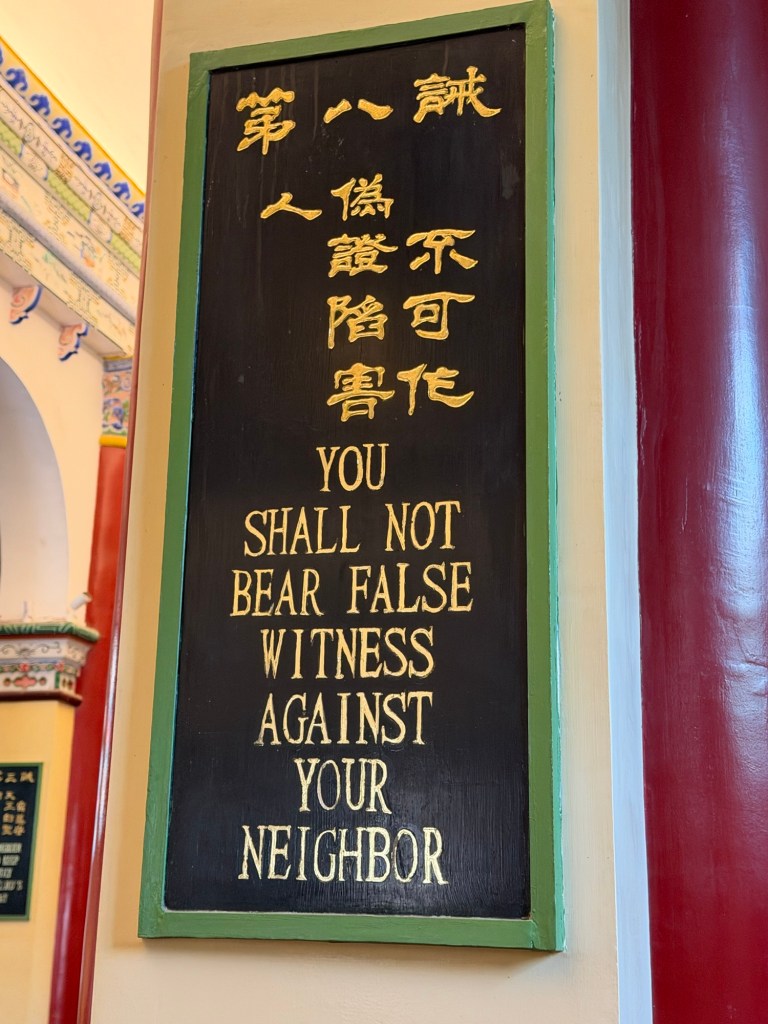
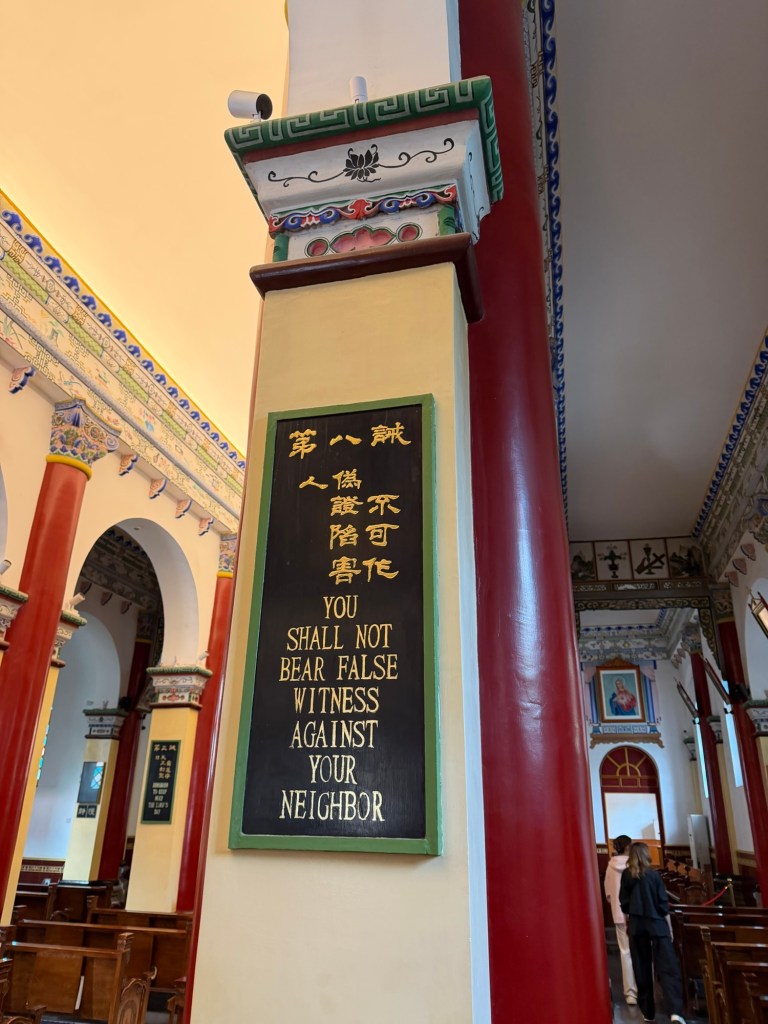
A reminder of the essential tenets we were both taught as children…
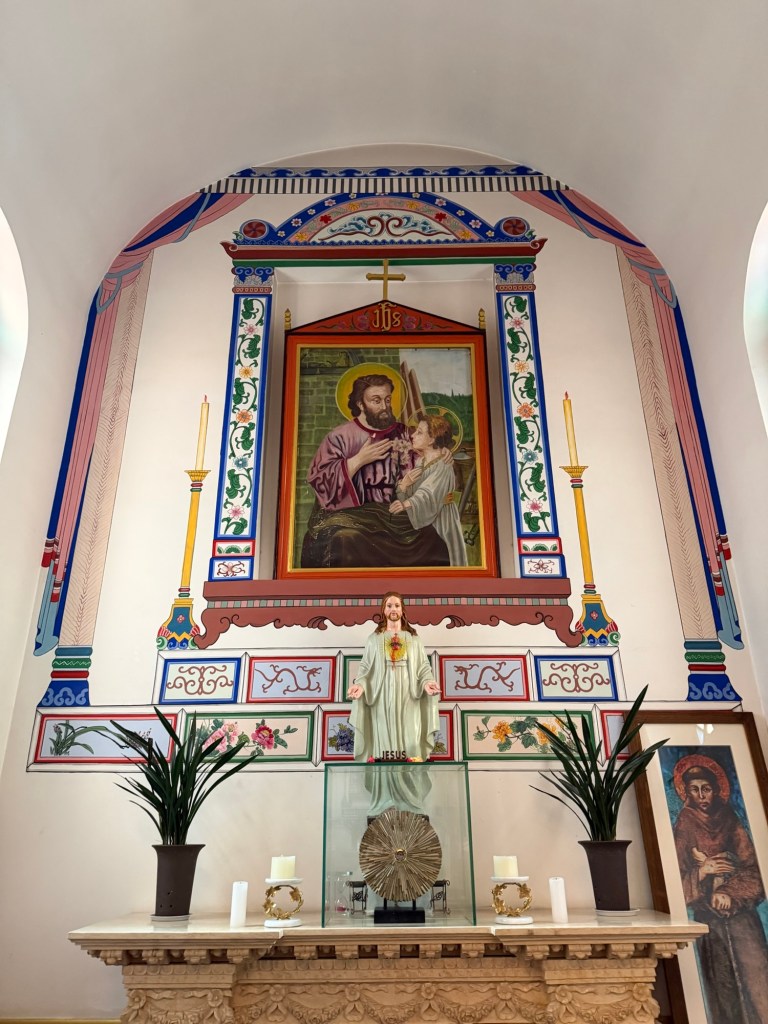
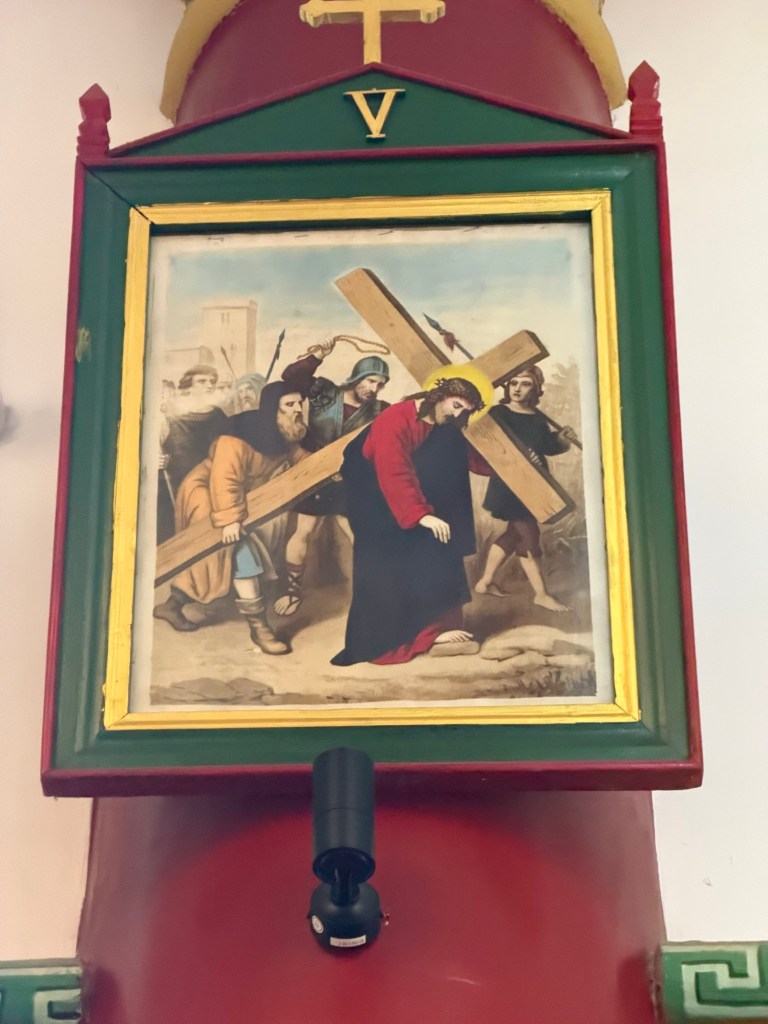
And of the ultimate sacrifice, on which Roman Catholic belief is founded…

The Cathedral is home to the Yellow River Soup Kitchen, a charity founded by Tony Day in December 2005 after a homeless woman in Xi’an asked him for financial help. The woman remained on Day’s mind as he meditated for two hours that night. “I suddenly had a sense this was a much greater problem and being unable to find any (with very few) voluntary projects available in China. I had decided the night before that if I learned nothing from the old lady, I would start buying food”. The following day, Day returned to St. Francis Cathedral on Wuxing Street, where he had met the woman. He asked Father Chen if he could distribute food to the homeless at the church.
The woman had inspired Day to establish support for the city’s homeless community. With growing support from global donors, Yellow River Soup Kitchen had mobilized 13,700 volunteers by 2021 to complete 2,580 charity projects.
In 2020, Yellow River Soup Kitchen faced significant challenges due to COVID-19, as St. Francis Cathedral and many other venues where the organization hosted events were closed. However, despite these setbacks, the organization adapted by providing 14,047 face masks to people experiencing homelessness.
For the Yellow River Soup Kitchen website click here
Ours is not the task of fixing the entire world all at once, but of stretching out to mend the part of the world that is within our reach.
The Great Mosque of Xi’an (西安大清清真寺) Arabic (مسجدشيان)
The campaign of Sinicization has led to the structural modification or removal of Islamic architectural elements (such as domes and minarets) on mosques, replacing them with traditional Chinese architectural styles.
The Great Mosque of Xi’an is located in the Xi’an Muslim Quarter (回民街). It is one of the largest mosques in China. Traditional accounts date the mosque’s founding to 742 C.E. during the Tang dynasty, when Xi’an (Chang’an) was the world’s largest city.
The mosque is used as a place of worship by Chinese Muslims, primarily the Hui people. It represents the Gedimu (格迪目) Arabic قديم tradition of Sunni Islam. The main prayer hall can accommodate 1000 people.
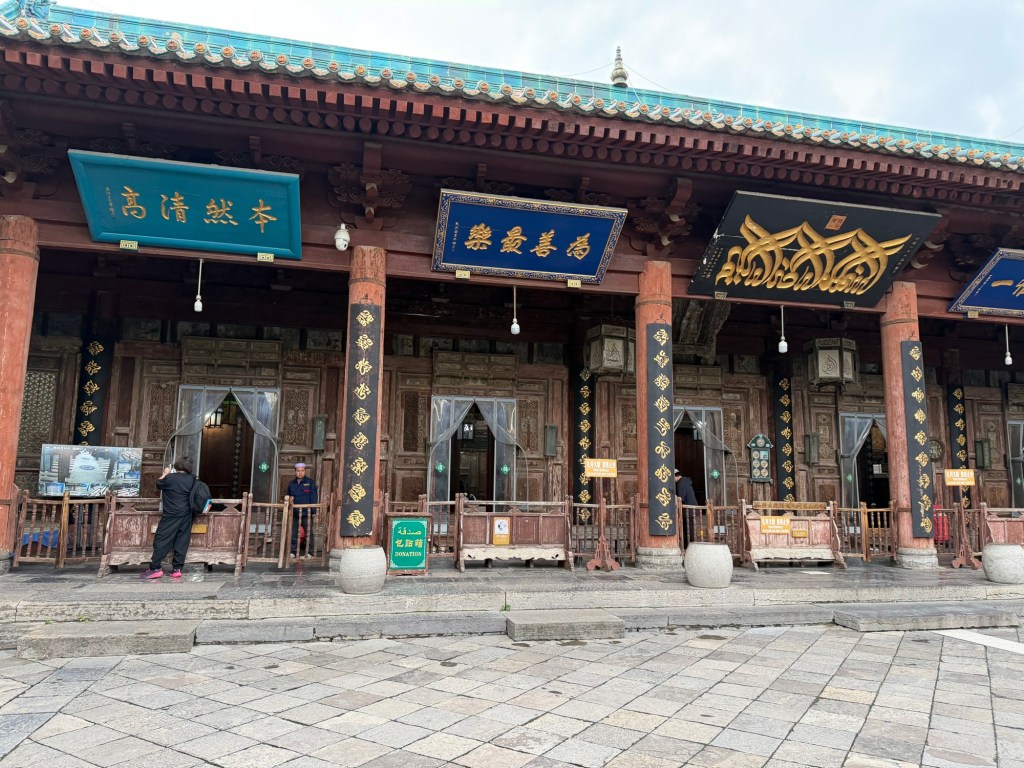
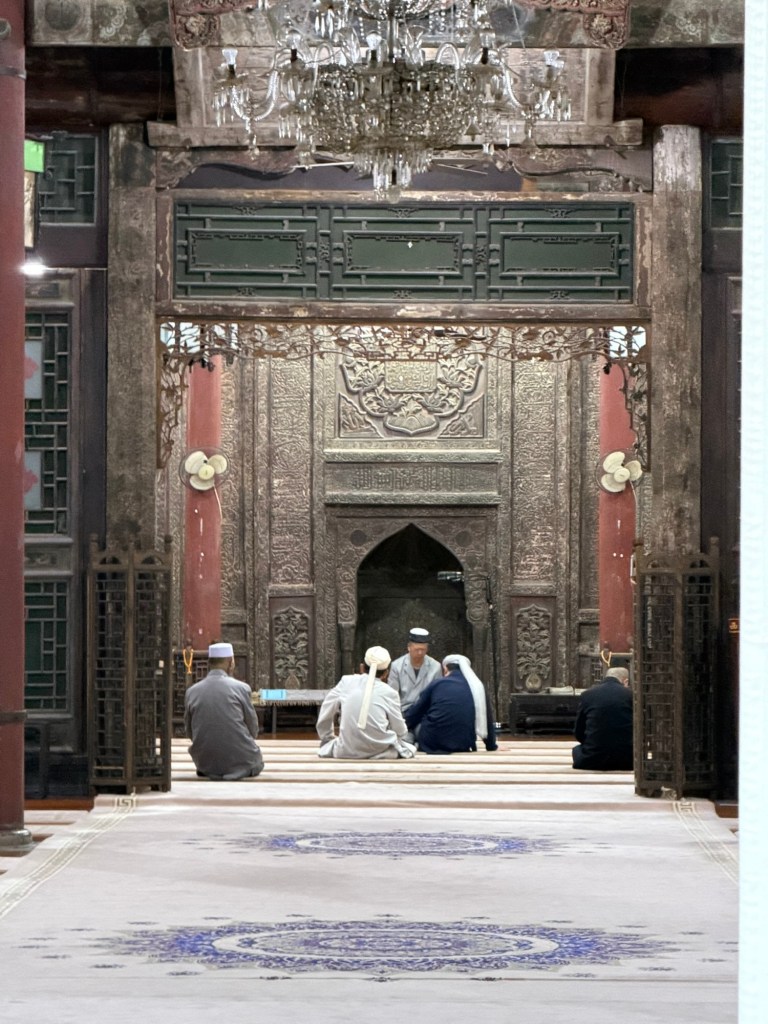
The Great Mosque is seen as an example of the adaptability of mosque architecture in the context of Chinese culture. The mosque has features that mosques around the world typically have, such as the qibla and mihrab, and it also contains Chinese architectural features and cultural symbols throughout.
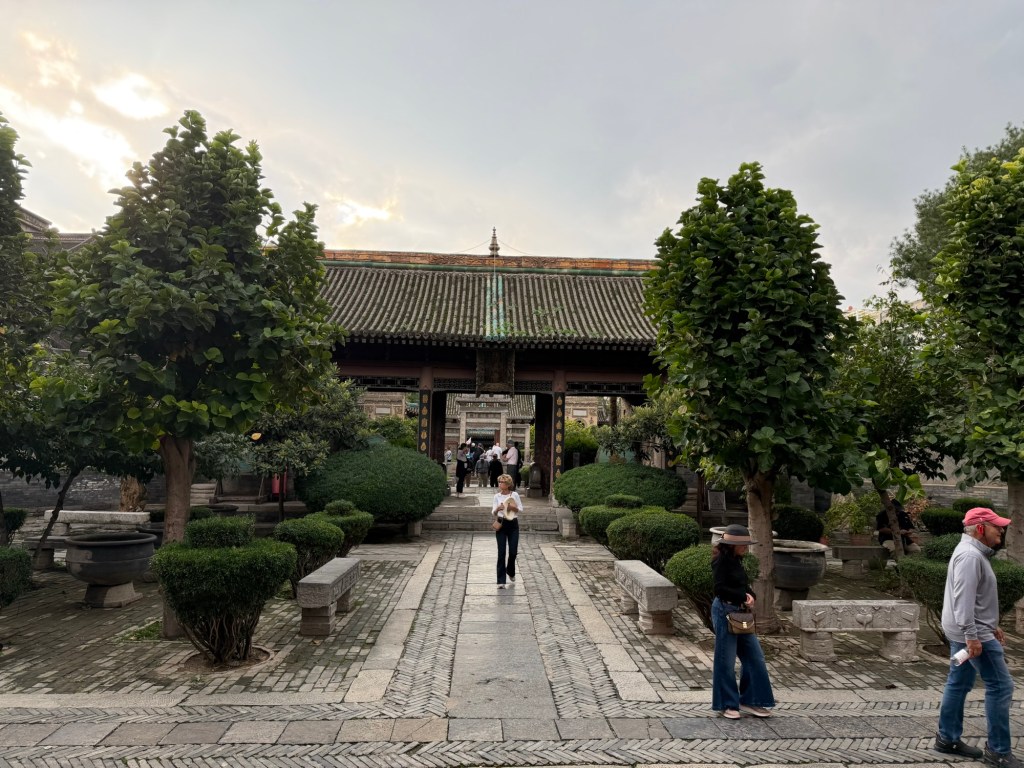
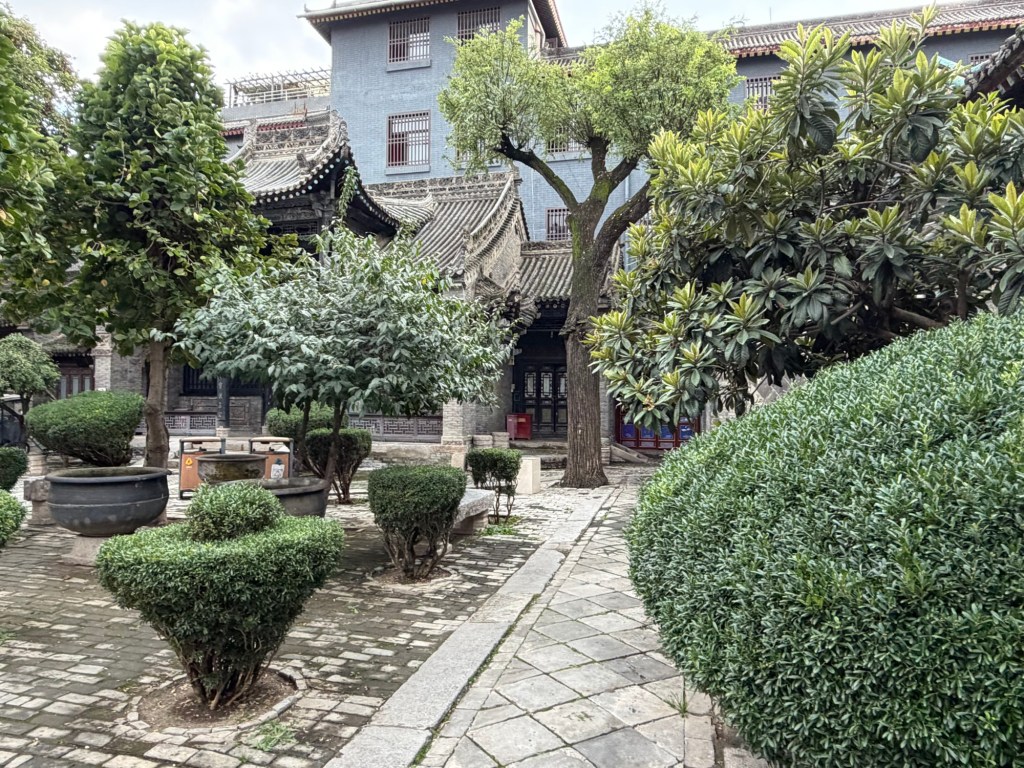
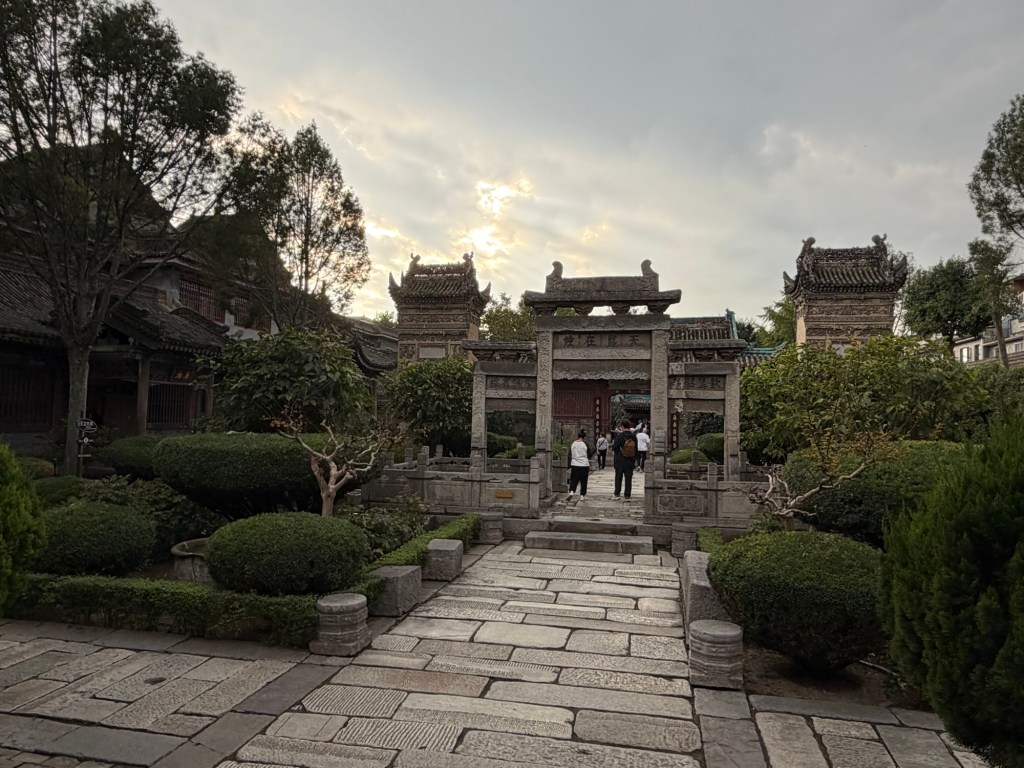
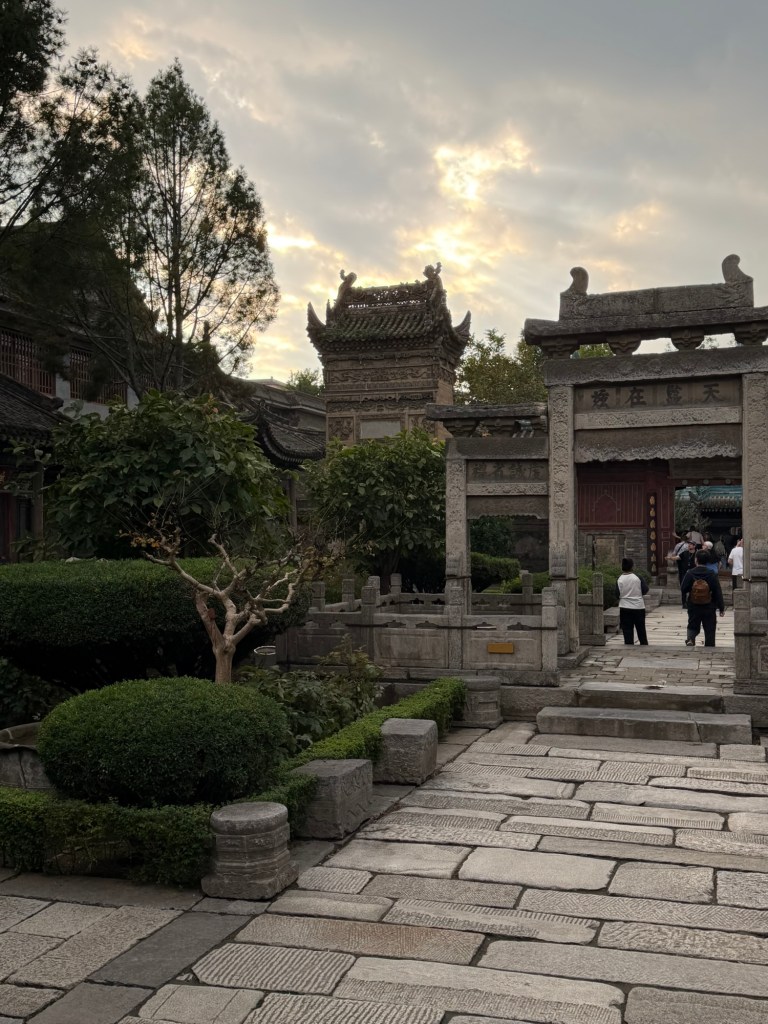
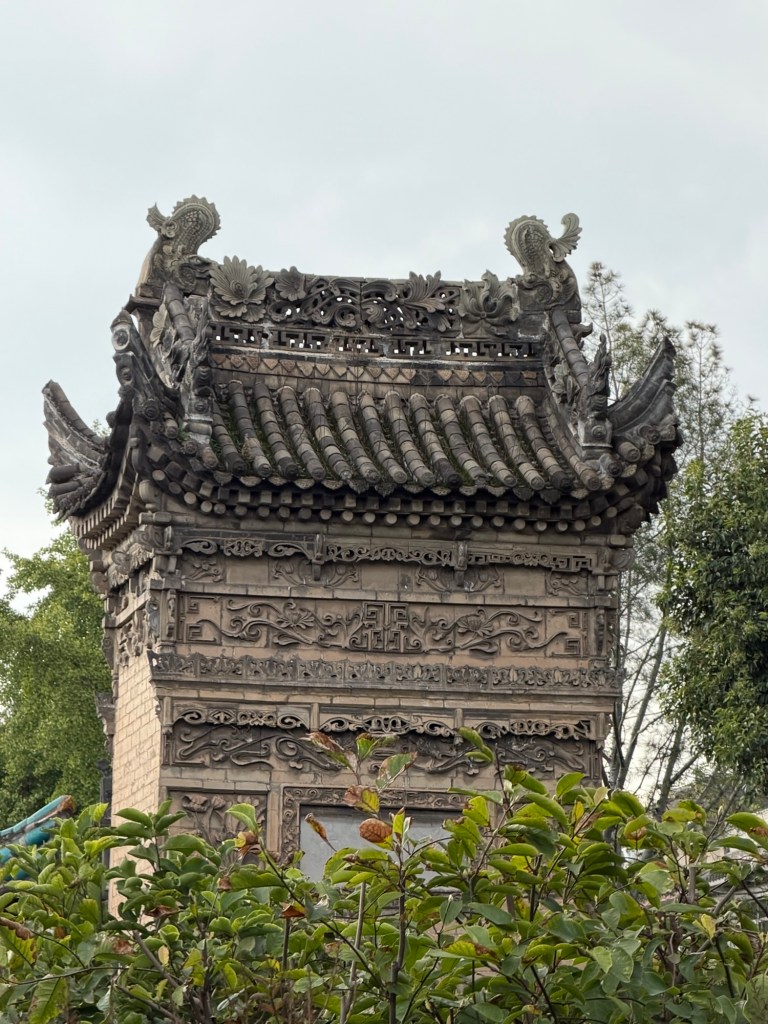
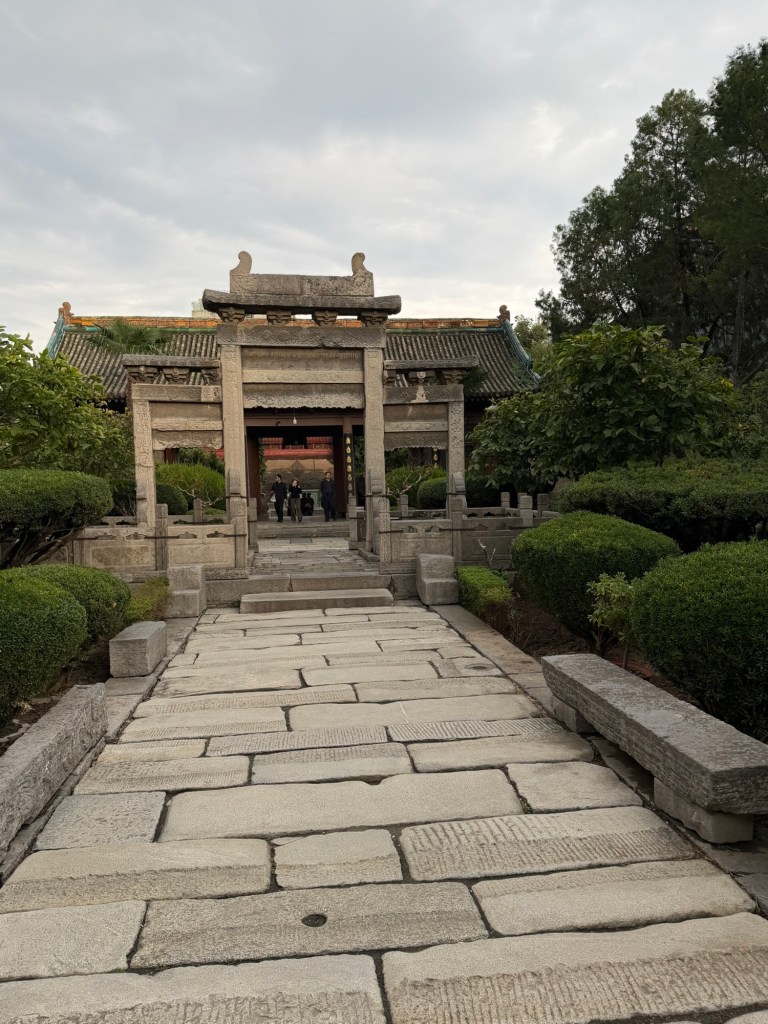
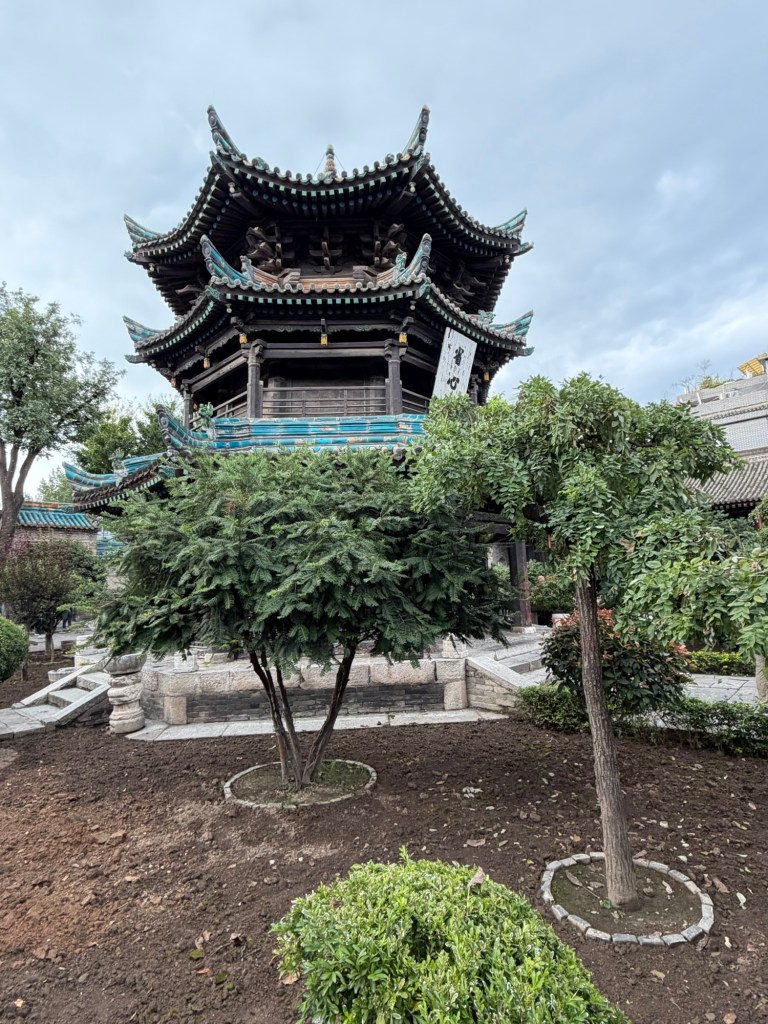
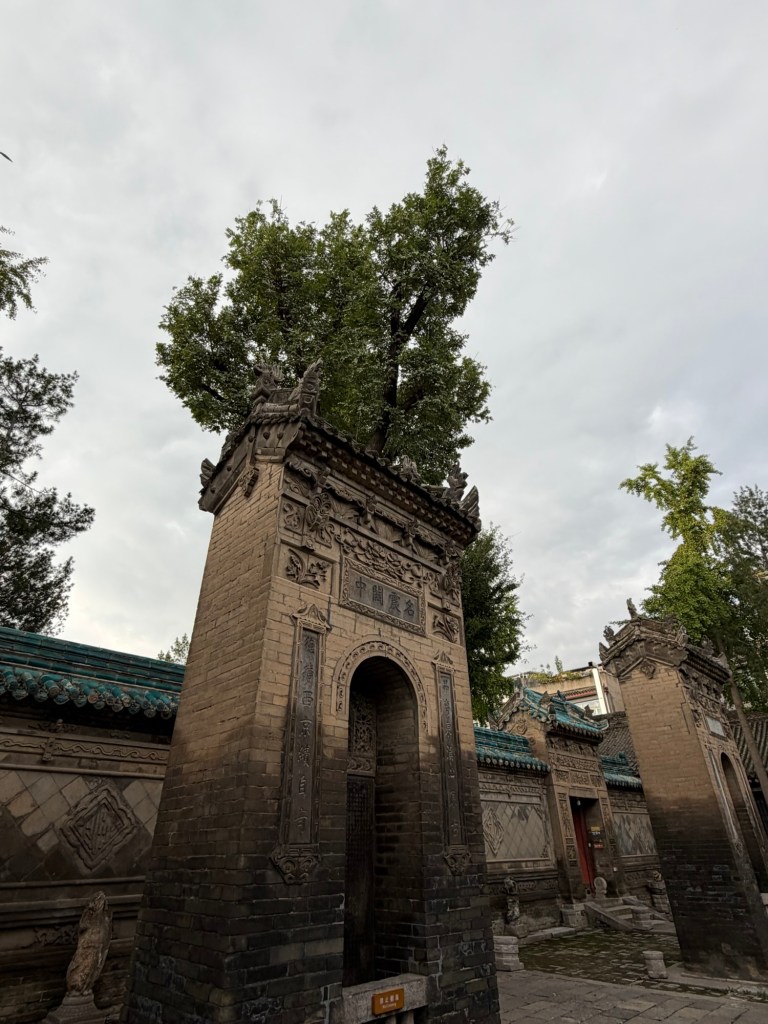
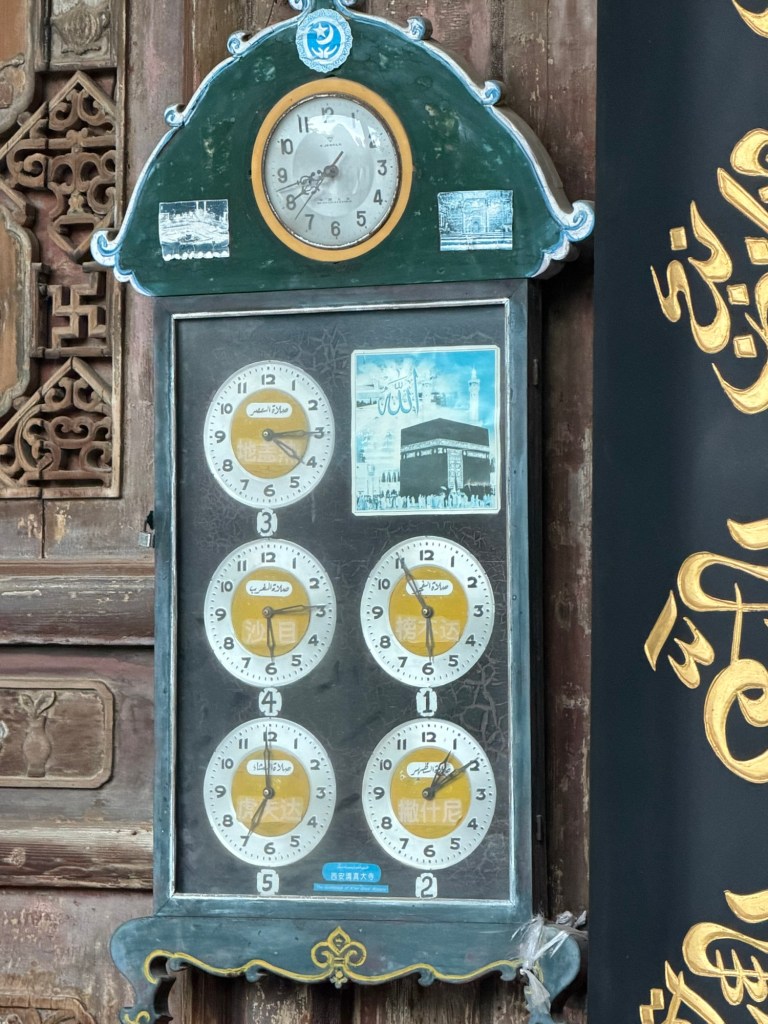
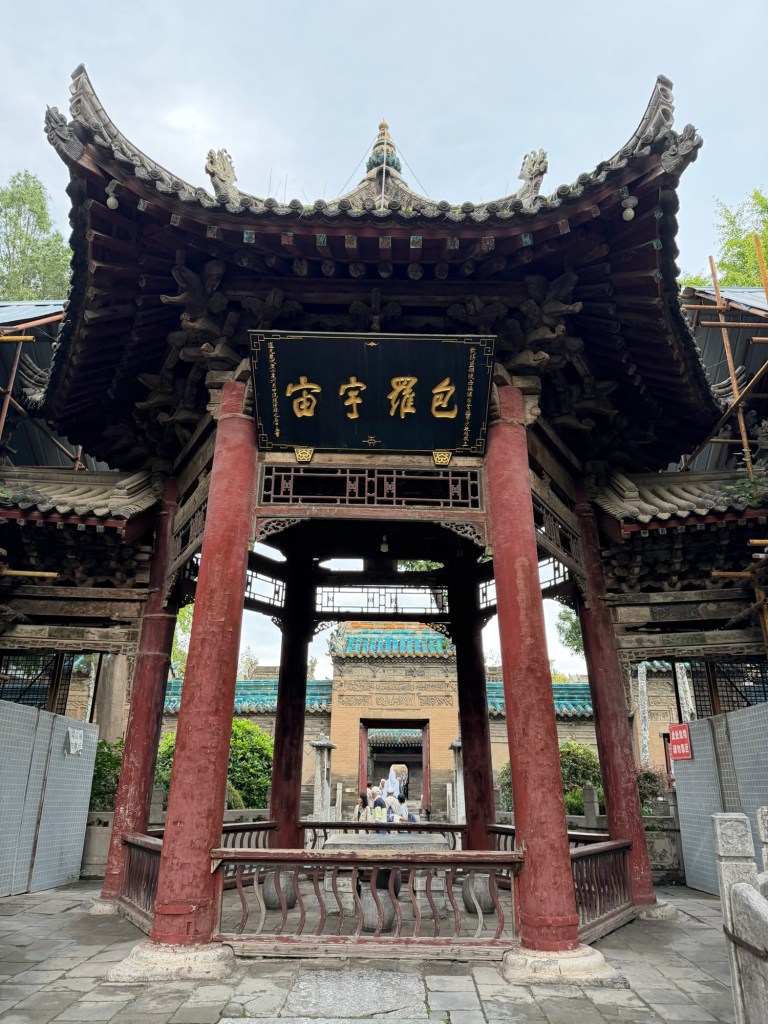
Again, we found the site to be another peaceful haven. Indeed, all 3 sites visited today – if different in terms of belief systems – felt equally calm and a place for reflection.
We thoroughly enjoyed today. It absolutely confirmed for us – if it was needed – that we people of the world, all faiths, really do have more in common than we sometimes imagine. And, actually, should we find fault with the Chinese brand of expectation so far as integration is concerned? Or have they got a lot right here?
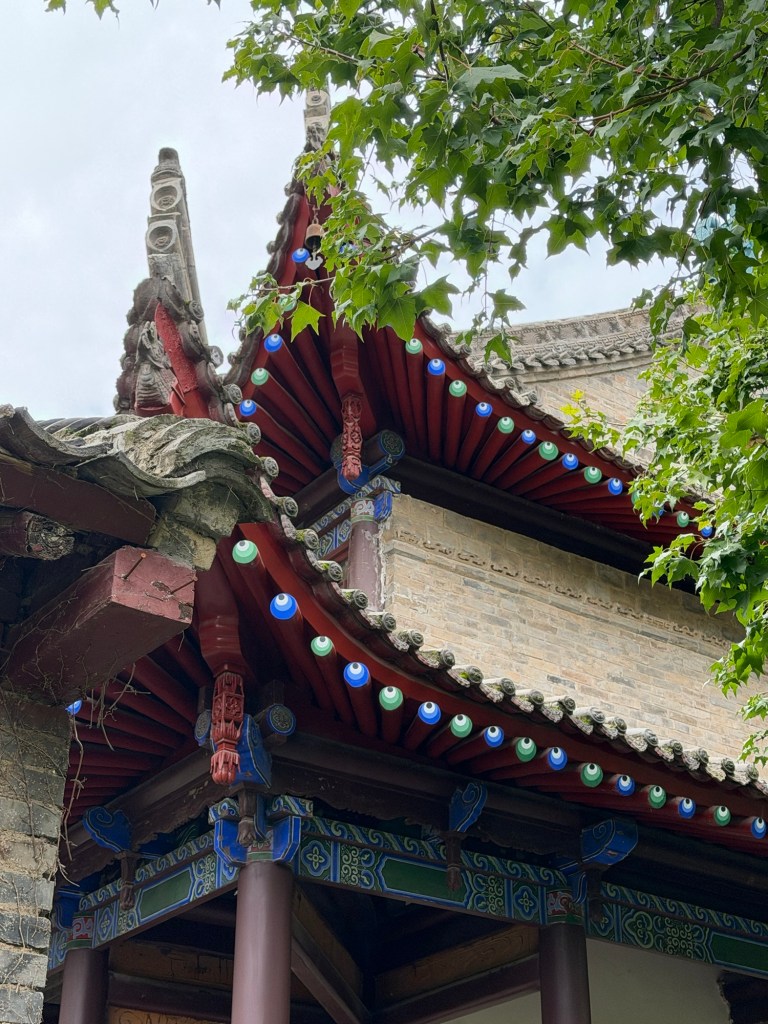
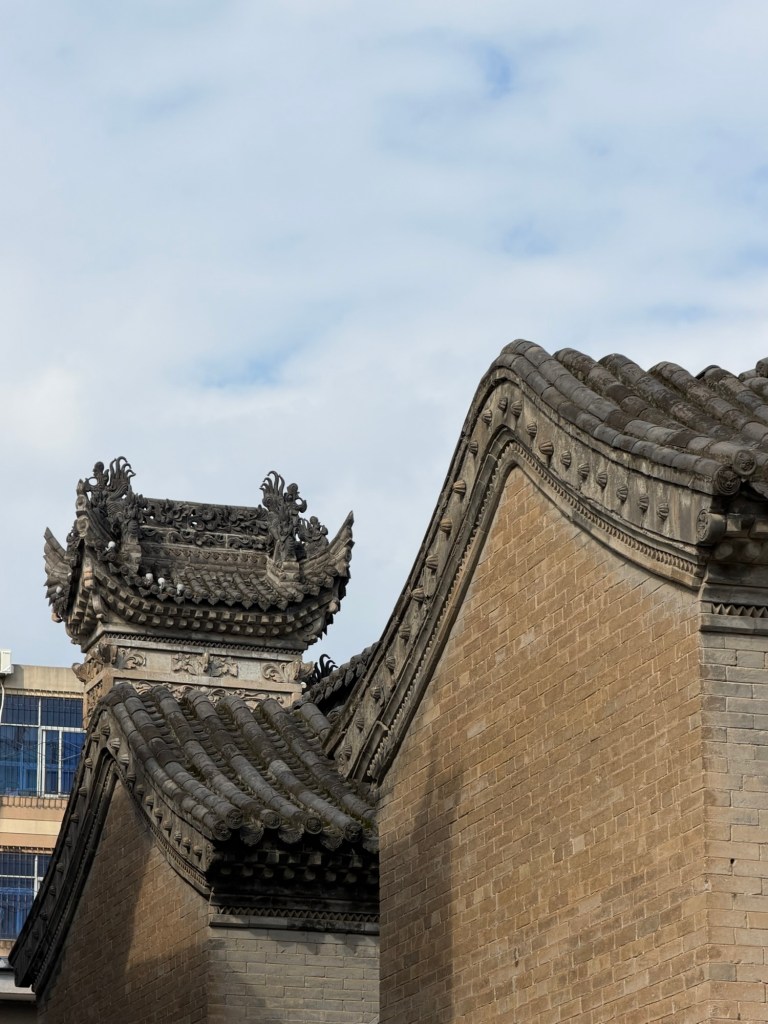
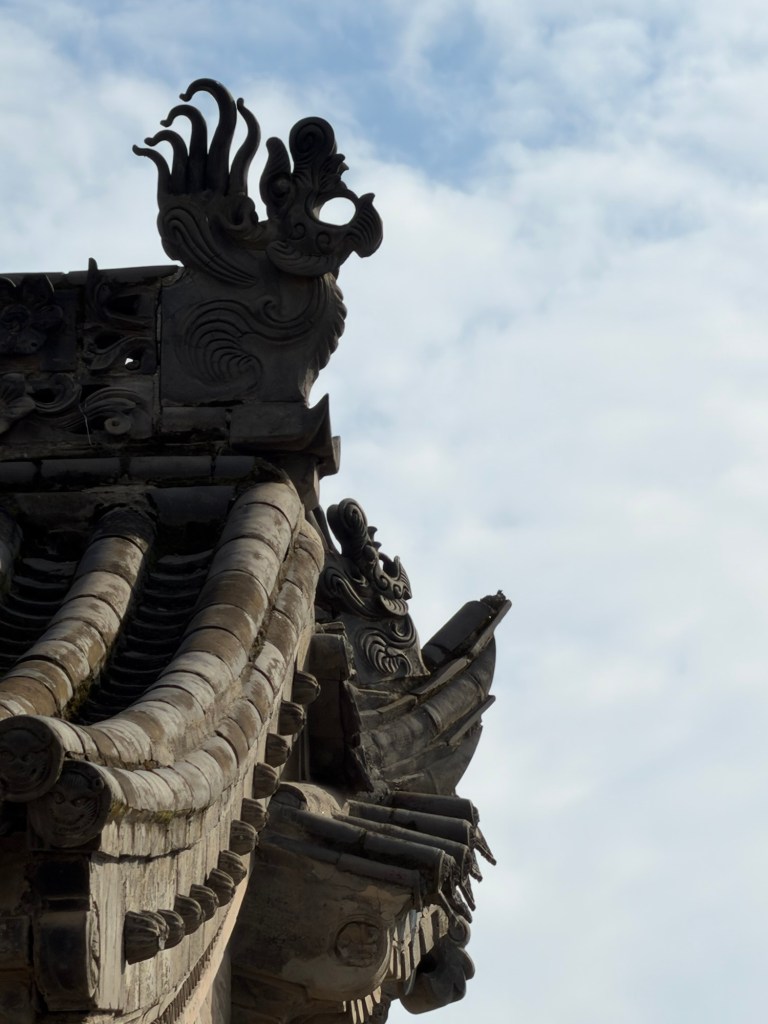
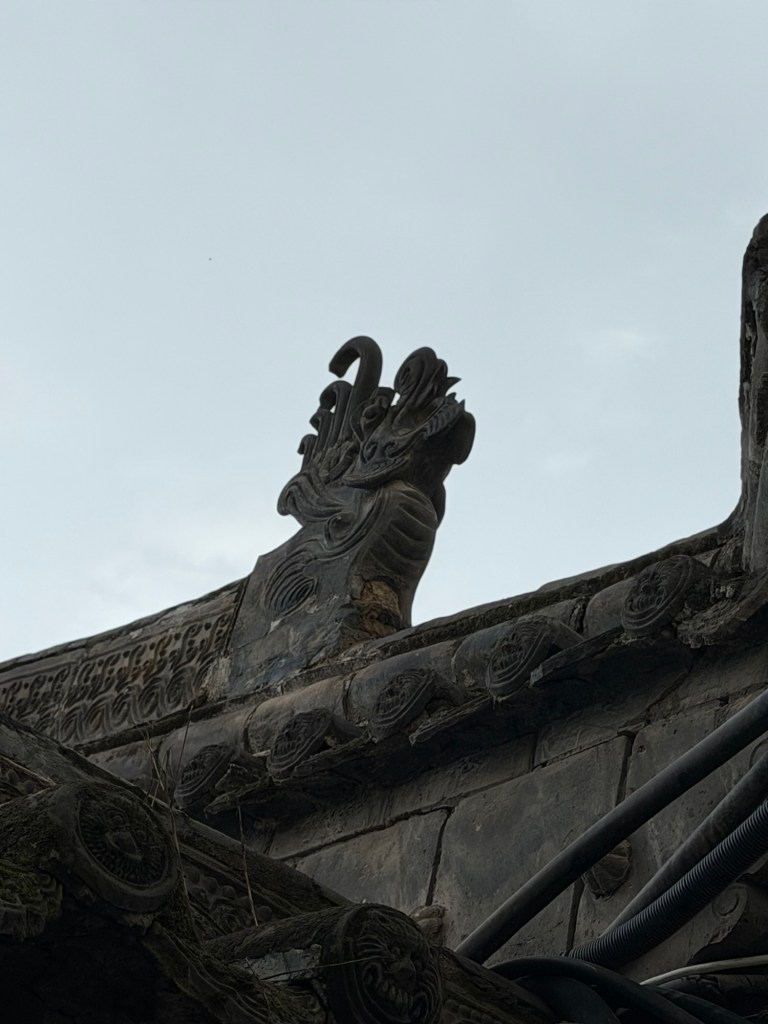
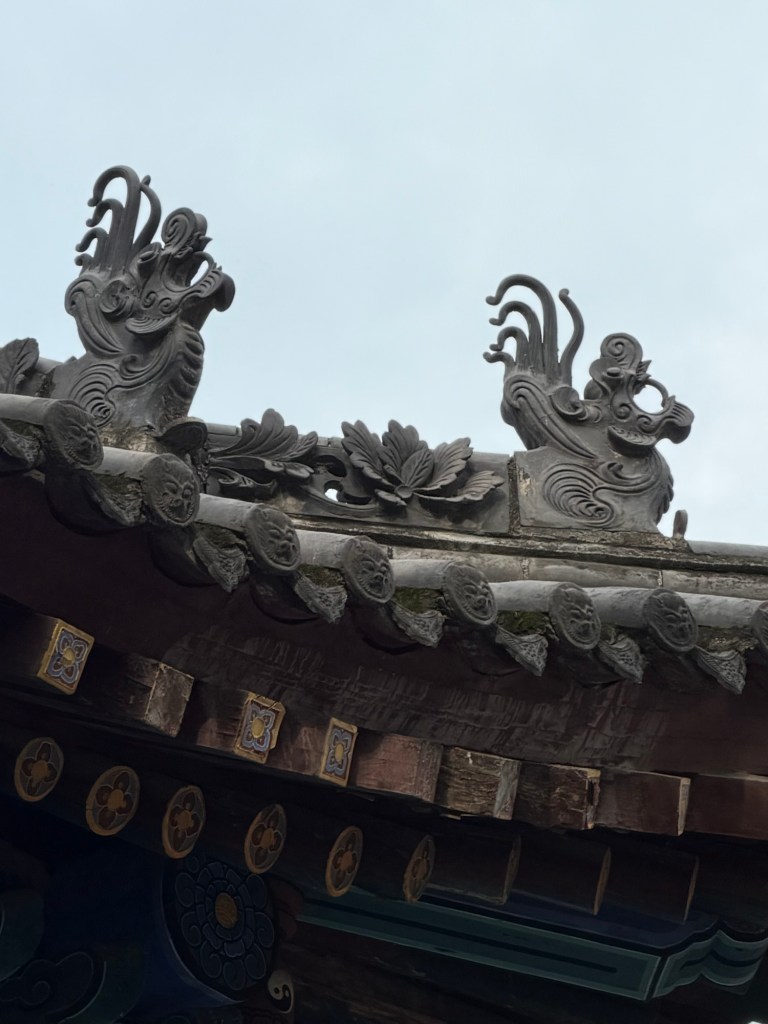
A little detail from roofs on the buildings of all 3 sites, in no particular order…
End note:
A quiet corner in a side street abutting the Taoist Du City God Temple and The Great Mosque…
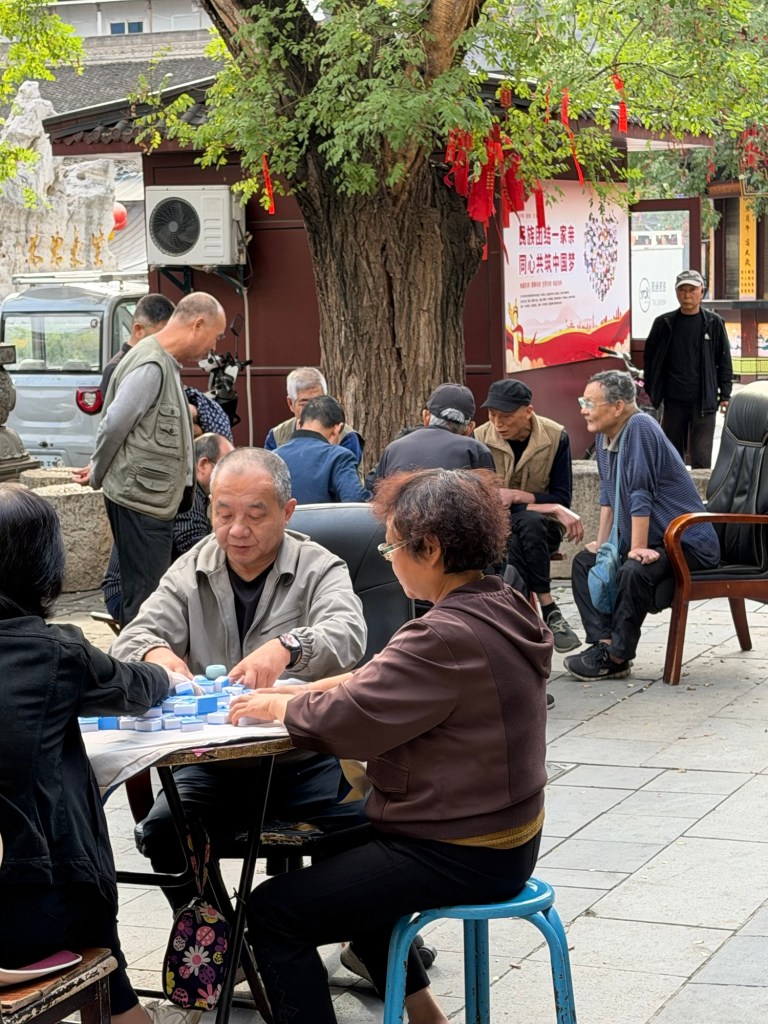
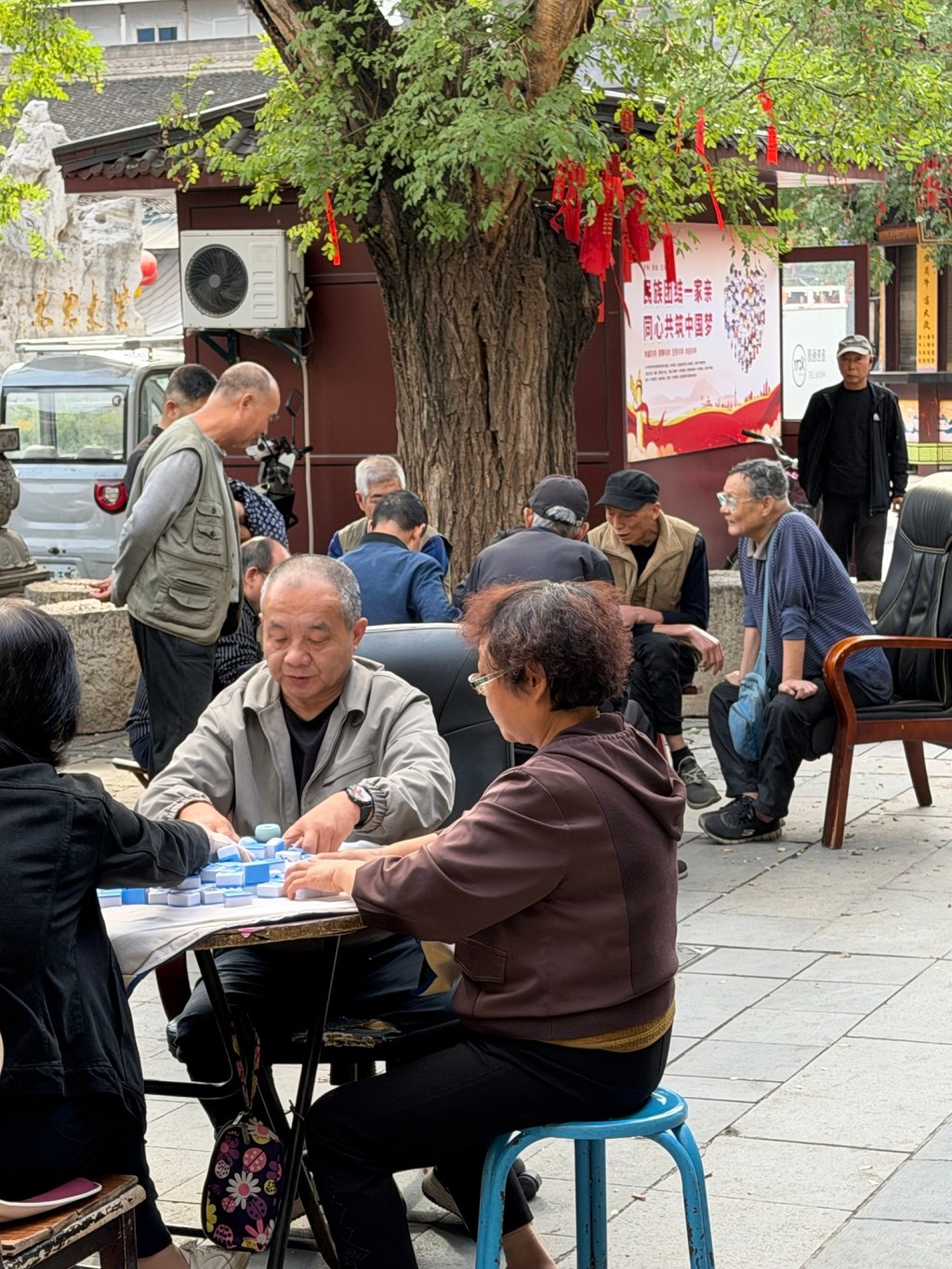
Mahjong on the street! Don’t you just love it!


Leave a Reply