Today we headed for Guangzhou / Canton.
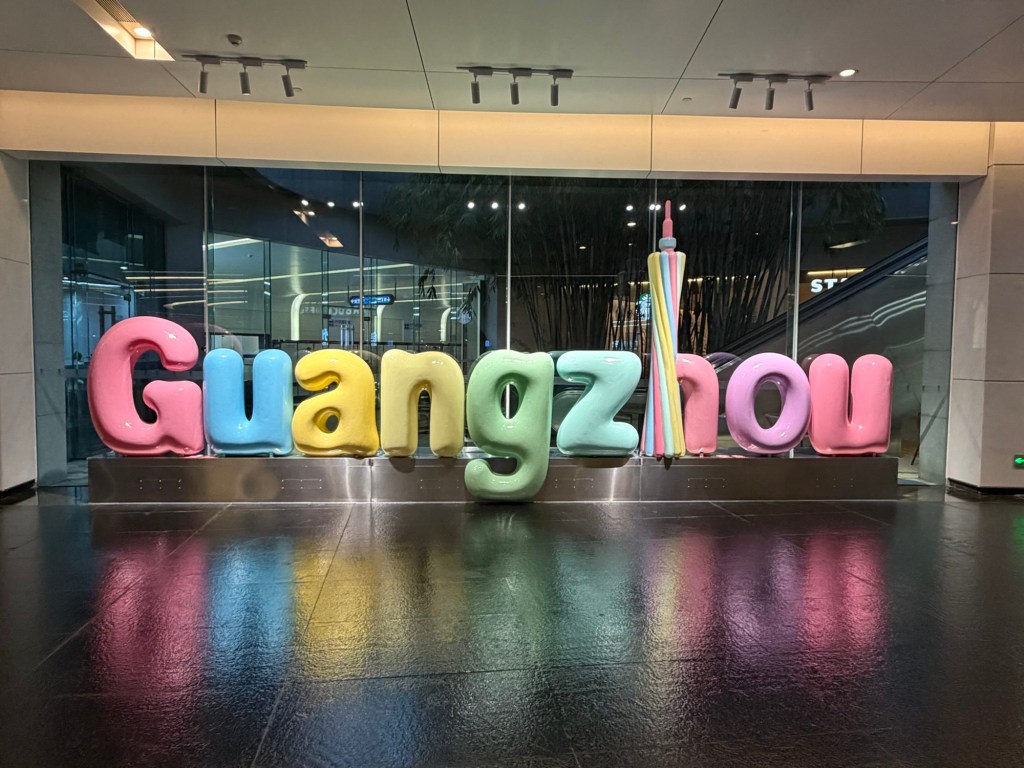
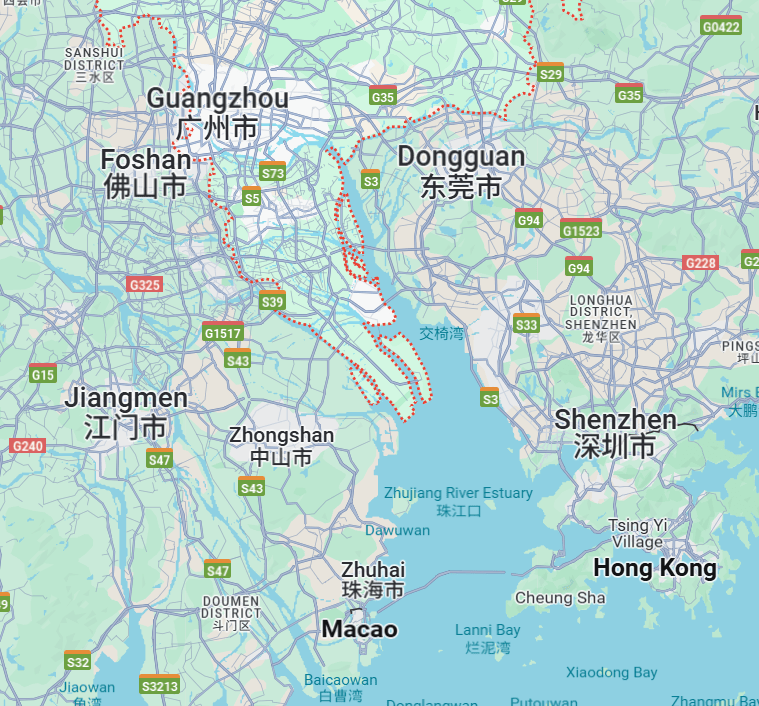
Guangzhou (formerly known as Canton) is a large city (population 18.6m) on the Pearl River. It is the birthplace of traditional Cantonese cuisine and dim sum, with local residents speaking Cantonese alongside Mandarin.
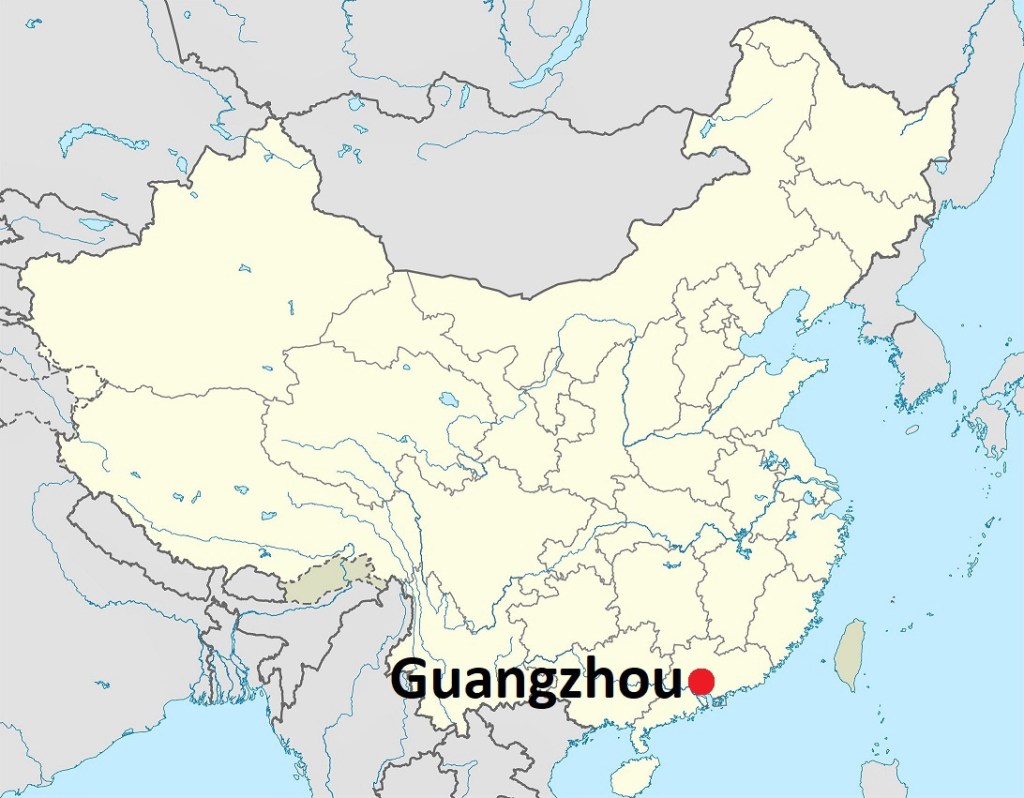
Guangzhou has a history of over 2,200 years and was a key point on the Maritime Silk Road. It was captured by the British during the first Opium War.
The Maritime Silk Road was an ancient network of sea trade routes operating from the 2nd century BCE to the 15th century CE that linked China and Southeast Asia with India, the Arabian Peninsula, East Africa, and Europe. It was the ocean-based trade route, as opposed to the land-based one; to which Xi’an (visited earlier) was a major hub.
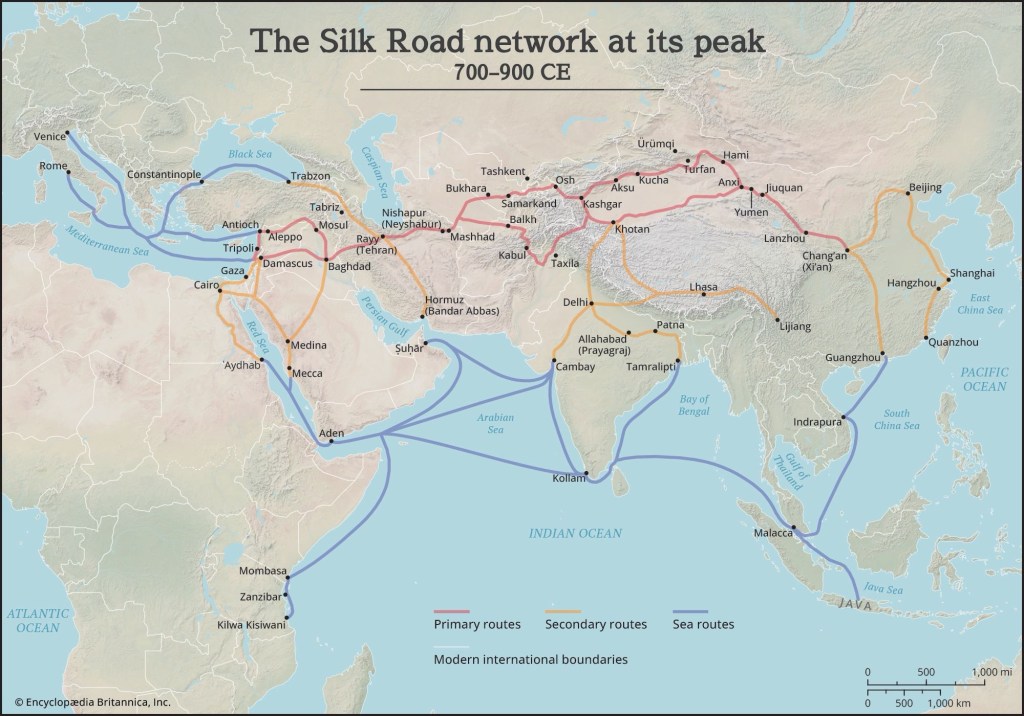
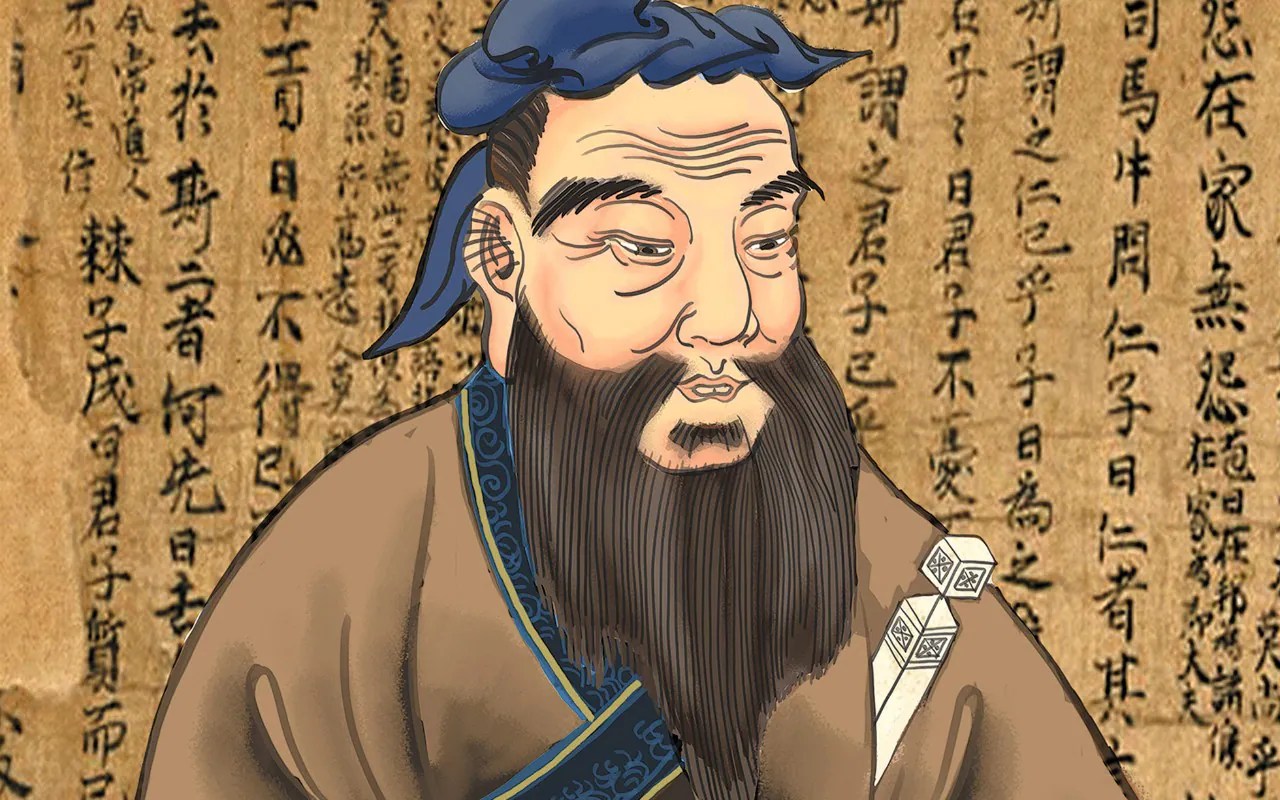
On the Maritime Silk Road, much of China’s groundbreaking technology and art, including its textiles, papermaking, compasses, porcelain making and painting, were spread to Europe by foreign merchants and missionaries. In addition, Chinese ancient classical books were translated and brought to the West. The influence of Confucian thought on the Enlightenment, Rococo fashion and art, and fine clothing and furniture favoured by Western upper classes are all testament to the refinement of Chinese culture through the millennia.
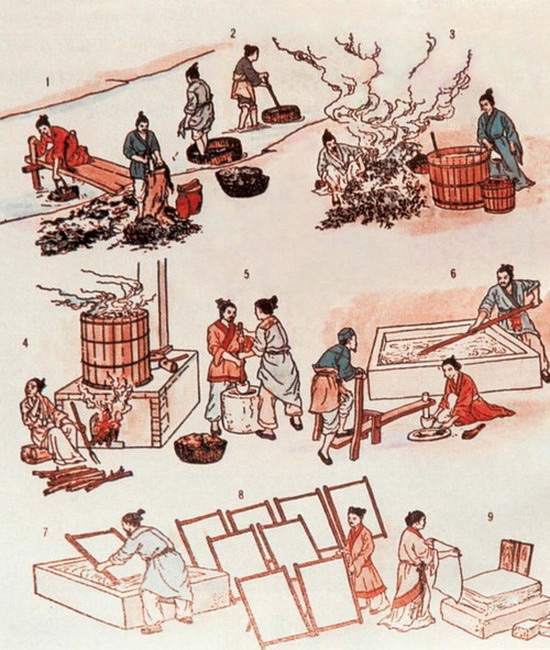
Cai Lun, an Eastern Han Dynasty court official, standardised and popularised a practical plant-fibre papermaking process around 105 CE.
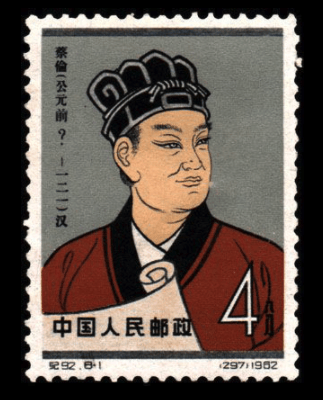
In response to the challenges of using cumbersome wooden and bamboo books, he conducted research to create a more practical writing material. Drawing inspiration from the silk-bleaching process, Cai Lun developed a new papermaking technique using materials such as old fish nets, mulberry bark, hemp, and rags, resulting in a lightweight and durable writing surface.
I wonder what Cai Lun would make of me sat on this train, right now, publishing stuff online, in real time, talking of his invention. I would be sure to thank him, and to stress that, to this day, holding a book (paper) remains my preferred medium.
In Cai Lun’s day, we would be travelling by boat to Guangzhou, heading up the Pearl River. It being 2026, we are on the Shenzhen Metro, heading for Shenzhenbei, and then on to Guanzhou by bullet train. Total distance: 300km plus, there and back. Total cost, each (return): £27. China’s incredibly cheap (relative to what we are used to), swift, efficient, and comfortable travel network makes visiting neighbouring places totally doable and worth it. It does beg the question, too, is it actually cheaper today, in real-terms, to travel from Dameisha to Guangzhou than it was in Cai Lun’s day?
Travelling in ancient China we may well have used another of the great inventions the Chinese bestowed upon the World; one that made its way down the Silk Road (land and/or sea), the compass.
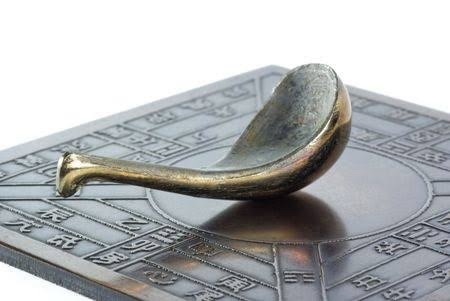
The most popular style of the first Chinese compass used a lodestone (which automatically points to the south) and a bronze plate. The lodestone was carved into the shape of a spoon. The spoon was placed on a flat plate of bronze. As the bronze plate was moved, the lodestone spun around and came to a stop in a north-to-south orientation with the handle pointing to the south. The “magnetised” lodestone aligned itself with the Earth’s magnetic field. This style of compass was called a “south-pointer”. The bronze plate was also marked with constellations, cardinal points, and other symbols important to the Ancient Chinese.
And so, to something a little more modern, the Ferris Wheel…
a large, vertical wheel in an amusement park with seats that stay horizontal as the wheel turns round
Source: Cambridge Dictionary
Inventor and Engineer: George Washington Gale Ferris Jr., a civil engineer from Pittsburgh, Pennsylvania. Now there’s a name to conjure with. And guess which city in China has the world’s highest Ferris Wheel? Yep, Guangzhou!
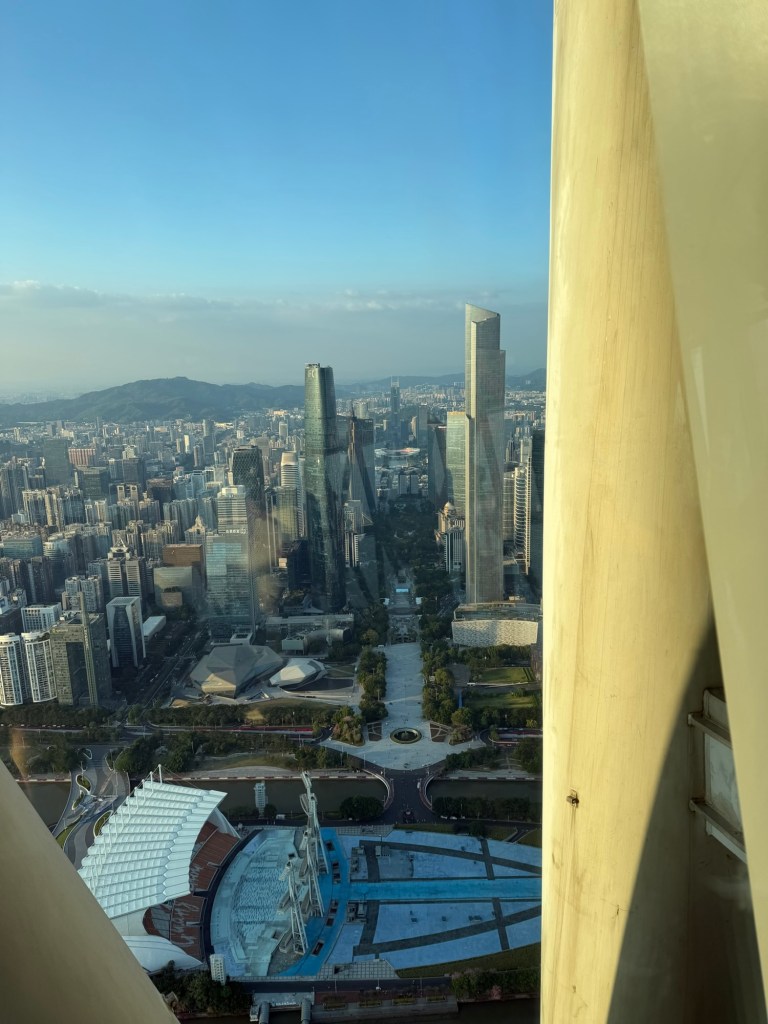
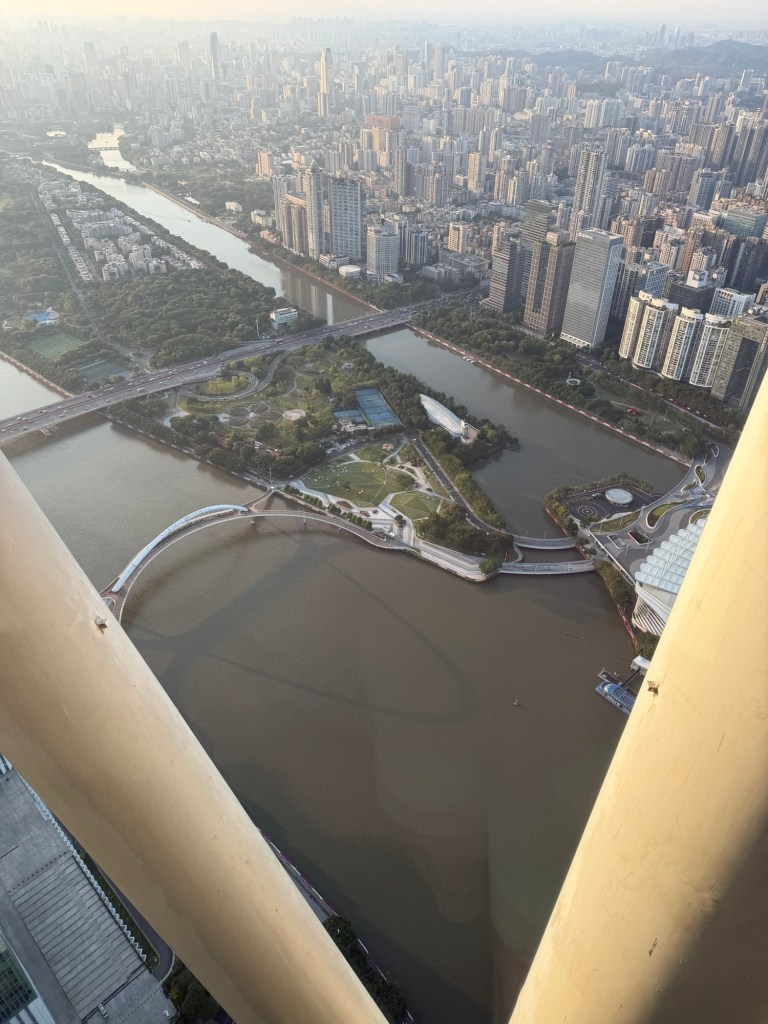
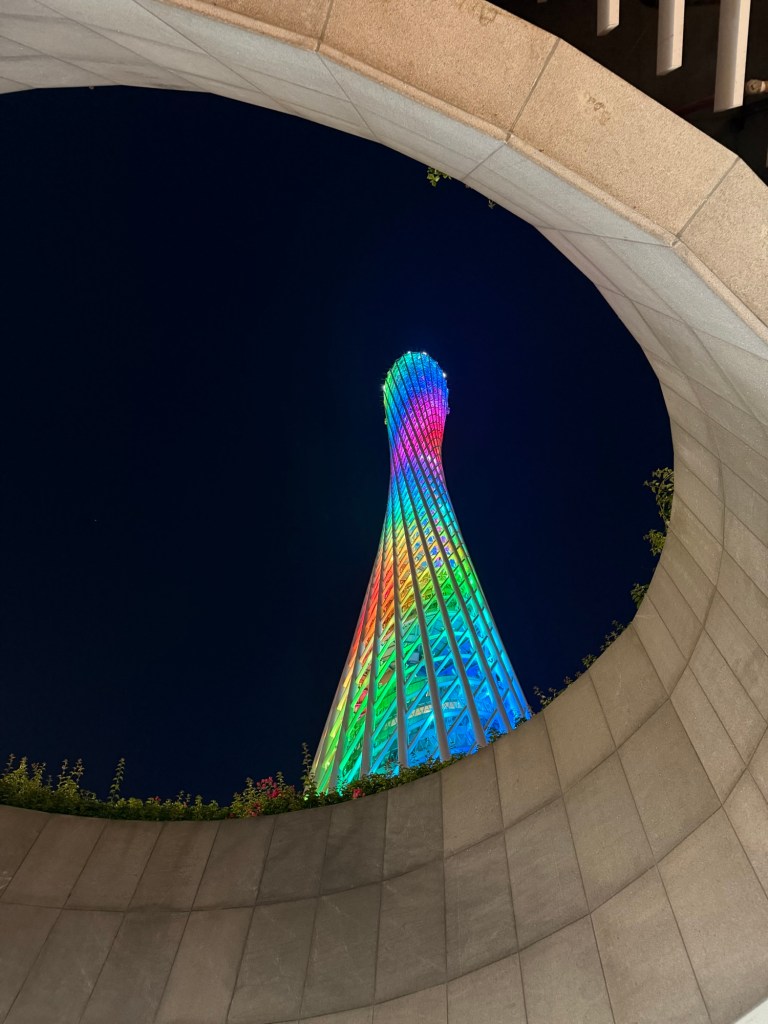
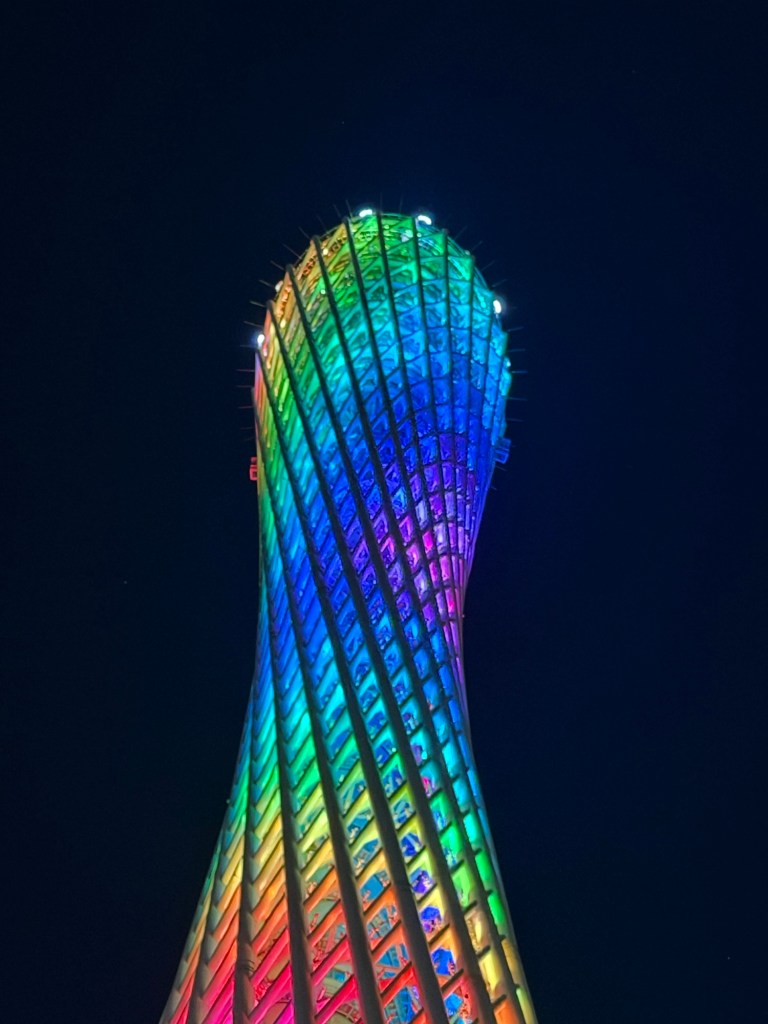
The Canton Tower (广州塔) is 600 metres high (454-metre main body plus a 146-metre antenna mast). Construction began in November 2005, it was topped out in 2009, and officially opened on September 29, 2010, for the Asian Games.
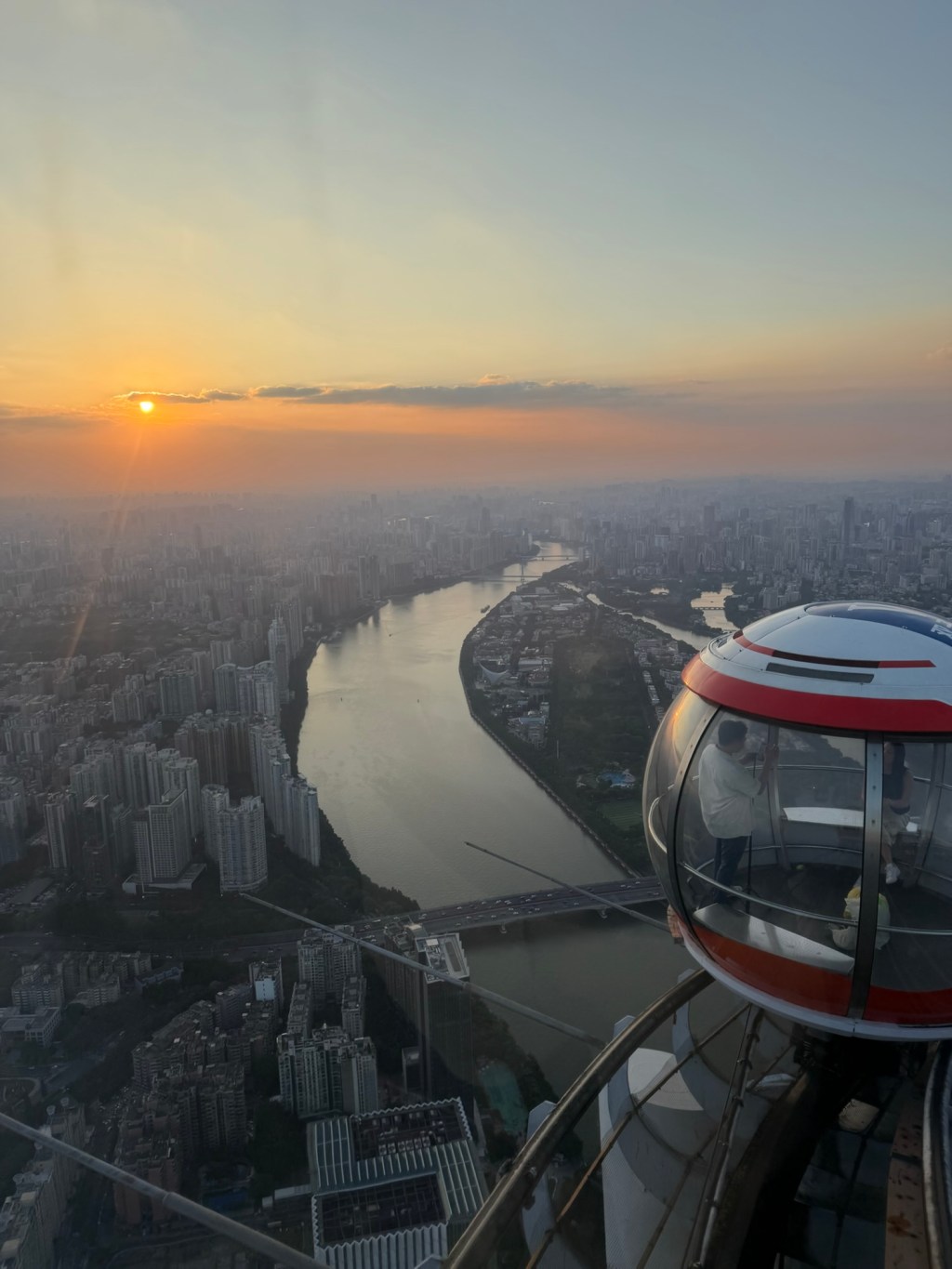
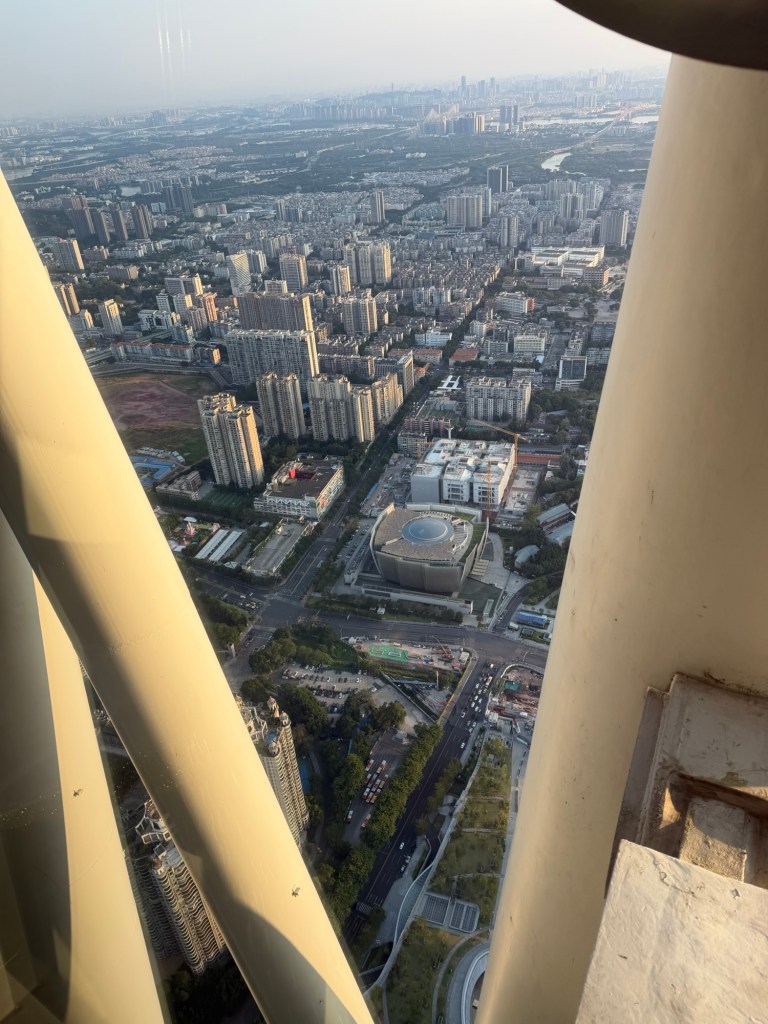
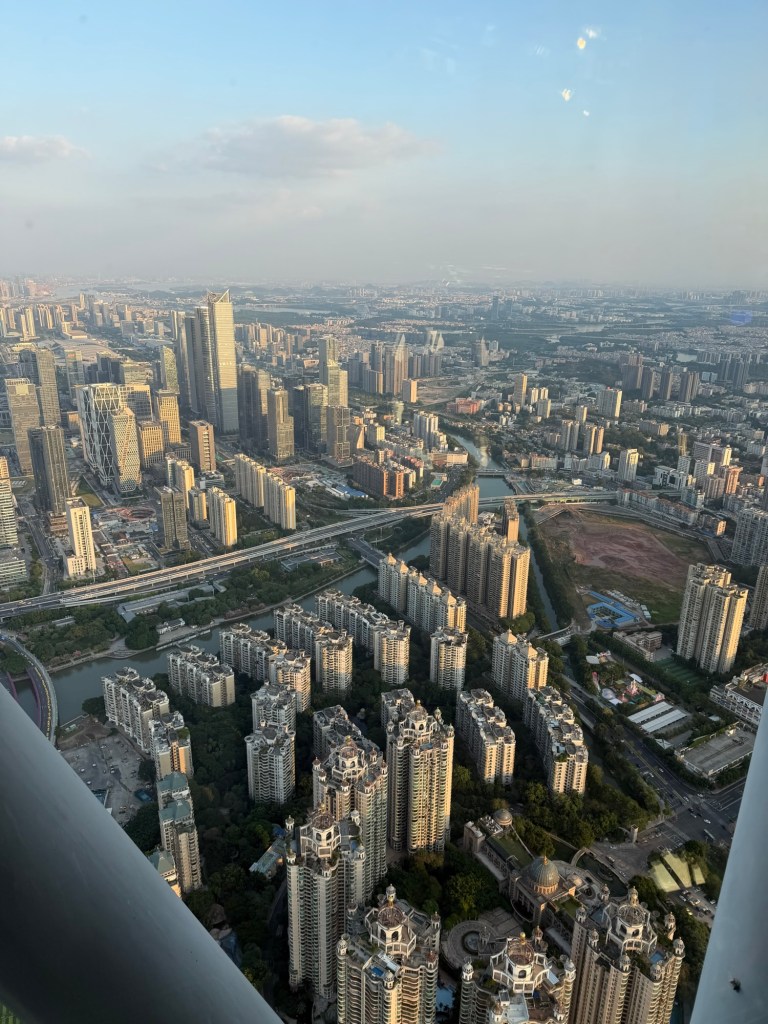
Only having a few hours to spend in Guangzhou, we headed straight for Canton Tower, reckoning on it being the best way to see the city in all its glory. We were not wrong! The thought of going on the world’s highest Ferris Wheel really appealed to us. Did I say that it is at the top of the Canton Tower?
It is in fact a horizontal Ferris Wheel, a ‘Bubble Tram’ that circles the tower at 460m. We absolutely loved it! what an experience!
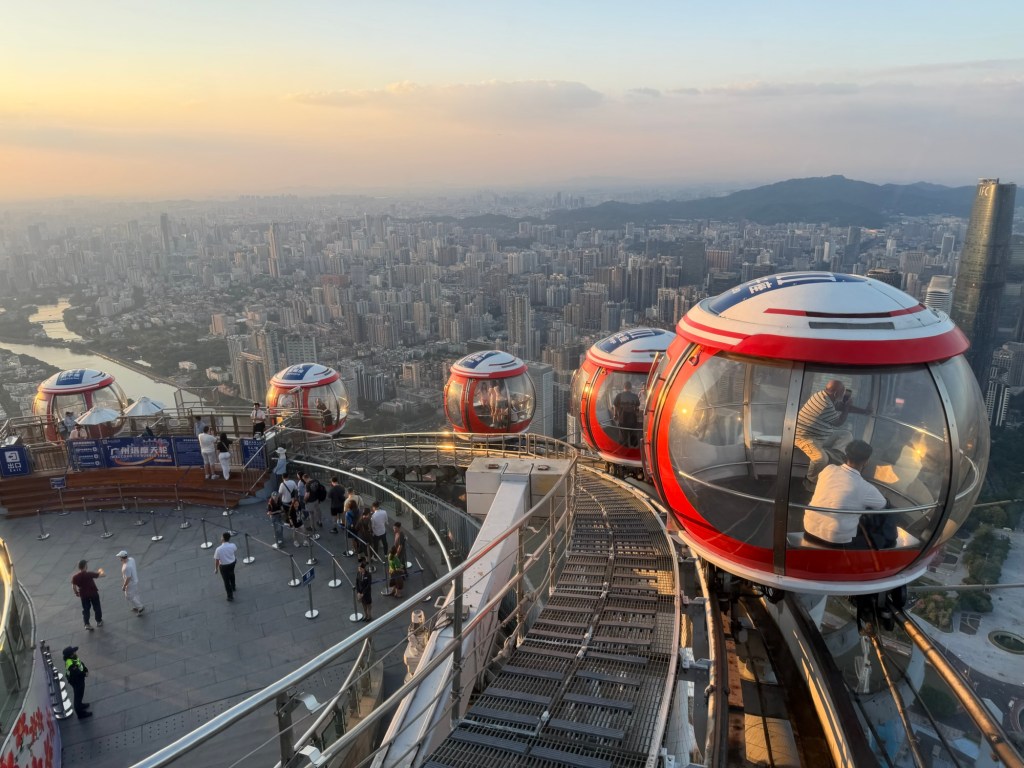
Views from the observation deck before the Bubble…
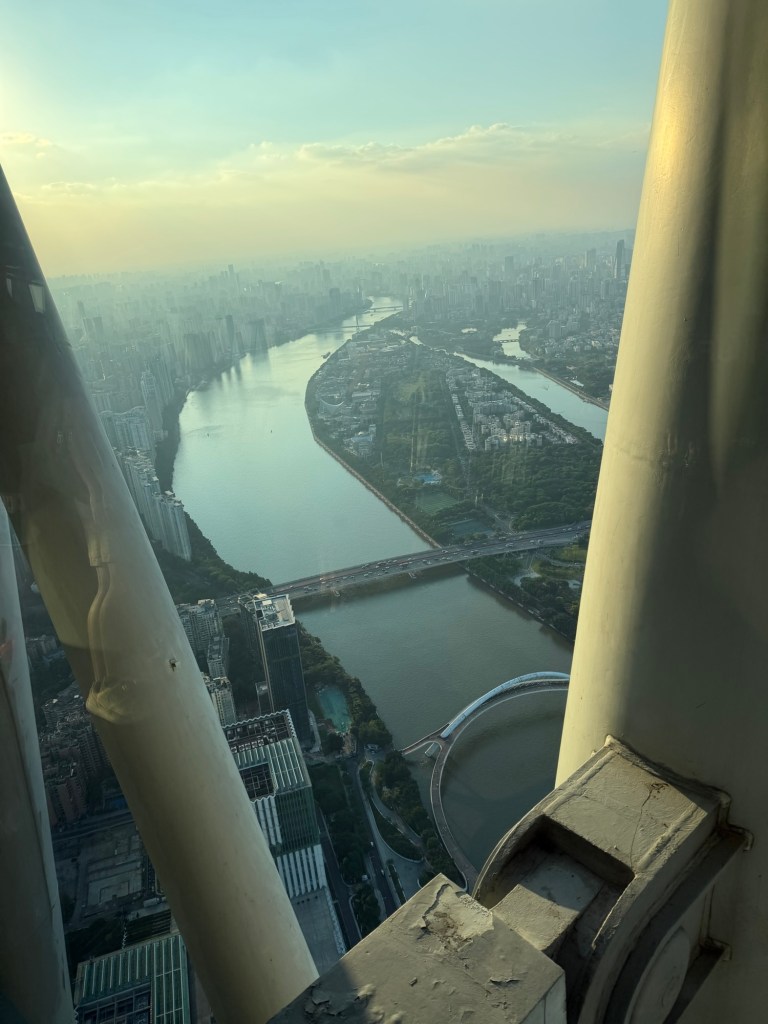
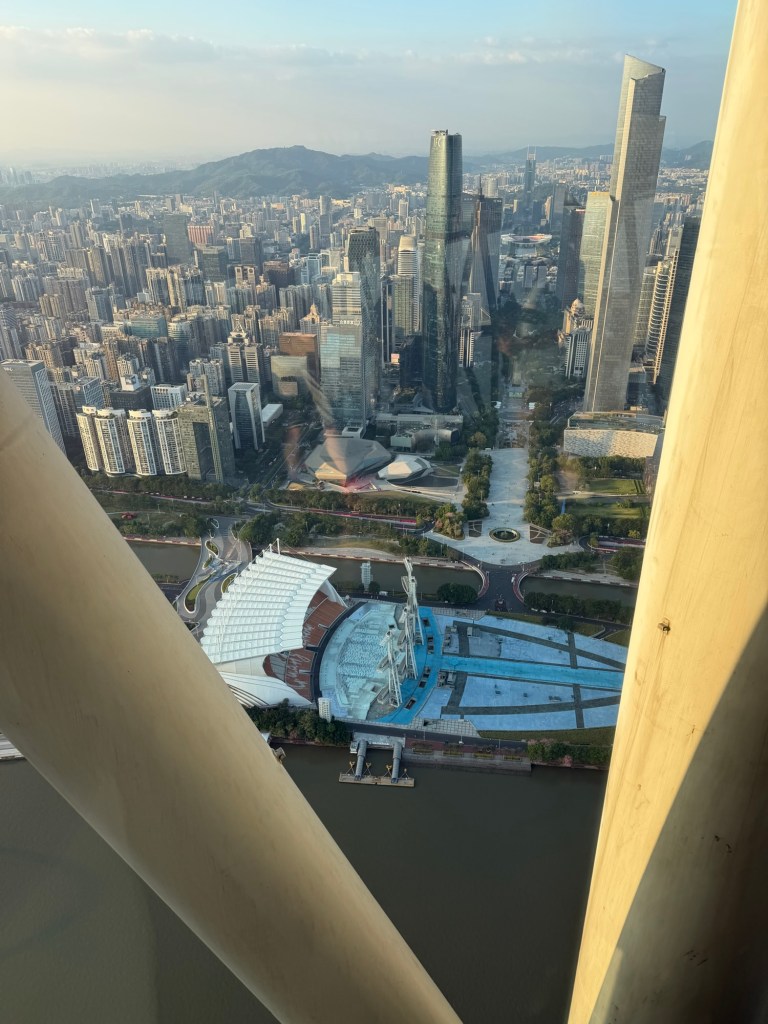
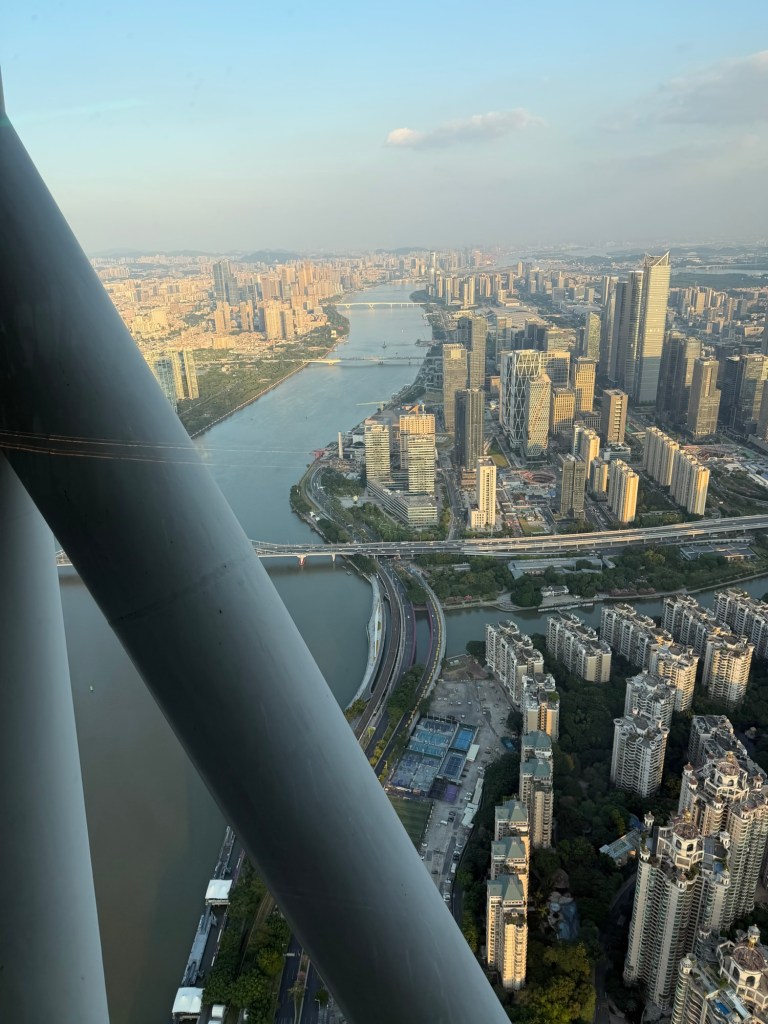
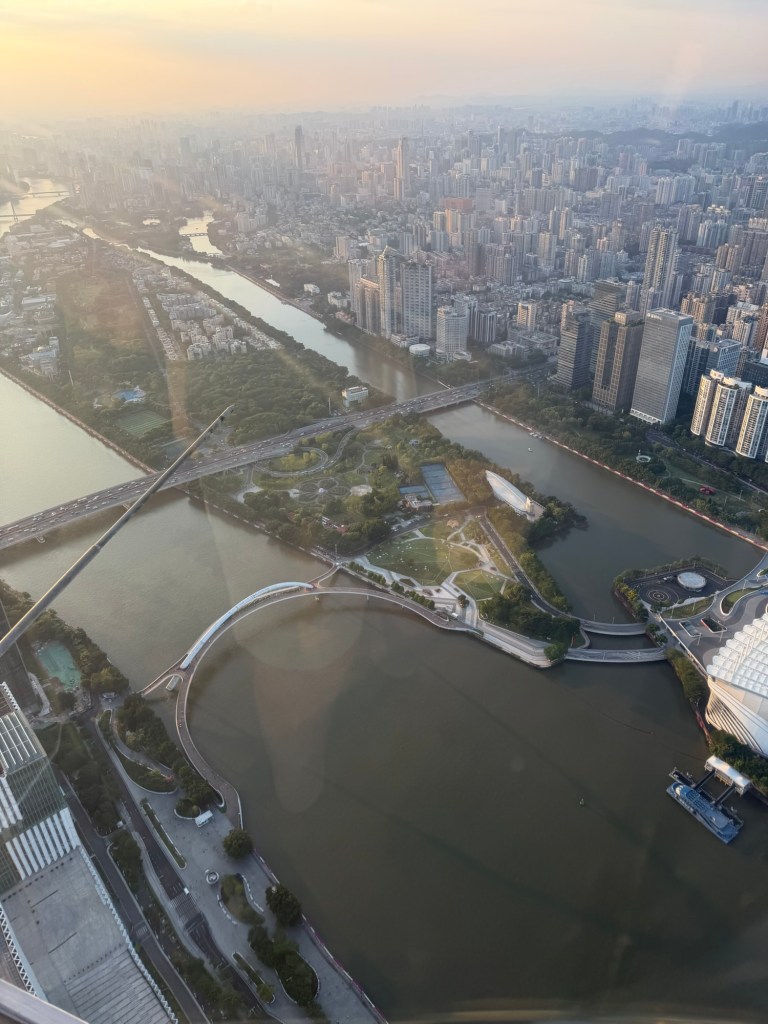
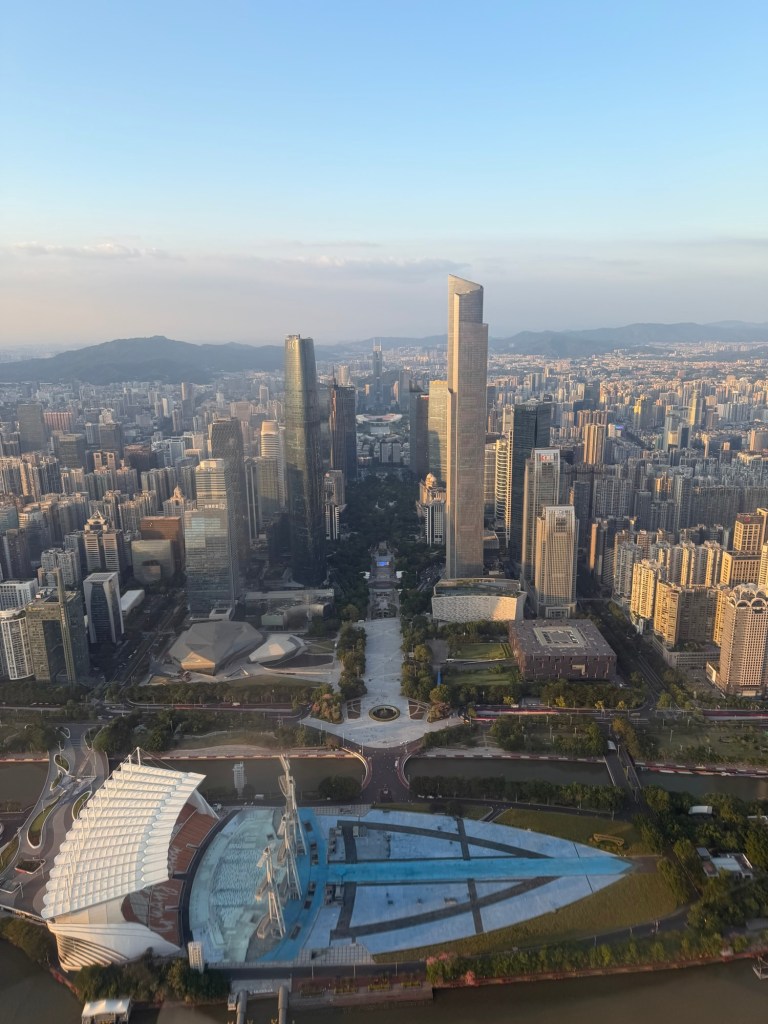
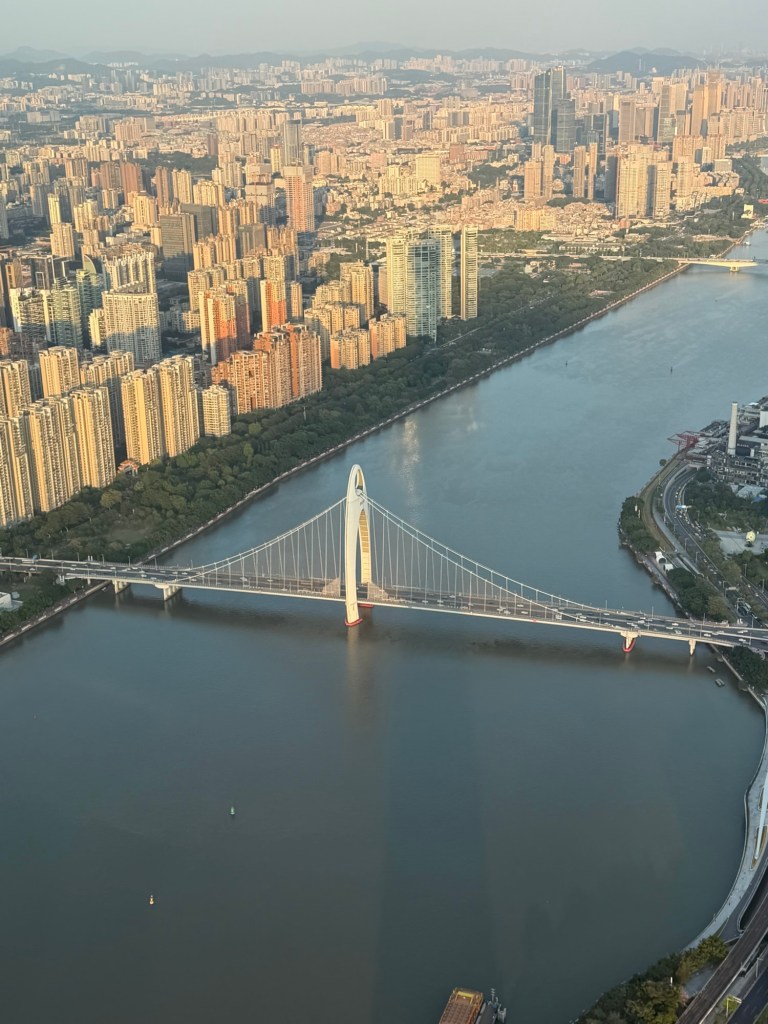
And our experience from within our very own Bubble…
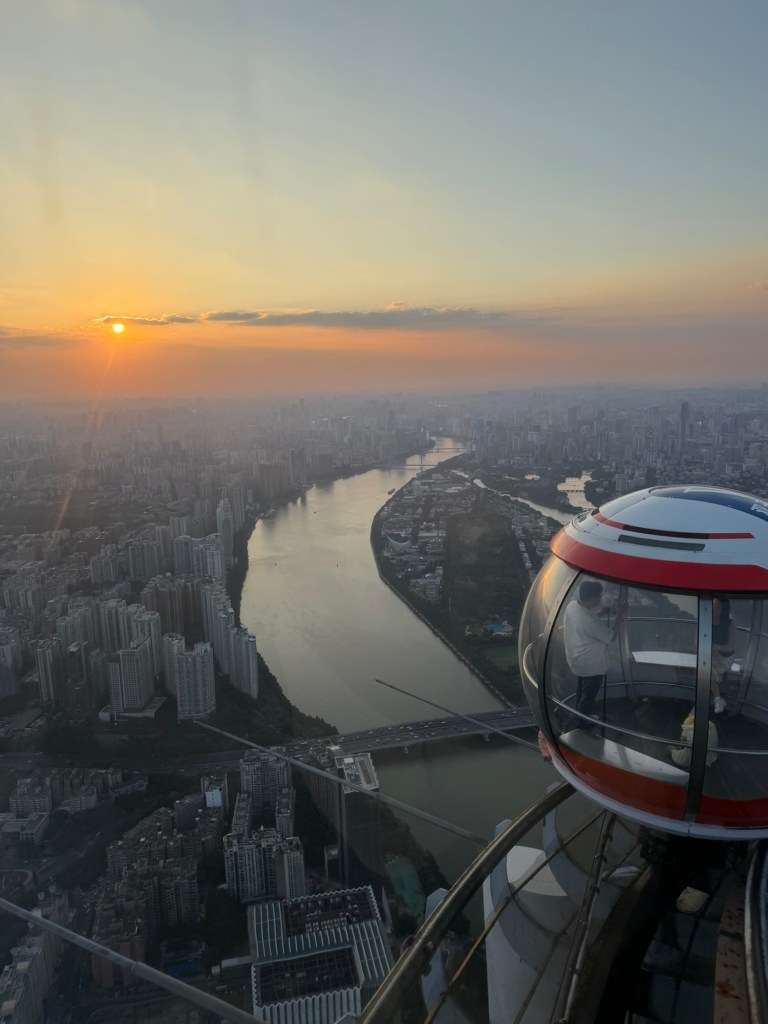
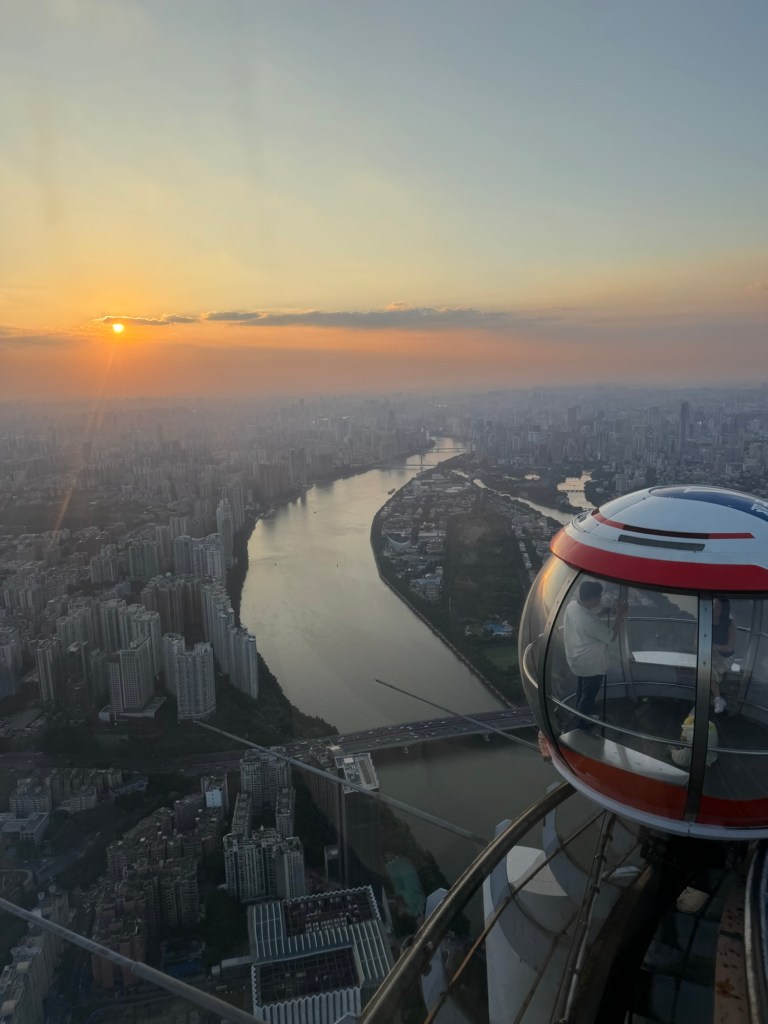
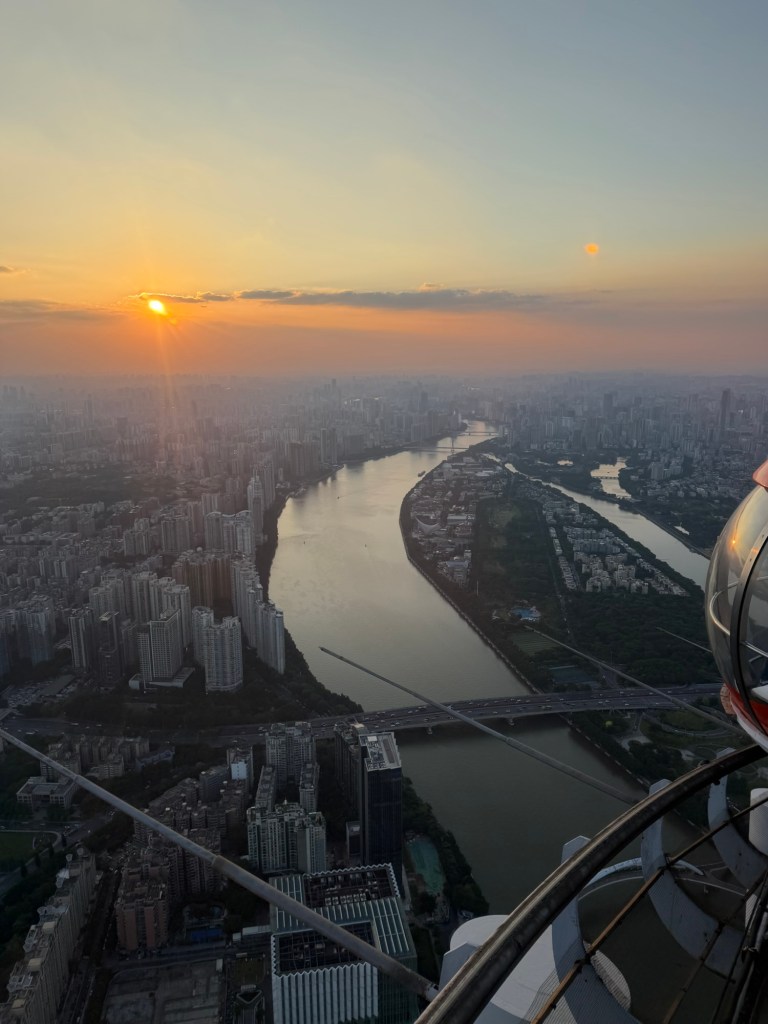
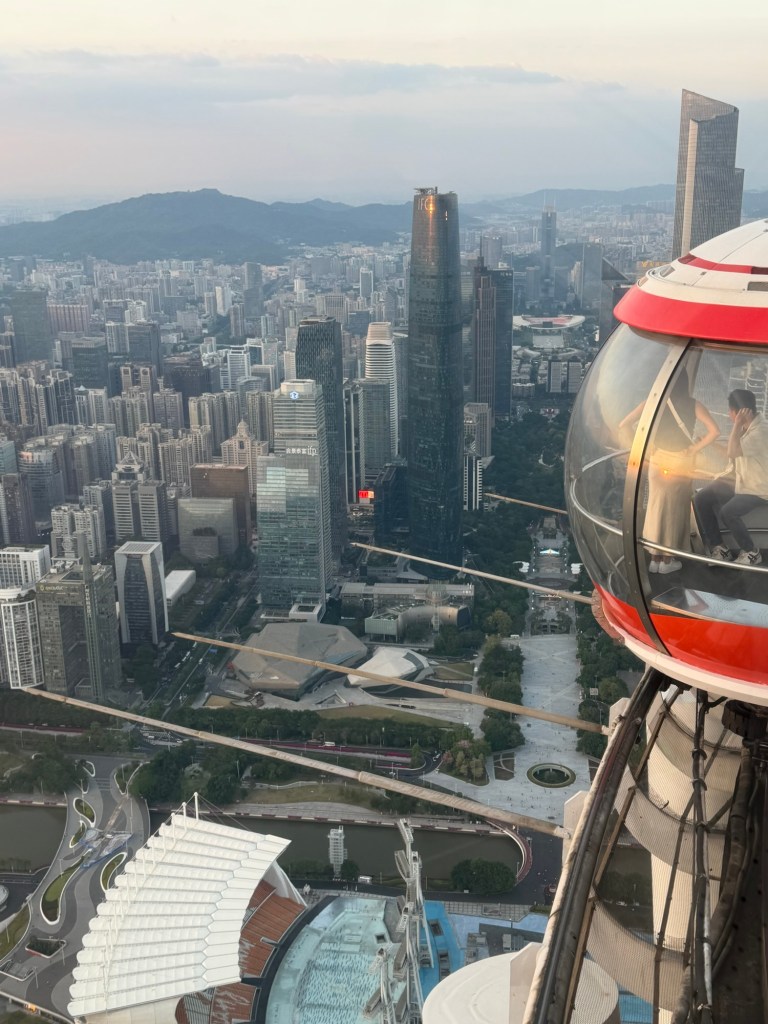
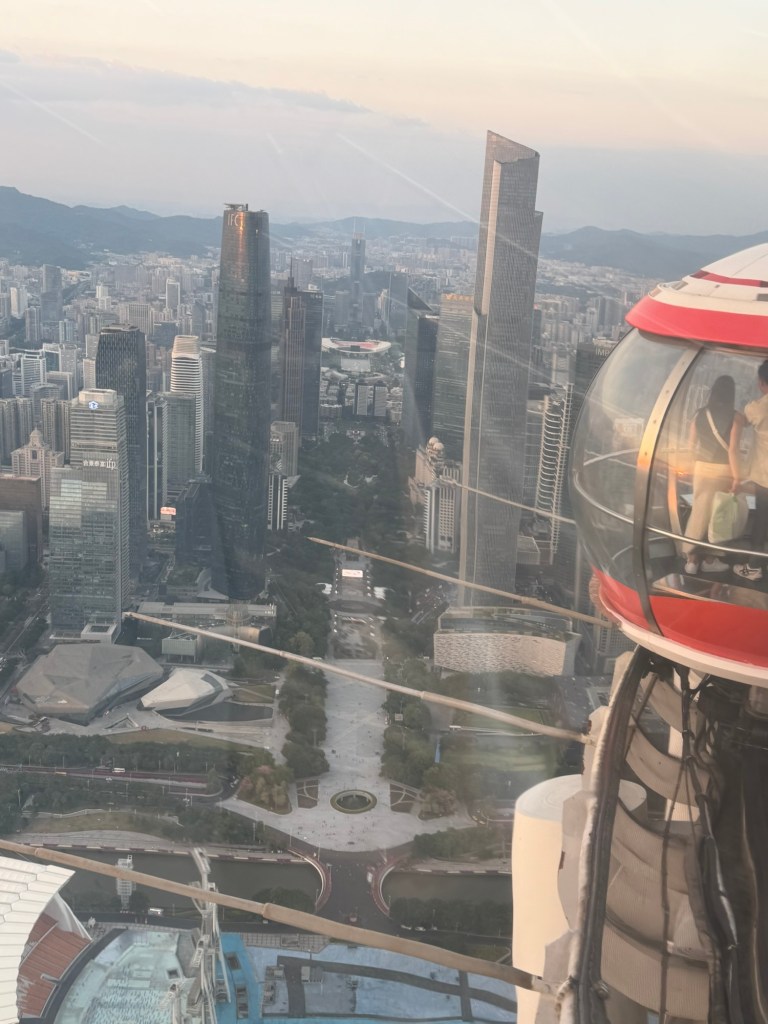
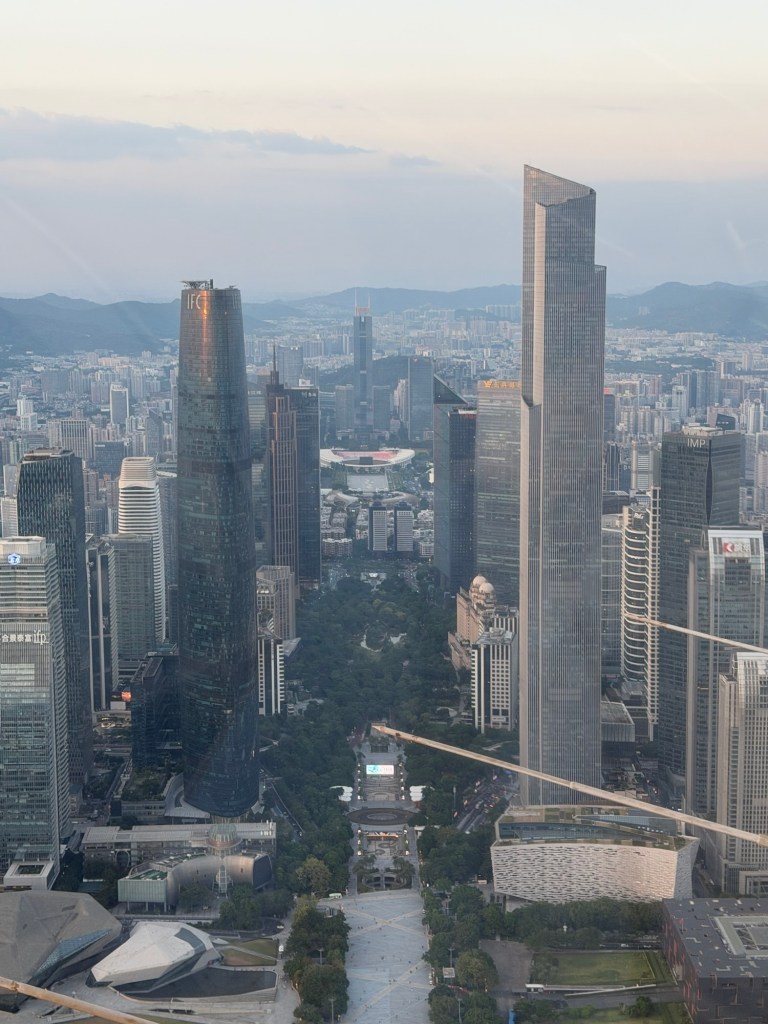
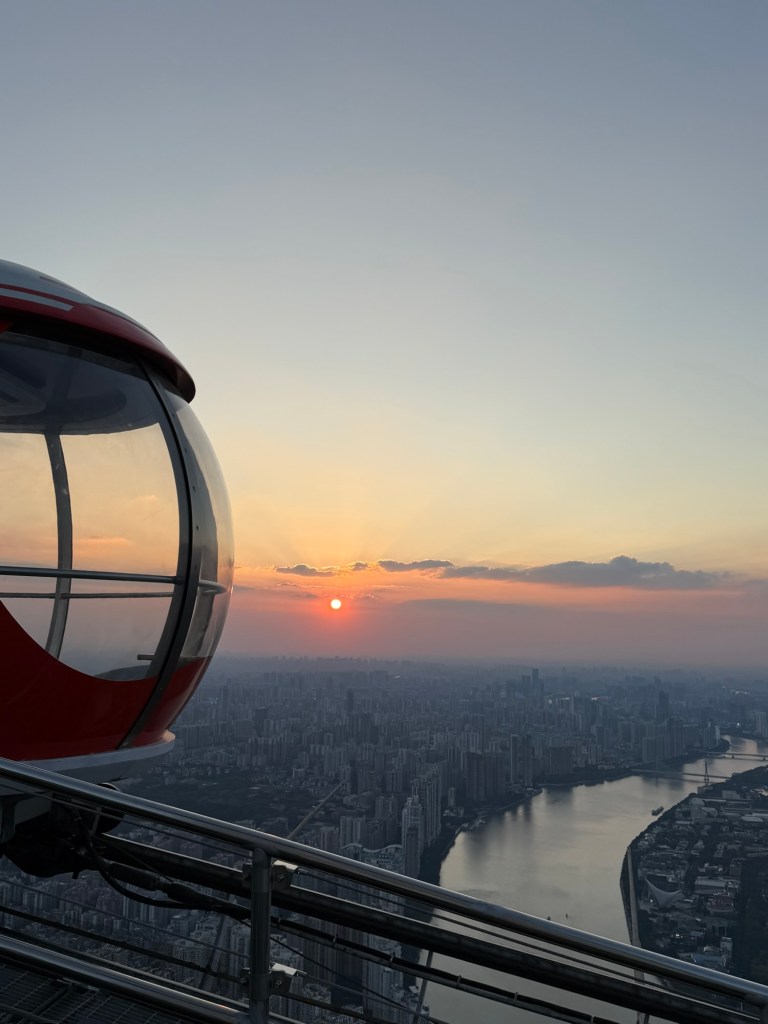
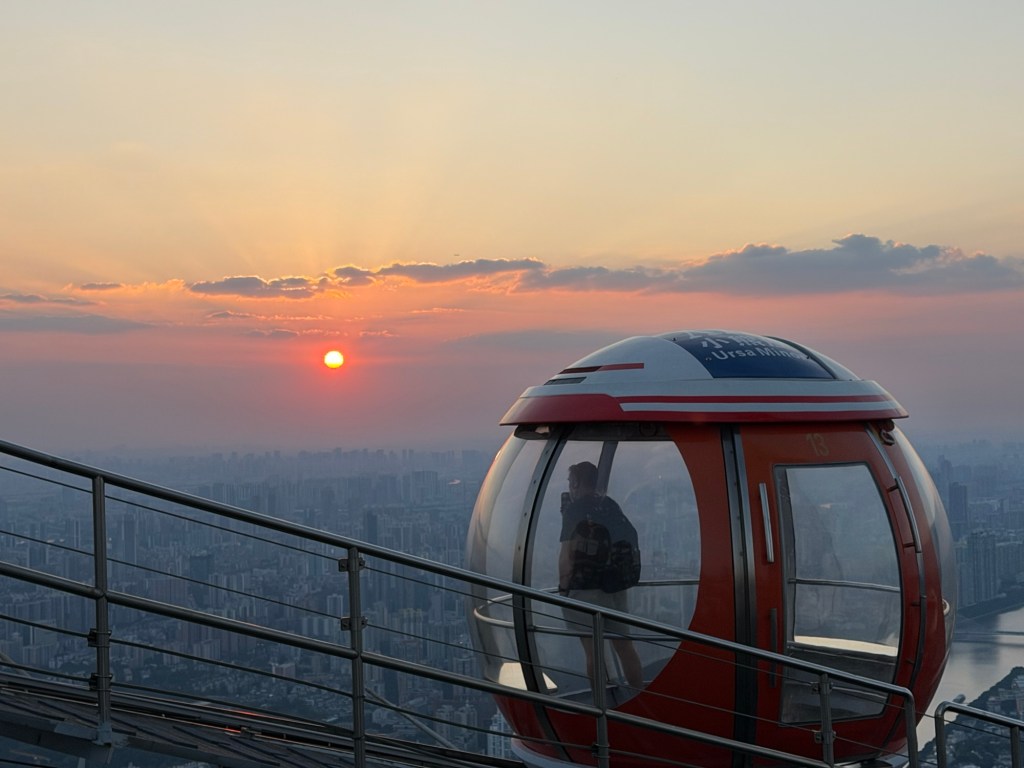

As the sun sets on Canton, time for some Chinese style tapas, with jasmine and ginger tea…
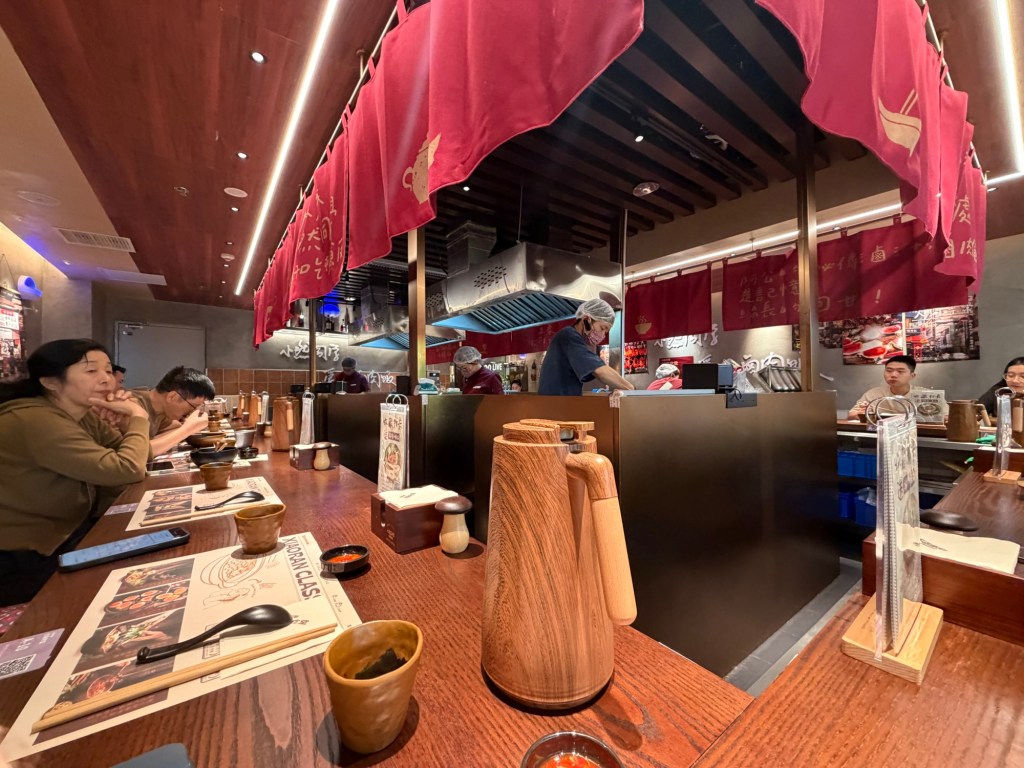
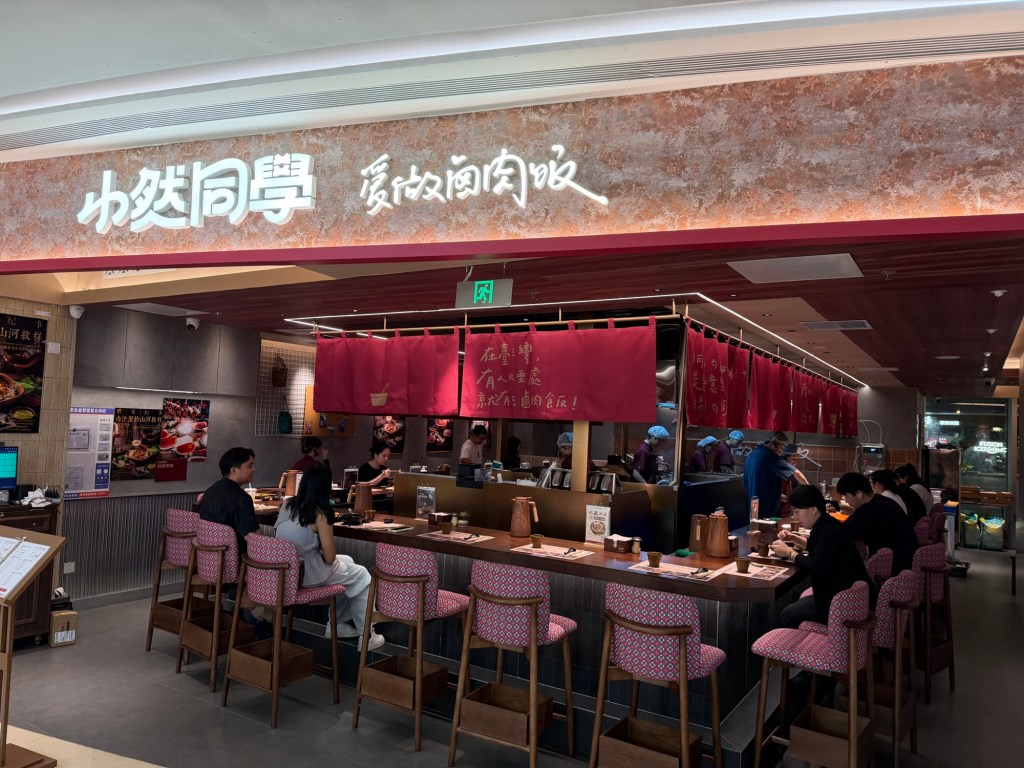
And hurry back to the station for our journey back to base. A long journey to and from but Guangzhou sure looks a place worthy of a longer visit.
Wondering why a group of people were peering up through a hole in the concrete canopy just outside the restaurant area, we ventured over… and there it is… one last glimpse of Canton Tower…
Previous daily China blogs here


Leave a Reply